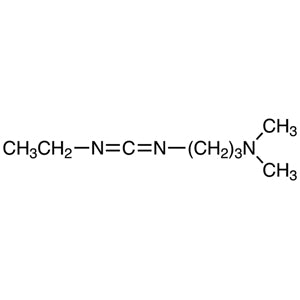
TCI D4029, 1-(3-Dimethylaminopropyl)-3-ethylcarbodiimide, is known in most laboratories simply by the abbreviation EDC or EDAC. It is a carbodiimide-class coupling reagent that forms the backbone of modern peptide chemistry. Its primary function is to activate carboxylic acid groups, converting them into a highly reactive O-acylisourea intermediate that can then be attacked directly by an amine to form an amide bond or a peptide bond. Because it joins two molecular fragments together under mild conditions, this reagent is used widely across peptide synthesis, biomolecule conjugation, and the immobilization of proteins onto solid surfaces in biochemistry laboratories.
The property that has made EDC so popular is its water solubility, together with the fact that its by-product is a urea derivative that is also water soluble. The dimethylaminopropyl group in its structure is weakly basic and can be protonated, which means that both excess reagent and reaction by-products can be removed simply by washing with water or dilute acid, without the time-consuming chromatography required when working with dicyclohexylcarbodiimide. The reagent performs well over a weakly acidic to neutral pH range and is commonly paired with additives to improve coupling efficiency and suppress side reactions.
In Indonesian laboratories, TCI D4029 is a routine choice wherever amide bond formation is carried out under mild aqueous or mixed-solvent conditions. University research groups, biochemistry and biotechnology laboratories, and analytical development groups rely on it for peptide synthesis work, for preparing bioconjugates, and for attaching biomolecules to solid supports. Its straightforward aqueous work-up makes it particularly convenient for laboratories that prefer to avoid extended purification steps for every coupling reaction.
- Peptide synthesis — EDC activates the carboxyl terminus of an amino acid or peptide fragment so that it couples cleanly with a free amine to form the peptide bond under mild conditions.
- Amide bond formation in organic synthesis — the reagent converts carboxylic acids into reactive O-acylisourea intermediates, allowing amines to be coupled without the harsh conditions normally needed for direct amidation.
- Biomolecule conjugation — because it works in weakly acidic to neutral aqueous media, EDC is well suited to joining proteins, peptides, and other sensitive biomolecules that would not survive aggressive coupling chemistry.
- Protein immobilization on solid surfaces — carboxyl-functionalized supports can be activated with EDC and then coupled to amine groups on proteins, a standard route for preparing functionalized surfaces in biochemistry work.
- Coupling reactions requiring simple work-up — the water-soluble urea by-product and protonatable dimethylaminopropyl group allow removal by water or dilute acid washing, making EDC ideal where chromatographic purification is impractical.
| Brand | TCI |
|---|---|
| CAS number | 1892-57-5 |
| Molecular formula | — |
| Purity | — |
| Category | Chemistry > Chemical Biology > Peptide Chemistry |
| Pack sizes | available in standard TCI catalogue pack sizes; please confirm the size required when ordering |
| Physical form | — |
| Storage | store according to the conditions stated on the manufacturer's label and Safety Data Sheet |
- Chemical name: 1-(3-Dimethylaminopropyl)-3-ethylcarbodiimide (EDC / EDAC)
Store this reagent in a cool, dry place in its original tightly closed container, following the storage conditions specified on the manufacturer's label and Safety Data Sheet. Carbodiimide reagents are moisture sensitive, so keep the container well sealed and allow it to reach room temperature before opening to limit condensation on the contents. Handle in a fume hood or a well-ventilated area, wearing gloves, safety glasses, and a laboratory coat, and avoid contact with skin and eyes as well as inhalation of any dust or vapour. Keep away from incompatible materials, weigh out only the quantity needed for the reaction, and dispose of residues and contaminated materials in accordance with your institution's chemical waste procedures. Always consult the Safety Data Sheet before first use.
—
Produk Terkait
-
2,3-Bis(2,6-diisopropylphenylimino)butane TCI B5606
Regular price From Rp 2.942.100,00Regular price -
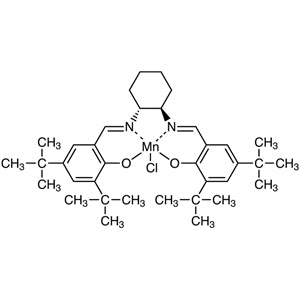
(R,R)-(-)-N,N'-Bis(3,5-di-tert-butylsalicylidene)-1,2-cyclohexanediaminomanganese(III)Chloride TCI B5613
Regular price Rp 3.127.950,00Regular price -
(R,R)-N,N'-Bis(3,5-di-tert-butylsalicylidene)-1,2-cyclohexanediaminocobalt(II) TCI B5732
Regular price From Rp 1.670.550,00Regular price -
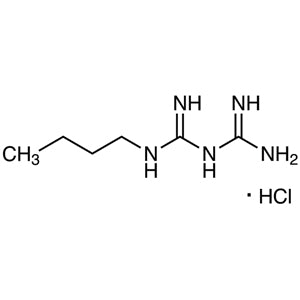
BuforminHydrochloride TCI B6007
Regular price From Rp 1.961.400,00Regular price -
2-tert-Butyl-1,1,3,3-tetramethylguanidine TCI B6052
Regular price From Rp 1.565.550,00Regular price -
Boc-Arg-OH TCI B6362
Regular price From Rp 903.000,00Regular price -
6,6'-[[Ethane-1,2-diylbis(azaneylylidene)]bis(methaneylylidene)]bis(2,4-di-tert-butylphenol) TCI B6501
Regular price Rp 3.287.550,00Regular price -
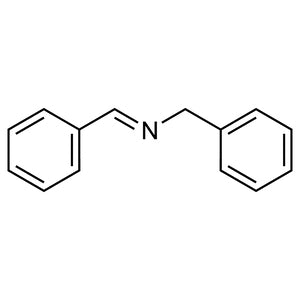
(E)-N-Benzyl-1-phenylmethanimine TCI B6850
Regular price From Rp 2.862.300,00Regular price





![6,6'-[[Ethane-1,2-diylbis(azaneylylidene)]bis(methaneylylidene)]bis(2,4-di-tert-butylphenol) (CAS 103595-81-9) - TCI B6501 - AMI Scientific](http://amiscientific.com/cdn/shop/files/TCI2510B6501.jpg?v=1767093755&width=533)