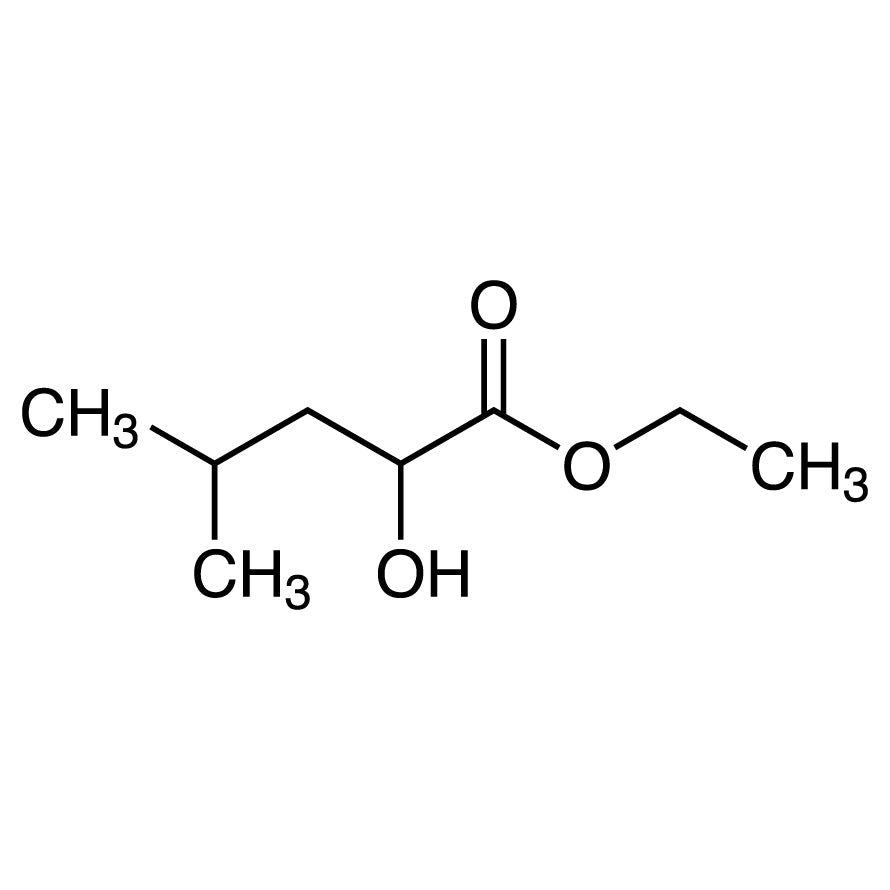
Ethyl DL-Leucate is the ethyl ester of leucic acid, the alpha-hydroxy analogue of the amino acid leucine in which the amino group has been replaced by a hydroxyl group. The DL designation indicates that the product is a racemic mixture of both enantiomers. In laboratory work, the compound is valued because it combines three features within a single small molecule: a secondary hydroxyl group, an ester group, and a hydrophobic isobutyl side chain. That combination makes it an attractive building block for depsipeptide synthesis, polyester chemistry, and biochemical studies comparing the behaviour of hydroxy acids with their amino acid counterparts.
The properties that make it a sound choice centre on its dual reactivity. The free hydroxyl group can be esterified, etherified, or oxidised, while the ester group remains available for hydrolysis and aminolysis, giving synthetic chemists two independent handles on one scaffold. Its close structural resemblance to leucine makes the compound particularly useful as a comparator in studies of enzymatic substrate recognition, because substituting hydroxyl for amino removes specific hydrogen-bonding capability without altering the overall shape of the molecule. The racemic form is likewise advantageous for enzymatic resolution experiments that compare how enzymes discriminate between the two enantiomers.
In Indonesian laboratories, Ethyl DL-Leucate is typically encountered in university and institutional research settings working on peptide and depsipeptide chemistry, polymer synthesis, and enzymology. It suits groups investigating ester-linked backbones as alternatives to conventional amide-linked peptides, as well as those probing the contribution of hydrogen bonding to enzyme–substrate interactions. Because it is supplied by TCI as a catalogue biochemical reagent, it is generally ordered in research-scale quantities for method development and exploratory synthesis rather than for routine analysis.
- Depsipeptide synthesis — the free secondary hydroxyl couples to activated carboxyl partners to form ester linkages, letting researchers build backbones that alternate ester and amide bonds within one chain.
- Polyester and polymer building block — the combination of hydroxyl and ester functionality on the same molecule supports condensation and transesterification routes toward polyesters bearing hydrophobic isobutyl side chains.
- Enzymatic resolution studies — as a racemic mixture of both enantiomers, it serves as a convenient substrate for evaluating how esterases, lipases, and related enzymes discriminate between mirror-image forms.
- Enzyme substrate recognition research — its close structural similarity to leucine, with hydroxyl replacing amino, allows investigators to remove specific hydrogen-bonding capability while preserving the overall molecular shape.
- Comparative biochemical studies of hydroxy acids — the compound provides a matched hydroxy acid counterpart to a standard amino acid, supporting experiments that isolate the functional contribution of the amino group.
| Brand | TCI (Tokyo Chemical Industry), catalogue number E0802 |
|---|---|
| CAS number | 10348-47-7 |
| Molecular formula | — |
| Purity | — |
| Category | Life Science > Biochemicals and Reagents > Lipids |
| Pack sizes | available in TCI research-scale catalogue pack sizes; please confirm the current options when ordering |
| Physical form | — |
| Storage | store according to the storage conditions stated on the TCI product label and Safety Data Sheet |
- Chemical identity: ethyl ester of DL-leucic acid, supplied as a racemic mixture of both enantiomers
Store the container tightly closed in a cool, dry, well-ventilated area away from heat sources, direct sunlight, and strong oxidising agents, following the storage conditions printed on the manufacturer's label and Safety Data Sheet. Keep the material in its original supplier container, or transfer it to a chemically compatible, tightly sealed glass vessel with an inert closure liner to limit moisture uptake and hydrolysis of the ester group. Handle in a fume hood using nitrile gloves, safety goggles, and a laboratory coat, and avoid contact with skin and eyes as well as inhalation of any vapour. Label all secondary containers clearly, record opening dates for stock control, and dispose of residues and contaminated consumables through your institution's chemical waste stream in line with local regulations.
—
Produk Terkait
-
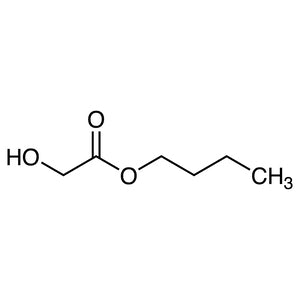
Butyl2-Hydroxyacetate TCI B6748
Regular price From Rp 1.220.100,00Regular price -
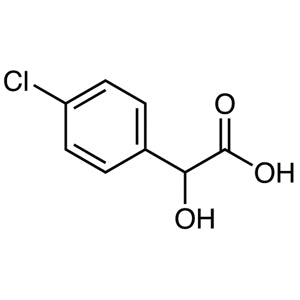
4-Chloro-DL-mandelicAcid TCI C0193
Regular price From Rp 1.035.300,00Regular price -
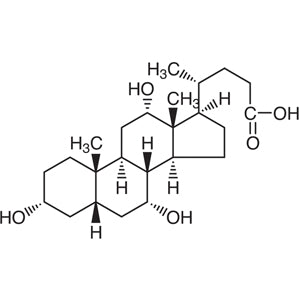
DeoxycholicAcid TCI C0315
Regular price From Rp 1.618.050,00Regular price -
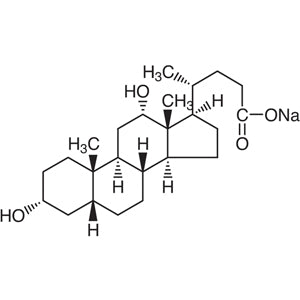
SodiumDeoxycholate TCI C0316
Regular price From Rp 1.644.300,00Regular price -
CholicAcid TCI C0324
Regular price From Rp 1.353.450,00Regular price -
SodiumCholate TCI C0325
Regular price From Rp 1.724.100,00Regular price -
ChenodeoxycholicAcid TCI C0750
Regular price Rp 1.246.350,00Regular price -
Methyl(E)-4-Chloro-3-methoxy-2-butenoate TCI C1340
Regular price From Rp 1.908.900,00Regular price