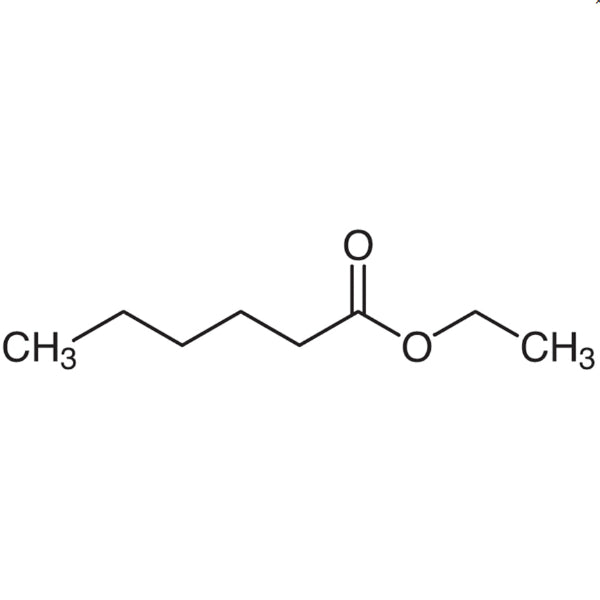
Ethyl Hexanoate is the ethyl ester of hexanoic acid and ranks among the most frequently discussed volatile compounds in studies of food aroma and fermented beverages. Its structure is straightforward, consisting of a six-carbon acyl chain bound to an ethyl group, yet its role in the laboratory is substantial: it serves as a standard compound for analysis, a reference material in the construction of aroma libraries, and an intermediate for organic synthesis. Its classification at TCI under Non-Heterocyclic Building Blocks underlines its usefulness as a ready-to-use starting material for a wide range of purposes.
The property that makes Ethyl Hexanoate a preferred choice is its high volatility compared with longer-chain hexanoate esters, which means the compound is readily detected in headspace analysis and gas chromatography within a relatively short analysis time. It is a liquid with a pronounced fruity aroma, dissolving well in ethanol and other organic solvents while remaining only slightly soluble in water. The ester group is stable under neutral conditions but can be hydrolysed under both acidic and basic conditions, making it well suited to the systematic study of ester reaction mechanisms.
In Indonesian laboratories, Ethyl Hexanoate is typically encountered in food and beverage science, in fermentation research, and in organic chemistry teaching and practical work. Analysts rely on it as a reference peak when identifying volatile esters in samples, while synthesis groups use it as an accessible non-heterocyclic building block. Its predictable behaviour and familiar aroma profile make it a practical item for routine analytical work as well as for method development in academic and industrial settings.
- Gas chromatography reference standard: its high volatility relative to longer-chain hexanoate esters produces a clean, early-eluting peak that makes retention time calibration and peak identification straightforward in routine runs.
- Headspace analysis of volatile compounds: because the compound partitions readily into the vapour phase, it is easily detected in headspace sampling and serves as a dependable marker during method development and validation.
- Aroma library construction: its distinct fruity aroma and well-documented status as a widely discussed volatile make it a standard comparison material when compiling and cross-checking reference aroma collections.
- Fermented food and beverage research: as one of the volatiles most frequently discussed in fermentation aroma studies, it functions as a comparison compound when profiling esters formed during fermentation processes.
- Organic synthesis intermediate: classified by TCI as a non-heterocyclic building block, it provides a simple six-carbon acyl framework that is ready to use as a starting material or as a substrate for studying acid- and base-catalysed ester hydrolysis.
| Brand | TCI |
|---|---|
| CAS number | 123-66-0 |
| Molecular formula | — |
| Purity | — |
| Category | Chemistry > Building Blocks > Non-Heterocyclic Building Blocks |
| Pack sizes | available in the standard TCI catalogue pack sizes; please confirm the specific size when ordering |
| Physical form | liquid with a pronounced fruity aroma |
| Storage | keep in a tightly closed container in a cool, well-ventilated place away from heat and ignition sources |
Store Ethyl Hexanoate in a tightly closed container in a cool, well-ventilated area, away from heat, sparks, and open flame, since the material is a volatile organic liquid. Amber glass bottles with chemically resistant closures are appropriate, as they limit evaporative loss and protect the contents from light. Keep containers sealed when not in use so that the characteristic aroma does not disperse through the laboratory and so that sample composition remains consistent between analyses. Handle in a fume hood or a well-ventilated workspace, and wear standard laboratory personal protective equipment including safety goggles, a laboratory coat, and chemically resistant gloves. Avoid contact with strong acids and bases, which can promote hydrolysis of the ester group. Transfer using clean, dry glassware, and return the container promptly to its designated storage location after each use.
—
Produk Terkait
-
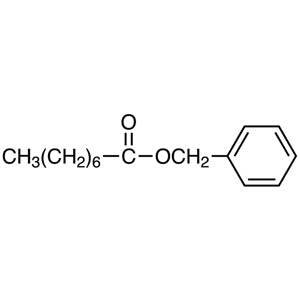
BenzylOctanoate TCI B6116
Regular price Rp 1.538.250,00Regular price -
tert-Butyl4-Bromobutanoate TCI B6167
Regular price Rp 2.439.150,00Regular price -
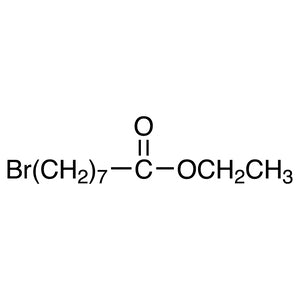
Ethyl8-Bromooctanoate TCI B6430
Regular price From Rp 928.200,00Regular price -
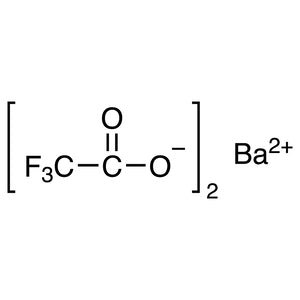
Barium(II)Trifluoroacetate TCI B6582
Regular price From Rp 2.068.500,00Regular price -
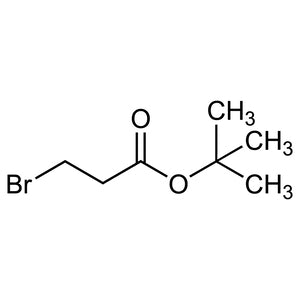
tert-Butyl3-Bromopropanoate TCI B6840
Regular price From Rp 2.545.200,00Regular price -
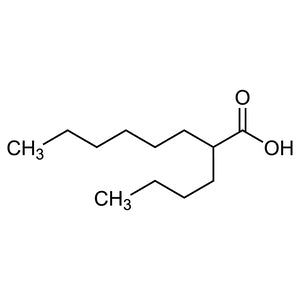
2-ButyloctanoicAcid TCI B6845
Regular price From Rp 848.400,00Regular price -
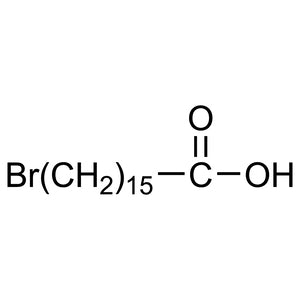
16-BromohexadecanoicAcid TCI B6915
Regular price From Rp 1.378.650,00Regular price -
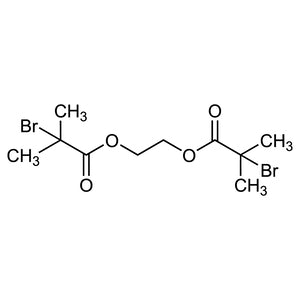
EthyleneBis(2-bromoisobutyrate) TCI B7067
Regular price From Rp 1.829.100,00Regular price