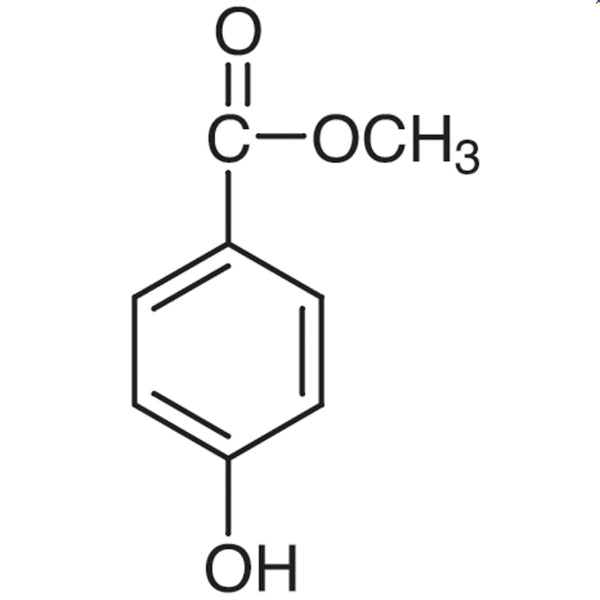
Methyl 4-Hydroxybenzoate, known throughout industry as methylparaben or nipagin, is the simplest and most widely used member of the hydroxybenzoate ester family. In the laboratory it serves three distinct roles: as the primary reference standard for preservative analysis, as a preservative in research media and preparations, and as a non-heterocyclic building block for organic synthesis. Almost every cosmetic and pharmaceutical quality control laboratory requires it, because methylparaben is the preservative most frequently encountered in formulations, making verification of its content a routine and repeatedly performed task.
The characteristic that makes this compound the preferred choice is its very short methyl chain, which produces the most polar compound in the series. That polarity gives it relatively good solubility in water–alcohol mixtures, so standard solutions are easy to prepare, and in reversed-phase chromatography methylparaben elutes earliest among its homologues, making it a practical reference peak within test mixtures. The phenolic hydroxyl group at the para position provides a distinctive and strong ultraviolet absorption, supporting sensitive detection. Its solid form is stable and not readily degraded under normal handling.
In Indonesian laboratories, this material is typically found in cosmetic and pharmaceutical quality control units, where preservative content verification is recurring routine work. It is equally at home in university and research institute laboratories, both as a preservative for research media and preparations and as a starting material in organic synthesis work. Its role as a non-heterocyclic building block makes it a standard item on the shelves of synthesis laboratories that prepare hydroxybenzoate derivatives.
- Preservative content assay reference standard: as the primary comparison standard for preservative analysis, it allows analysts to confirm methylparaben levels in formulations against a known reference material.
- Reversed-phase HPLC reference peak: because it elutes earliest among the hydroxybenzoate homologues, it provides a practical and easily identified anchor peak within paraben test mixtures.
- Ultraviolet spectrophotometric detection work: the phenolic hydroxyl group at the para position gives a distinctive and strong ultraviolet absorption, supporting sensitive detection at low working concentrations.
- Preservation of research media and preparations: it functions as a preservative in laboratory media and research preparations, drawing on the same preservative behaviour that makes it common in commercial formulations.
- Non-heterocyclic building block for organic synthesis: as the simplest member of the hydroxybenzoate ester family, it serves as a convenient starting material for preparing related derivatives.
| Brand | TCI |
|---|---|
| CAS number | 99-76-3 |
| Molecular formula | — |
| Purity | — |
| Category | Chemistry > Building Blocks > Non-Heterocyclic Building Blocks |
| Pack sizes | available in the pack sizes listed by the manufacturer for this catalogue number |
| Physical form | stable solid, not readily degraded under normal handling |
| Storage | store in a closed container in a cool, dry place away from direct light |
- Catalogue number: H0216
Store the material in its original tightly closed container in a cool, dry place, protected from direct sunlight and away from sources of heat and ignition. Amber glass or the manufacturer's supplied container is suitable, since the phenolic hydroxyl group responds to ultraviolet light and light protection helps preserve standard quality. Handle in a well-ventilated area or fume hood, using laboratory gloves, safety glasses, and a laboratory coat. Avoid generating dust when weighing the solid, and use clean, dry spatulas to prevent moisture ingress and cross-contamination of the remaining stock. Prepare working solutions in water–alcohol mixtures fresh where analytical accuracy is critical, and label all prepared standards clearly with their preparation date. Consult the manufacturer's safety data sheet before first use.
—
Produk Terkait
-
Methyl5-Bromo-2-hydroxybenzoate TCI B6380
Regular price From Rp 2.016.000,00Regular price -
2,3-DihydroxybenzoicAcid TCI C0054
Regular price From Rp 1.298.850,00Regular price -
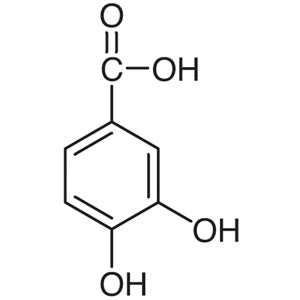
3,4-DihydroxybenzoicAcid TCI C0055
Regular price From Rp 2.386.650,00Regular price -
5-ChlorosalicylicAcid TCI C0287
Regular price From Rp 637.350,00Regular price -
trans-p-CoumaricAcid TCI C0393
Regular price From Rp 1.510.950,00Regular price -
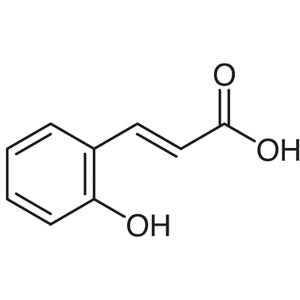
trans-o-CoumaricAcid TCI C0394
Regular price From Rp 875.700,00Regular price -
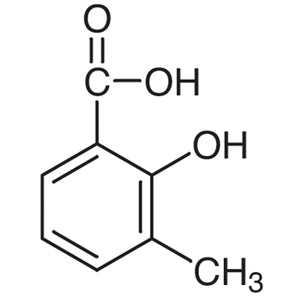
3-MethylsalicylicAcid TCI C0408
Regular price From Rp 530.250,00Regular price -
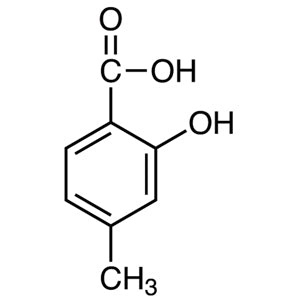
4-MethylsalicylicAcid TCI C0409
Regular price From Rp 1.193.850,00Regular price