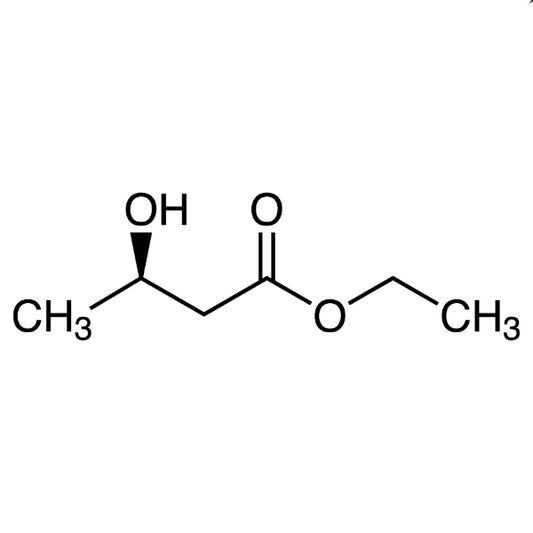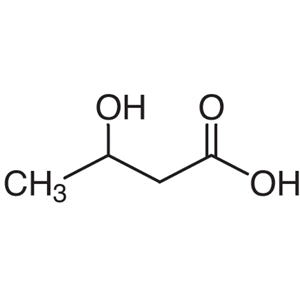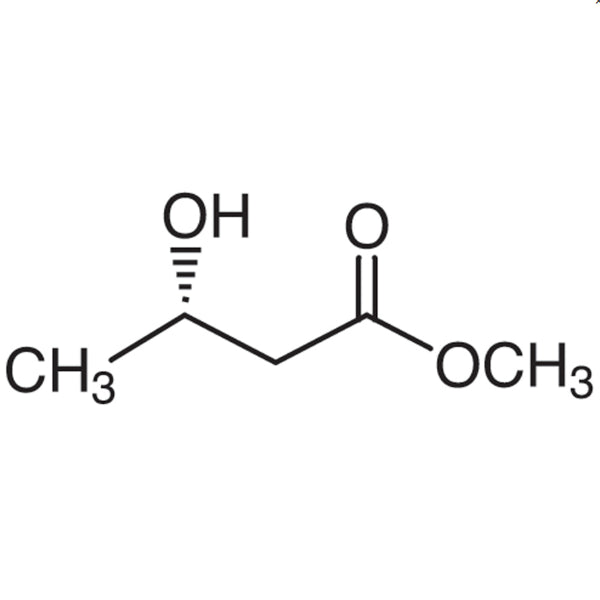
Methyl (S)-(+)-3-Hydroxybutyrate is a chiral compound widely used in asymmetric synthesis to construct complex molecular structures. As a chiral building block, it plays a crucial role in the development of optically active compounds, such as lactic acid derivatives and other biologically active substances. Its stereochemical properties make it essential for achieving precise control over the spatial arrangement of atoms in synthetic reactions. In laboratory settings, it is a key reagent for researchers aiming to produce enantiomerically pure compounds with specific biological or pharmacological properties.
This compound is preferred due to its high stereochemical specificity and stability under various reaction conditions. Its chiral nature allows for the selective formation of desired stereoisomers, which is critical in pharmaceutical and organic chemistry. Additionally, its availability in different packaging formats makes it convenient for use in both academic and industrial research environments. The compound's reliability and consistent performance contribute to its popularity among chemists working on asymmetric synthesis projects.
In Indonesian laboratories, Methyl (S)-(+)-3-Hydroxybutyrate is commonly used in organic chemistry research, particularly in universities and research institutions. It is frequently employed in the development of new synthetic methods and in studies focused on stereoselectivity. Researchers rely on its predictable behavior and compatibility with a wide range of reaction conditions to achieve accurate and reproducible results in their experiments.
TCI brochures (PDF)
- Chiral Building Blocks 2025-04-14 · p. 8
- Lipids 2025-12-17 · p. 8
Related TCI products
- TCI H0705 3976-69-0 Methyl (R)-(-)-3-Hydroxybutyrate
- TCI H1029 24915-95-5 Ethyl (R)-(-)-3-Hydroxybutyrate
- TCI H0975 56816-01-4 Ethyl (S)-(+)-3-Hydroxybutyrate
- TCI H0230 5405-41-4 Ethyl DL-3-Hydroxybutyrate
- TCI H0229 52089-54-0 Ethyl 2-Hydroxybutyrate
- TCI C1717 86728-85-0 Ethyl (S)-4-Chloro-3-hydroxybutyrate
- Asymmetric Synthesis: This compound is ideal for creating enantiomerically pure compounds, which is essential in pharmaceutical research.
- Chiral Compound Development: Its stereochemical properties make it suitable for synthesizing optically active molecules with specific biological activities.
- Organic Chemistry Research: It is widely used in academic laboratories to explore new synthetic pathways and reaction mechanisms.
- Stereochemistry Studies: The compound's chiral nature allows for detailed investigations into stereoselectivity and reaction outcomes.
- Biologically Active Compound Synthesis: It serves as a building block for compounds with potential therapeutic applications in drug development.
| Brand | TCI |
|---|---|
| CAS number | 53562-86-0 |
| Molecular formula | — |
| Purity | — |
| Category | Chemistry > Asymmetric Synthesis > Chiral Building Blocks |
| Pack sizes | Available in various quantities as per standard laboratory requirements |
| Physical form | Liquid or crystalline, depending on the packaging |
| Storage | Store in a cool, dry place away from direct sunlight |
This compound should be stored in a cool, dry environment, away from direct sunlight and sources of heat. It is recommended to use airtight containers to prevent moisture absorption and contamination. For long-term storage, a refrigerator may be suitable, depending on the specific formulation. Always ensure proper ventilation when handling the compound to avoid inhalation of vapors. It is important to follow standard laboratory safety protocols, including the use of personal protective equipment such as gloves and safety goggles. The compound should be kept in a secure location to prevent accidental exposure or contamination.
—
Product Categories
Produk Terkait
-
Methyl(R)-(-)-3-Hydroxybutyrate TCI H0705
Regular price From Rp 2.013.900,00Regular priceRp 1.423.800,00Sale price From Rp 2.013.900,00 -
Ethyl(R)-(-)-3-Hydroxybutyrate TCI H1029
Regular price From Rp 530.250,00Regular priceRp 386.400,00Sale price From Rp 530.250,00 -
Ethyl(S)-(+)-3-Hydroxybutyrate TCI H0975
Regular price From Rp 3.763.200,00Regular priceRp 2.647.050,00Sale price From Rp 3.763.200,00 -
EthylDL-3-Hydroxybutyrate TCI H0230
Regular price From Rp 1.060.500,00Regular priceRp 757.050,00Sale price From Rp 1.060.500,00 -
Ethyl2-Hydroxybutyrate TCI H0229
Regular price From Rp 5.274.150,00Regular priceRp 3.703.350,00Sale price From Rp 5.274.150,00 -
Ethyl(S)-4-Chloro-3-hydroxybutyrate TCI C1717
Regular price From Rp 1.272.600,00Regular priceRp 905.100,00Sale price From Rp 1.272.600,00 -
Ethyl(R)-(-)-4-Cyano-3-hydroxybutyrate TCI C1474
Regular price From Rp 505.050,00Regular priceRp 368.550,00Sale price From Rp 505.050,00 -
DL-3-HydroxybutyricAcid(containsPolymolecularesterificationproduct) TCI H0228
Regular price From Rp 1.881.600,00Regular priceRp 1.331.400,00Sale price From Rp 1.881.600,00