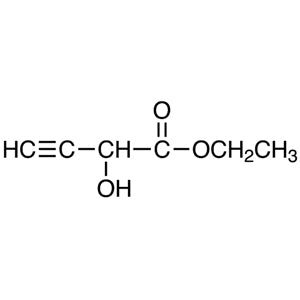
TCI H0823 Ethyl 2-Hydroxy-3-butynoate is a compound with a remarkably high density of functional groups for a molecule of such modest size: an ethyl ester, a secondary alcohol, and a terminal alkyne all assembled on a four-carbon chain. In synthetic laboratories, materials of this kind are highly valued as building blocks because each functional group opens a distinct reaction pathway. Researchers can exploit the terminal alkyne for coupling or cycloaddition reactions, modify the hydroxyl group to control stereochemistry and solubility, and convert the ester into an acid, amide, or alcohol according to the requirements of the target molecule.
The property that makes this compound stand out is the combination of a terminal alkyne with a hydroxyl group at the propargylic position. Propargylic alcohols are a classic entry point to a wide range of transformations, from rearrangements and metal-catalysed cyclisations through to the construction of heterocyclic rings. The terminal alkyne itself is a dependable reaction partner for Sonogashira coupling and azide-alkyne cycloaddition, two reactions used very frequently in medicinal chemistry and materials chemistry. The ester group adjacent to the carbinol centre both activates that position and provides a convenient handle for further elaboration.
In Indonesian laboratories, a building block of this type is typically found in university research groups, institutional synthesis facilities, and industrial R&D units working on the preparation of new molecules. It is generally purchased in small quantities for exploratory route development, method optimisation, or the synthesis of intermediates that are not commercially available in finished form. Because it belongs to the non-heterocyclic building block category, it is commonly stored alongside other small reactive intermediates in a dedicated reagent inventory.
- Sonogashira coupling: the terminal alkyne reacts reliably with aryl and vinyl halides, allowing researchers to extend the carbon skeleton while retaining the ester and hydroxyl handles for later modification.
- Azide-alkyne cycloaddition (click chemistry): the unsubstituted alkyne terminus is an ideal partner for forming triazole linkages in conjugation work, probe preparation, and library synthesis programmes.
- Propargylic alcohol chemistry: the hydroxyl group at the propargylic position serves as a classic entry point for rearrangements, substitutions, and directed functionalisation of the adjacent triple bond.
- Metal-catalysed cyclisation toward heterocycles: the combination of alkyne and hydroxyl functionality allows ring-forming reactions that build heterocyclic cores frequently required in medicinal chemistry research.
- Ester interconversion for target synthesis: the ethyl ester can be hydrolysed to the acid, converted to amides, or reduced to the alcohol, adapting the fragment to the requirements of the intended molecule.
| Brand | TCI (Tokyo Chemical Industry) |
|---|---|
| CAS number | 18418-08-1 |
| Molecular formula | — |
| Purity | — |
| Category | Chemistry > Building Blocks > Non-Heterocyclic Building Blocks |
| Pack sizes | research-scale packs; please confirm the available sizes when ordering |
| Physical form | — |
| Storage | keep in the original sealed container under the conditions stated on the manufacturer's label |
- Product code: H0823
Store the material in its original tightly closed container, protected from light, moisture, and sources of heat or ignition, and follow the storage conditions printed on the manufacturer's label and safety data sheet. Keep the container upright in a designated chemical cabinet, away from incompatible substances and from ordinary laboratory traffic. Handle the compound in a fume hood while wearing safety goggles, chemically resistant gloves, and a laboratory coat. Reseal the container promptly after each use to limit exposure to air and atmospheric moisture, label any working solutions clearly, and dispose of residues and contaminated consumables through the laboratory's established chemical waste route. Always review the full safety data sheet before first use.
—
Produk Terkait
-
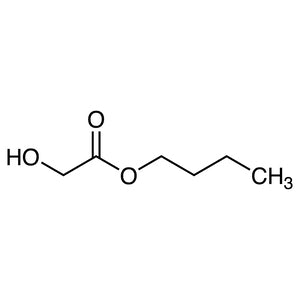
Butyl2-Hydroxyacetate TCI B6748
Regular price From Rp 1.220.100,00Regular price -
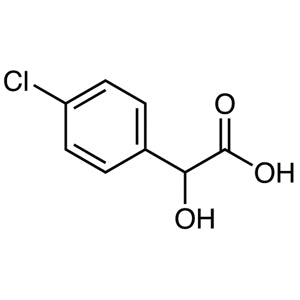
4-Chloro-DL-mandelicAcid TCI C0193
Regular price From Rp 1.035.300,00Regular price -
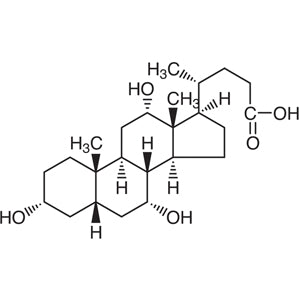
DeoxycholicAcid TCI C0315
Regular price From Rp 1.618.050,00Regular price -
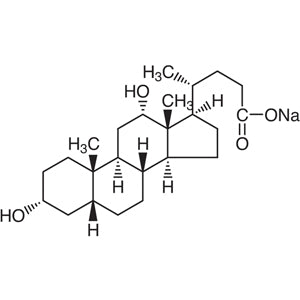
SodiumDeoxycholate TCI C0316
Regular price From Rp 1.644.300,00Regular price -
CholicAcid TCI C0324
Regular price From Rp 1.353.450,00Regular price -
SodiumCholate TCI C0325
Regular price From Rp 1.724.100,00Regular price -
ChenodeoxycholicAcid TCI C0750
Regular price Rp 1.246.350,00Regular price -
Methyl(E)-4-Chloro-3-methoxy-2-butenoate TCI C1340
Regular price From Rp 1.908.900,00Regular price