2-(2-Hydroxyphenyl)benzothiazole, commonly abbreviated as HBT, is a heterocyclic compound that combines a benzothiazole ring with a phenol group at the ortho position. This arrangement produces an intramolecular hydrogen bond between the hydroxyl group and the benzothiazole nitrogen atom, a structural feature that has made it one of the most widely recognised fluorophore scaffolds in studies of excited-state intramolecular proton transfer. In the laboratory, the compound serves as a heterocyclic building block for the synthesis of fluorescent probes, chemical sensors, and metal-chelating ligands, as well as a model compound in photophysical research.
The property that makes HBT so highly valued is its emission behaviour, which displays a large Stokes shift arising from the excited-state intramolecular proton transfer mechanism. This wide separation between absorption and emission wavelengths reduces self-absorption interference, an advantage in the design of sensors and light-emitting materials. In addition, the pairing of the phenol group with the heterocyclic nitrogen forms an effective coordination pocket for metal ions, so the compound's response toward particular analytes can be tuned through simple modification of the scaffold rather than through a complete redesign of the molecule.
In Indonesian laboratories, HBT is typically encountered in university and institutional research groups working on organic synthesis, photochemistry, and analytical sensor development. It is used at bench scale for preparing probe libraries, for reference measurements in fluorescence spectroscopy, and as a starting material in postgraduate research projects. Because it is supplied as a defined research chemical, it is generally ordered in small quantities suited to method development and repeated experimental trials.
Related TCI products
- Fluorescent probe synthesis: the benzothiazole-phenol scaffold provides a ready-made emissive core that can be functionalised into probes for imaging and detection work.
- Chemical sensor development: the phenol and heterocyclic nitrogen pair forms a coordination pocket whose response to target analytes can be tuned through straightforward structural modification.
- Metal-chelating ligand preparation: the compound binds metal ions through its hydroxyl and nitrogen donors, making it useful for preparing coordination complexes and studying metal-ligand interactions.
- Photophysical model studies: HBT is a benchmark compound for investigating excited-state intramolecular proton transfer, allowing researchers to characterise emission mechanisms under controlled conditions.
- Light-emitting material research: the large Stokes shift reduces self-absorption losses, which benefits the design and evaluation of emissive materials in fundamental optical materials studies.
| Brand | TCI |
|---|---|
| CAS number | 3411-95-8 |
| Molecular formula | — |
| Purity | — |
| Category | Chemistry > Building Blocks > Heterocyclic Building Blocks |
| Pack sizes | available in standard research-scale packs as listed by the manufacturer |
| Physical form | — |
| Storage | keep in a cool, dry place, protected from light |
- Product code: H0973
Store the container in a cool, dry, well-ventilated area away from direct sunlight and sources of heat or ignition. Keep the material in its original tightly closed container, or in a comparable chemically resistant amber glass vessel, to limit exposure to light and moisture. Handle the compound in a fume hood using safety glasses, gloves, and a laboratory coat, and avoid generating dust during weighing and transfer. Return the container promptly to its designated storage location after use, keep it clearly labelled, and consult the manufacturer's safety data sheet before first handling and for disposal guidance.
—
Product Categories
Produk Terkait
-
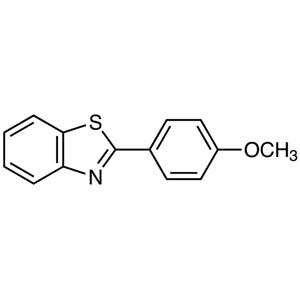
2-(4-Methoxyphenyl)benzothiazole TCI M1654
Regular price Rp 717.150,00Regular price -
2-(2-Hydroxyphenyl)benzoxazole TCI H0291
Regular price From Rp 505.050,00Regular price -
2-(2-Hydroxyphenyl)-1H-benzimidazole TCI H1736
Regular price From Rp 2.571.450,00Regular price -
2-Phenylbenzoxazole TCI P2264
Regular price From Rp 1.485.750,00Regular price -
2-Phenylbenzothiazole TCI P1130
Regular price Rp 2.837.100,00Regular price -
1,3-Benzothiazole-2-carbaldehyde TCI B5403
Regular price From Rp 1.458.450,00Regular price -
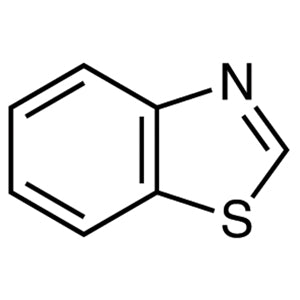
Benzothiazole TCI B0092
Regular price From Rp 689.850,00Regular price -
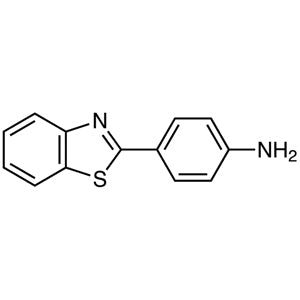
2-(4-Aminophenyl)benzothiazole TCI A2672
Regular price Rp 1.298.850,00Regular price