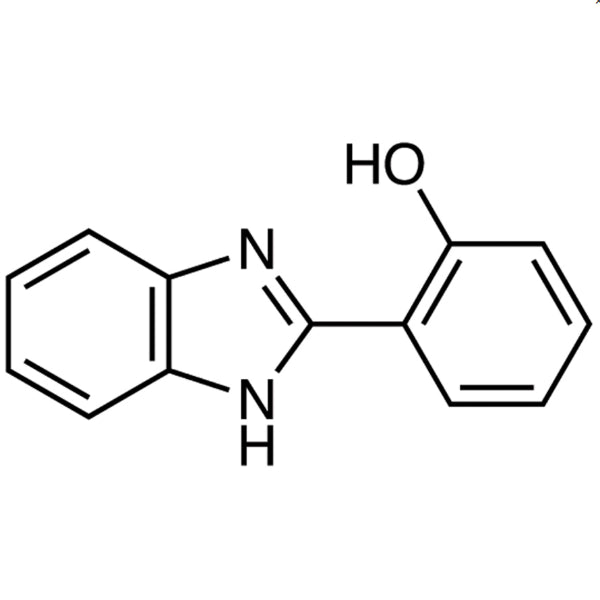
2-(2-Hydroxyphenyl)-1H-benzimidazole is a chemical compound widely used in laboratory settings for the synthesis of complex molecules. It belongs to the class of heterocyclic building blocks, making it a valuable tool in organic chemistry research. This compound is commonly found in aromatic and heterocyclic structures, playing a crucial role in the development of various chemical compounds. Its versatility allows it to be used in multiple applications, from pharmaceutical research to industrial chemical synthesis. Due to its stability and controlled reactivity, it is a preferred choice for chemists seeking to build complex molecular frameworks.
The compound’s unique structure, featuring a hydroxyl group and a benzimidazole ring, gives it reactivity that facilitates substitution reactions and functional group modifications. These properties make it highly suitable for chemical synthesis, especially in the creation of UV protectants and radiation-protective agents. Its ability to react with various functional groups enables the development of new compounds with tailored properties. This makes it an essential component in both academic and industrial research environments.
In Indonesian laboratories, 2-(2-Hydroxyphenyl)-1H-benzimidazole is frequently used in organic chemistry research, pharmaceutical development, and the synthesis of industrial compounds. Its availability in various packaging formats ensures easy access for researchers and institutions. The compound’s broad applications in chemical synthesis and its role in developing functional materials make it a key reagent in the Indonesian scientific community.
TCI brochures (PDF)
- Ligands 2025-12-01 · p. 11
Related TCI products
- TCI H0973 3411-95-8 2-(2-Hydroxyphenyl)benzothiazole
- TCI H0291 835-64-3 2-(2-Hydroxyphenyl)benzoxazole
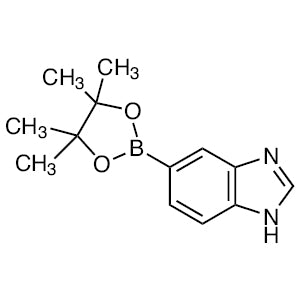
- TCI T3275 1007206-54-3 5-(4,4,5,5-Tetramethyl-1,3,2-dioxaborolan-2-yl)-1H-benzimidazole
- TCI B2812 2622-74-4 2-(4-Bromophenyl)benzimidazole
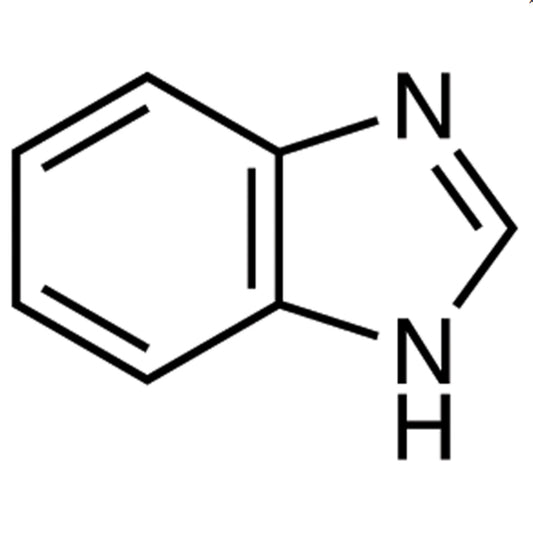
- TCI B0054 51-17-2 Benzimidazole
- TCI A2759 7621-86-5 5-Amino-2-(4-aminophenyl)benzimidazole
- Synthesis of radiation-protective compounds due to its ability to form stable molecular structures that absorb harmful radiation.
- Development of UV protection agents because of its aromatic and heterocyclic properties that enhance light absorption.
- Pharmaceutical research for creating active ingredients in drugs, as it can be modified to target specific biological functions.
- Industrial chemical synthesis for producing materials with functional properties, leveraging its reactivity and structural versatility.
- Organic chemistry experiments to build complex molecules, benefiting from its role as a heterocyclic building block.
| Brand | TCI |
|---|---|
| CAS number | 2963-66-8 |
| Molecular formula | — |
| Purity | — |
| Category | Chemistry > Building Blocks > Heterocyclic Building Blocks |
| Pack sizes | Available in various packaging formats for laboratory use |
| Physical form | Solid |
| Storage | Store in a cool, dry place away from direct sunlight |
This compound should be stored in a cool, dry environment, away from direct sunlight and sources of heat. It is recommended to use airtight containers to prevent moisture absorption and maintain its chemical integrity. Due to its reactivity, it should be handled with care, using appropriate personal protective equipment such as gloves and safety goggles. It is important to ensure proper ventilation in the laboratory to minimize exposure. The compound is generally stable under normal storage conditions but should be kept in a secure location to prevent accidental spills or contamination. Regular inspection of storage containers is advised to ensure they remain intact and suitable for long-term use.
—
Product Categories
Produk Terkait
-
2-(2-Hydroxyphenyl)benzothiazole TCI H0973
Regular price From Rp 903.000,00Regular price -
2-(2-Hydroxyphenyl)benzoxazole TCI H0291
Regular price From Rp 505.050,00Regular price -
5-(4,4,5,5-Tetramethyl-1,3,2-dioxaborolan-2-yl)-1H-benzimidazole TCI T3275
Regular price Rp 2.121.000,00Regular price -
2-(4-Bromophenyl)benzimidazole TCI B2812
Regular price From Rp 1.961.400,00Regular price -
Benzimidazole TCI B0054
Regular price From Rp 875.700,00Regular price -
5-Amino-2-(4-aminophenyl)benzimidazole TCI A2759
Regular price From Rp 2.094.750,00Regular price -
2-(2-Pyridyl)benzimidazole TCI P1599
Regular price Rp 1.829.100,00Regular price -
MethylBenzimidazole-5-carboxylate TCI M2582
Regular price Rp 2.174.550,00Regular price