2-(2-Pyridyl)benzimidazole from TCI (product code P1599) is a heterocyclic compound that joins a benzimidazole ring and a pyridine ring in one molecular framework. Its two nitrogen atoms sit in the right positions to bind a metal ion in a bidentate fashion. For this reason the compound is best known as a ligand in coordination chemistry. It is also used as a heterocyclic building block for making more complex molecules in medicinal chemistry and functional materials research.
The main appeal of this compound is its N,N-chelating ability. This is similar to bipyridine ligands, but the benzimidazole ring adds an N-H group that can be deprotonated or alkylated. That flexibility lets researchers tune the electronic and steric properties of the metal complexes they make. The conjugated aromatic framework also gives the molecule useful optical properties, so its metal complexes are often studied for luminescence, photochemistry, and catalysis. The rigid structure also helps the complexes it forms stay stable.
In Indonesian laboratories, this compound suits research groups in inorganic chemistry, coordination chemistry, and materials science at universities that are developing new metal complexes. Graduate students and lecturers working on luminescent materials, photoactive compounds, or homogeneous catalysts can use it as a dependable starting ligand. Synthetic chemistry groups can also use it as a heterocyclic scaffold in multistep synthesis. Having a consistent, well-characterized reagent from an established brand like TCI helps research teams get reproducible results across experiments.
Related TCI products
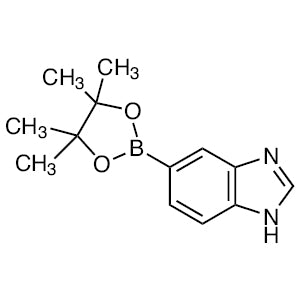
- TCI T3275 1007206-54-3 5-(4,4,5,5-Tetramethyl-1,3,2-dioxaborolan-2-yl)-1H-benzimidazole
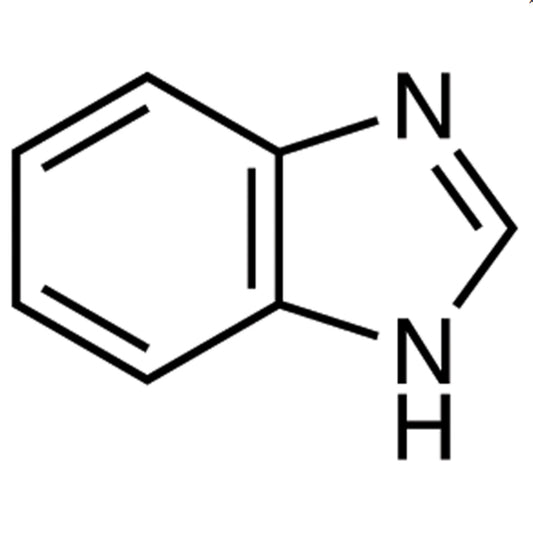
- TCI B0054 51-17-2 Benzimidazole
- TCI M2582 26663-77-4 Methyl Benzimidazole-5-carboxylate
- TCI M0438 7152-24-1 2-(Methylthio)benzimidazole
- TCI H1736 2963-66-8 2-(2-Hydroxyphenyl)-1H-benzimidazole
- TCI H1229 4856-97-7 2-(Hydroxymethyl)benzimidazole
- Coordination chemistry ligand synthesis: its bidentate N,N-chelating site binds metal ions much like bipyridine, making it a practical ligand for preparing and studying new transition-metal complexes.
- Luminescent material research: its conjugated aromatic framework gives metal complexes useful optical properties, which makes it a good candidate for studying emissive and light-responsive compounds.
- Photochemistry studies: complexes built from this ligand are often studied for photochemical behaviour, so it suits research groups that look at light absorption and excited-state processes.
- Catalysis development: researchers can deprotonate or alkylate the benzimidazole N-H group to tune the electronic and steric environment around a metal centre and adjust catalytic performance.
- Heterocyclic building block for synthesis: its combined benzimidazole and pyridine framework is a useful starting point for building more complex molecules in medicinal chemistry and functional materials research.
| Brand | TCI (product code P1599) |
|---|---|
| CAS number | 1137-68-4 |
| Molecular formula | — |
| Purity | — |
| Category | Chemistry > Building Blocks > Heterocyclic Building Blocks |
| Pack sizes | available in standard TCI pack sizes; please contact AMI Scientific for current options |
| Physical form | solid; refer to the product label and certificate of analysis for details |
| Storage | keep tightly closed in a cool, dry place, following the manufacturer's recommendations |
Store 2-(2-Pyridyl)benzimidazole in its original, tightly sealed container in a cool, dry, well-ventilated area, away from direct sunlight, moisture, and strong oxidizing agents. If you transfer the material to another container, use a clean, dry glass or chemically compatible bottle with a secure cap, and label it clearly. Handle the compound in a fume hood or well-ventilated area. Wear standard personal protective equipment, including a lab coat, safety glasses, and nitrile gloves. Avoid creating or breathing in dust, and avoid contact with skin and eyes. Always check the Safety Data Sheet (SDS) supplied by the manufacturer for specific hazard information, first-aid measures, and disposal requirements before use.
—
Produk Terkait
-
5-(4,4,5,5-Tetramethyl-1,3,2-dioxaborolan-2-yl)-1H-benzimidazole TCI T3275
Regular price Rp 2.121.000,00Regular price -
Benzimidazole TCI B0054
Regular price From Rp 875.700,00Regular price -
MethylBenzimidazole-5-carboxylate TCI M2582
Regular price Rp 2.174.550,00Regular price -
2-(Methylthio)benzimidazole TCI M0438
Regular price From Rp 1.829.100,00Regular price -
2-(2-Hydroxyphenyl)-1H-benzimidazole TCI H1736
Regular price From Rp 2.571.450,00Regular price -
2-(Hydroxymethyl)benzimidazole TCI H1229
Regular price Rp 1.803.900,00Regular price -
2-(3-Hydroxypropyl)benzimidazole TCI H0988
Regular price Rp 1.298.850,00Regular price -
2-Ethyl-1H-benzimidazole TCI E1358
Regular price From Rp 2.332.050,00Regular price