2-Ethyl-1H-benzimidazole is a chemical compound widely used as a building block in various laboratory applications, particularly in the synthesis of heterocyclic compounds. This compound plays a crucial role in organic chemistry due to its ability to participate in a wide range of chemical reactions. Its molecular structure features an imidazole ring extended by an ethyl group, making it a versatile intermediate in the development of pharmaceuticals, industrial chemicals, and other complex organic molecules. Its presence in research settings highlights its importance in advancing chemical innovation.
The compound is known for its chemical stability under specific conditions, which makes it a preferred choice for synthetic processes requiring controlled reactivity. It exhibits reactivity towards various chemical conditions, including high temperatures, catalysts, and organic solvents, which allows it to be used in diverse reaction mechanisms. Its resistance to degradation ensures that it maintains its structural integrity during prolonged use, making it ideal for applications where molecular stability is essential. Additionally, its ability to form bonds with functional groups enhances its utility in the synthesis of complex molecules.
In Indonesian laboratories, 2-Ethyl-1H-benzimidazole is commonly used in organic chemistry research, especially in the development of new compounds and the study of reaction mechanisms. Its availability and chemical versatility make it a valuable resource for researchers working on drug discovery, material science, and chemical synthesis. Its role in supporting scientific innovation is well recognized in the Indonesian scientific community.
Related TCI products
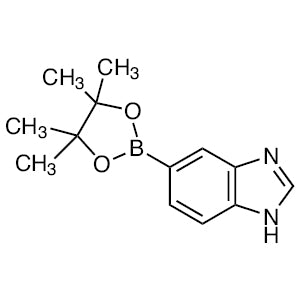
- TCI T3275 1007206-54-3 5-(4,4,5,5-Tetramethyl-1,3,2-dioxaborolan-2-yl)-1H-benzimidazole
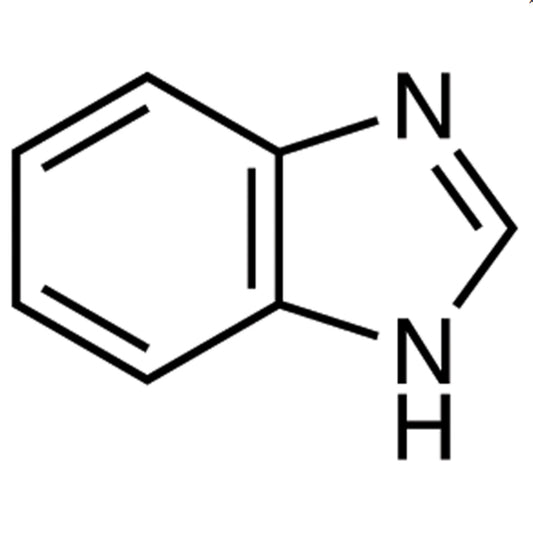
- TCI B0054 51-17-2 Benzimidazole
- TCI P1599 1137-68-4 2-(2-Pyridyl)benzimidazole
- TCI M2582 26663-77-4 Methyl Benzimidazole-5-carboxylate
- TCI M0438 7152-24-1 2-(Methylthio)benzimidazole
- TCI H1736 2963-66-8 2-(2-Hydroxyphenyl)-1H-benzimidazole
- Used in organic synthesis for the creation of heterocyclic compounds due to its reactive imidazole ring structure.
- Applied in pharmaceutical research for the development of new drugs and medicinal compounds.
- Utilized in industrial chemistry for the production of specialty chemicals and polymers.
- Employed in electrochemical studies to investigate reaction mechanisms and reactivity under different conditions.
- Integrated into material science research for the synthesis of advanced organic materials and functional polymers.
| Brand | TCI |
|---|---|
| CAS number | 1848-84-6 |
| Molecular formula | — |
| Purity | — |
| Category | Chemistry > Building Blocks > Heterocyclic Building Blocks |
| Pack sizes | Available in various quantities as per supplier specifications |
| Physical form | Solid |
| Storage | Store in a cool, dry place away from direct sunlight |
This compound should be stored in a cool, dry environment, away from direct sunlight and sources of heat. It is recommended to use airtight containers to prevent moisture absorption and contamination. Due to its reactivity, it should be handled with care, using appropriate personal protective equipment such as gloves and safety goggles. It is important to ensure proper ventilation when working with this compound to minimize exposure. Storage conditions should be maintained to preserve its chemical stability and ensure safe handling in laboratory settings. Always follow standard laboratory safety protocols when working with reactive chemical compounds.
—
Produk Terkait
-
5-(4,4,5,5-Tetramethyl-1,3,2-dioxaborolan-2-yl)-1H-benzimidazole TCI T3275
Regular price Rp 2.121.000,00Regular price -
Benzimidazole TCI B0054
Regular price From Rp 875.700,00Regular price -
2-(2-Pyridyl)benzimidazole TCI P1599
Regular price Rp 1.829.100,00Regular price -
MethylBenzimidazole-5-carboxylate TCI M2582
Regular price Rp 2.174.550,00Regular price -
2-(Methylthio)benzimidazole TCI M0438
Regular price From Rp 1.829.100,00Regular price -
2-(2-Hydroxyphenyl)-1H-benzimidazole TCI H1736
Regular price From Rp 2.571.450,00Regular price -
2-(Hydroxymethyl)benzimidazole TCI H1229
Regular price Rp 1.803.900,00Regular price -
2-(3-Hydroxypropyl)benzimidazole TCI H0988
Regular price Rp 1.298.850,00Regular price