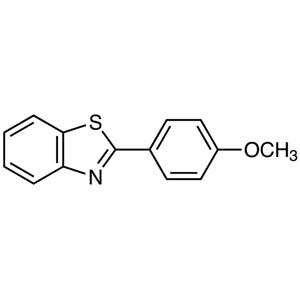
2-Phenylbenzoxazole is a chemical compound widely used as a building block in the synthesis of heterocyclic compounds. It plays a crucial role in laboratories where researchers are engaged in organic chemistry, pharmacology, and materials science. This compound is valued for its structural complexity and its ability to participate in various chemical reactions, making it an essential component in the development of new pharmaceuticals and functional materials. Its versatility allows it to be integrated into a wide range of synthetic pathways, supporting the creation of molecules with specific biological activities.
The chemical properties of 2-Phenylbenzoxazole make it a preferred choice for laboratory use. It exhibits stability and controlled reactivity, which are essential for successful chemical reactions. The compound’s ability to undergo substitution and condensation reactions with other substances enhances its utility in synthetic chemistry. Its molecular structure, consisting of a benzoxazole ring and a phenyl group, contributes to its unique reactivity and stability. These characteristics make it a reliable and efficient reagent for various chemical processes.
In Indonesian laboratories, 2-Phenylbenzoxazole is commonly used in organic chemistry and pharmacology research. It is frequently found in projects aimed at developing new drugs and materials. Its availability and reliability make it a popular choice among researchers. The compound’s role in creating complex molecules with specific functions highlights its importance in scientific studies. Its consistent performance in laboratory settings ensures that it remains a key component in many research applications.
TCI brochures (PDF)
- Ligands 2025-12-01 · p. 10
- Organic synthesis projects benefit from 2-Phenylbenzoxazole due to its ability to participate in substitution and condensation reactions, enabling the creation of complex heterocyclic structures.
- Pharmacological research utilizes this compound to develop molecules with specific biological activities, as its structural features allow for the design of drug candidates with targeted effects.
- Materials science applications leverage the compound’s stability and reactivity to synthesize functional materials with unique properties, such as enhanced conductivity or optical characteristics.
- Chemical research initiatives incorporate 2-Phenylbenzoxazole to explore new synthetic pathways and reaction mechanisms, contributing to the advancement of chemical knowledge.
- Analytical chemistry studies use the compound as a reference standard to evaluate the performance of analytical techniques and ensure the accuracy of chemical analyses.
| Brand | TCI |
|---|---|
| CAS number | 833-50-1 |
| Molecular formula | — |
| Purity | — |
| Category | Chemistry > Building Blocks > Heterocyclic Building Blocks |
| Pack sizes | Available in various quantities as per supplier specifications |
| Physical form | Solid |
| Storage | Store in a cool, dry place away from direct sunlight |
2-Phenylbenzoxazole should be stored in a cool, dry environment to maintain its chemical stability. It is recommended to keep the compound in a sealed container to prevent moisture absorption and contamination. The substance should be stored away from direct sunlight and sources of heat to avoid degradation. In laboratory settings, it is important to handle the compound with appropriate personal protective equipment, such as gloves and safety goggles. Proper ventilation should be maintained when working with the material to ensure a safe working environment. Regular monitoring of storage conditions is essential to preserve the integrity of the compound for research applications.
—
Product Categories
Produk Terkait
-
2-(2-Hydroxyphenyl)benzoxazole TCI H0291
Regular price From Rp 505.050,00Regular price -
2-Phenylbenzothiazole TCI P1130
Regular price Rp 2.837.100,00Regular price -
2-(4-Methoxyphenyl)benzothiazole TCI M1654
Regular price Rp 717.150,00Regular price -
2-(2-Hydroxyphenyl)benzothiazole TCI H0973
Regular price From Rp 903.000,00Regular price -
2-(2-Pyridyl)benzoxazole TCI P2098
Regular price Rp 1.431.150,00Regular price -
2-Phenylbenzimidazole TCI P1105
Regular price Rp 848.400,00Regular price -
5-Phenylbenzoxazole-2-thiol TCI P2011
Regular price Rp 1.378.650,00Regular price -
2-Methyl-5-phenylbenzoxazole TCI M1244
Regular price Rp 1.298.850,00Regular price