2-Methyl-5-phenylbenzoxazole is a chemical compound classified under heterocyclic building blocks, commonly used as a foundational material in the synthesis of complex compounds. This compound plays a crucial role in laboratory settings where the development of pharmaceuticals, industrial chemicals, and organic products is required. Its unique molecular structure, featuring a benzoxazole ring substituted with phenyl and methyl groups, allows for versatile chemical reactions and functional group modifications. Due to its stability and controlled reactivity, it is widely chosen for applications that demand precision and reproducibility in chemical synthesis.
The compound’s chemical properties make it a preferred choice for researchers seeking reliable and consistent results. It exhibits resistance to certain chemical reactions, ensuring stability during various synthetic processes. Its ability to participate in substitution, condensation, and catalytic reactions enhances its utility in diverse chemical transformations. Additionally, its non-volatile nature and resistance to degradation contribute to its suitability for long-term storage and use in controlled environments. These characteristics ensure that it remains a valuable component in both academic and industrial research.
In Indonesian laboratories, 2-Methyl-5-phenylbenzoxazole is commonly used in pharmaceutical and organic chemistry research. Its role in synthesizing complex molecules makes it essential for drug development and chemical innovation. Researchers in Indonesia rely on this compound for its predictable behavior and compatibility with a wide range of chemical processes. Its application spans various scientific fields, supporting advancements in chemical sciences and industrial applications.
- Pharmaceutical research utilizes this compound for the synthesis of bioactive molecules due to its structural versatility and reactivity.
- Organic chemistry experiments benefit from its ability to participate in multiple reaction types, enhancing synthetic pathway flexibility.
- Industrial chemical production relies on its stability and controlled reactivity for the creation of complex chemical intermediates.
- Drug development projects incorporate it as a building block for the design of novel therapeutic agents with targeted molecular structures.
- Analytical chemistry applications use it as a reference standard for the identification and quantification of heterocyclic compounds.
| Brand | TCI |
|---|---|
| CAS number | 61931-68-8 |
| Molecular formula | — |
| Purity | — |
| Category | Chemistry > Building Blocks > Heterocyclic Building Blocks |
| Pack sizes | Available in various quantities as per supplier specifications |
| Physical form | Solid, crystalline appearance |
| Storage | Store in a cool, dry, and well-ventilated area away from light |
This compound should be stored in a cool, dry, and well-ventilated area, away from direct light and sources of heat. It is recommended to use airtight containers made of glass or inert plastic to prevent contamination and maintain purity. Due to its chemical stability, it does not require refrigeration but should be protected from moisture and air exposure. Laboratory personnel should handle it with appropriate personal protective equipment, such as gloves and safety goggles, to ensure safe handling. It is important to store it separately from incompatible substances to prevent any potential chemical interactions. Regular inspection of storage conditions ensures the compound remains in optimal condition for use in research applications.
—
Produk Terkait
-
2-Phenylbenzoxazole TCI P2264
Regular price From Rp 1.485.750,00Regular price -
5-Phenylbenzoxazole-2-thiol TCI P2011
Regular price Rp 1.378.650,00Regular price -
2,5,6-Trimethylbenzoxazole TCI T1845
Regular price Rp 1.644.300,00Regular price -
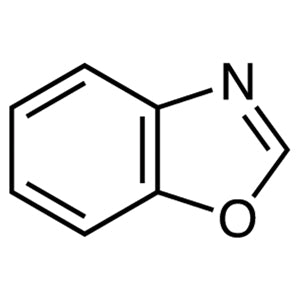
Benzoxazole TCI B0095
Regular price Rp 1.829.100,00Regular price -
2-(2-Pyridyl)benzoxazole TCI P2098
Regular price Rp 1.431.150,00Regular price -
6-Methyl-1,3-benzoxazole-2(3H)-thione TCI M3063
Regular price From Rp 1.856.400,00Regular price -
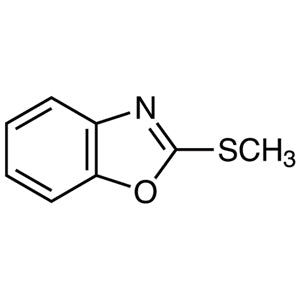
2-(Methylthio)benzoxazole TCI M2454
Regular price From Rp 1.431.150,00Regular price -
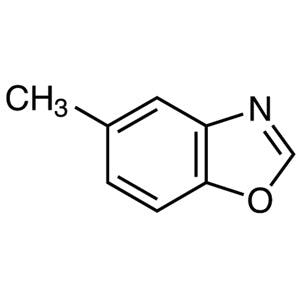
5-Methylbenzoxazole TCI M1688
Regular price From Rp 4.028.850,00Regular price