


TCI H1255, CAS 42711-75-1, is 3-Hydroxy-1-adamantanecarboxylic Acid, a non-heterocyclic building block constructed on the adamantane framework. Adamantane is a polycyclic hydrocarbon whose carbon atoms are arranged in the same pattern as a diamond lattice unit, producing a cage-shaped structure that is exceptionally rigid, symmetrical, and spatially bulky. This compound carries a carboxylic acid group and a hydroxyl group at two different bridgehead positions, providing two points of functionalisation on a skeleton that undergoes virtually no conformational change during a synthetic sequence.
These characteristics are precisely why adamantane compounds are so sought after in medicinal chemistry. The cage framework is strongly lipophilic and resistant to oxidative metabolism, so its presence within a drug structure frequently extends half-life and improves the ability of a molecule to cross biological membranes. The complete rigidity of the skeleton eliminates the entropic penalty that a flexible molecule pays when binding to a protein target, which translates into improved affinity. The bridgehead hydroxyl group adds a measure of polarity to balance the lipophilicity, while the carboxylic acid supplies a conventional amide coupling handle.
In Indonesian laboratories, this building block is typically used in university and institutional synthetic chemistry groups, in pharmaceutical research units developing new active compounds, and in analytical laboratories preparing reference materials. It is ordinarily handled in multi-step synthesis workflows where the acid function is coupled to an amine partner, then characterised by standard spectroscopic methods. As an imported specialty reagent, it is generally ordered in research-scale quantities and stored centrally within a departmental chemical store.
- Medicinal chemistry scaffold construction: the rigid adamantane cage is introduced into candidate drug molecules to raise lipophilicity and resist oxidative metabolism, thereby extending circulating half-life.
- Amide coupling and library synthesis: the bridgehead carboxylic acid provides a conventional handle for peptide-type coupling reagents, allowing rapid preparation of analogue series from a single common core.
- Conformational restriction studies: because the cage skeleton is fully rigid, chemists use it to lock binding geometry and reduce the entropic penalty a flexible ligand pays on protein binding.
- Membrane permeability optimisation: the highly lipophilic cage is added to polar lead compounds when a research programme needs improved passage across biological membranes without altering the core pharmacophore.
- Bifunctional linker chemistry: the hydroxyl and carboxylic acid groups sit at separate bridgehead positions, letting researchers functionalise each end selectively to build spatially defined linkers and conjugates.
| Brand | TCI (Tokyo Chemical Industry) |
|---|---|
| CAS number | 42711-75-1 |
| Molecular formula | — |
| Purity | — |
| Category | Chemistry > Building Blocks > Non-Heterocyclic Building Blocks |
| Pack sizes | available in standard research-scale catalogue pack sizes; please confirm the currently listed options when ordering |
| Physical form | — |
| Storage | store in a tightly closed container in a cool, dry place away from light |
- Chemical Name: 3-Hydroxy-1-adamantanecarboxylic Acid
- Product Code: H1255
Keep the container tightly closed in a cool, dry, and well-ventilated location, away from direct sunlight and sources of ignition. The original manufacturer bottle is the preferred container; if transfer is required, use clean amber glass with a chemically resistant closure, and label it clearly with the compound name and CAS number. Handle the solid inside a fume hood to avoid inhaling dust, and wear safety goggles, nitrile gloves, and a laboratory coat. Avoid contact with skin and eyes, and keep the material separated from strong oxidising agents and strong bases. Always consult the manufacturer's Safety Data Sheet before first use, and dispose of residues through the institution's chemical waste channel.
—
Produk Terkait
-
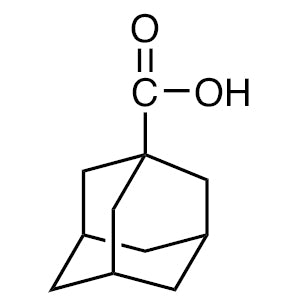
1-AdamantanecarboxylicAcid(purifiedbysublimation) TCI A3391
Regular price From Rp 1.035.300,00Regular price -
1-AdamantanecarboxylicAcid TCI A0742
Regular price From Rp 1.378.650,00Regular price -
4-Oxo-1-adamantanecarboxylicAcid TCI O0369
Regular price Rp 2.254.350,00Regular price -
Ethyl1-Adamantanecarboxylate TCI A0722
Regular price From Rp 2.227.050,00Regular price -
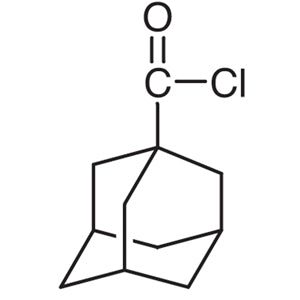
1-AdamantanecarbonylChloride TCI A0717
Regular price From Rp 928.200,00Regular price -
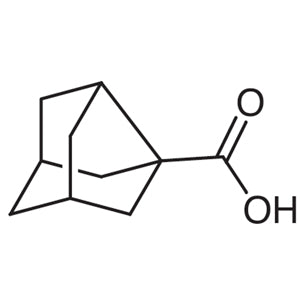
3-NoradamantanecarboxylicAcid TCI N0621
Regular price Rp 2.491.650,00Regular price -
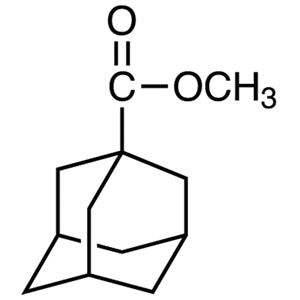
Methyl1-Adamantanecarboxylate TCI M2119
Regular price From Rp 2.677.500,00Regular price -
N,N'-[(Perfluoropropane-2,2-diyl)bis(6-hydroxy-3,1-phenylene)]bis(1,3-dioxo-1,3-dihydroisobenzofuran-5-carboxamide) TCI T4007
Regular price From Rp 1.776.600,00Regular price


![223255-30-9 N,N'-[(Perfluoropropane-2,2-diyl)bis(6-hydroxy-3,1-phenylene)]bis(1,3-dioxo-1,3-dihydroisobenzofuran-5-carboxamide) - AMI Scientific](http://amiscientific.com/cdn/shop/files/TCI2510T4007.jpg?v=1767144592&width=533)