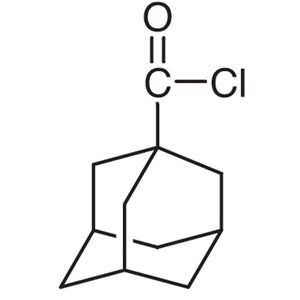
1-Adamantanecarbonyl Chloride is a chemical compound widely used in organic reactions to construct complex molecular structures. It serves as a key building block in the synthesis of both heterocyclic and non-heterocyclic compounds. This reagent is commonly found in chemical laboratories as a foundational material for creating new compounds with specific functional groups. Its versatility makes it an essential tool for researchers aiming to develop compounds with applications in pharmaceuticals, materials science, and organic chemistry.
The compound’s high reactivity and ability to form bonds with various functional groups make it a preferred choice in synthetic chemistry. Its stability under certain conditions allows for ease of handling and storage, which is critical in laboratory environments. The compound’s unique structure enables it to participate in substitution reactions and carbon-carbon bond formation, making it indispensable in the creation of complex organic molecules. These properties contribute to its widespread use in both academic and industrial research settings.
In Indonesian laboratories, 1-Adamantanecarbonyl Chloride is extensively used in organic chemistry research, particularly in educational institutions and research organizations focused on compound development. Its specific characteristics make it ideal for applications requiring precision and accuracy in synthesis. Researchers rely on this compound for its reliability and effectiveness in producing compounds with targeted properties and applications.
Related TCI products
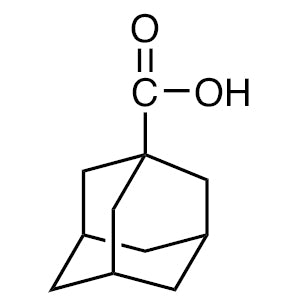
- TCI A3391 828-51-3 1-Adamantanecarboxylic Acid (purified by sublimation)
- TCI A0742 828-51-3 1-Adamantanecarboxylic Acid
- TCI A0722 2094-73-7 Ethyl 1-Adamantanecarboxylate
- TCI O0369 56674-87-4 4-Oxo-1-adamantanecarboxylic Acid
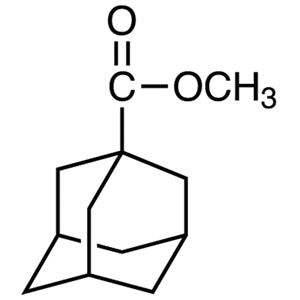
- TCI M2119 711-01-3 Methyl 1-Adamantanecarboxylate
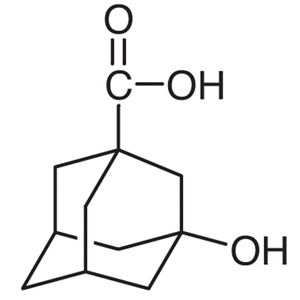
- TCI H1255 42711-75-1 3-Hydroxy-1-adamantanecarboxylic Acid
- Organic synthesis for creating complex molecular structures due to its reactivity and versatility in forming new compounds.
- Development of pharmaceutical compounds as a building block for drug synthesis and functional group modification.
- Material science research for synthesizing polymers and advanced materials with specific chemical properties.
- Academic teaching and research in chemistry laboratories for demonstrating reaction mechanisms and synthetic pathways.
- Industrial chemical production for manufacturing specialty chemicals and intermediates in various industries.
| Brand | TCI |
|---|---|
| CAS number | 2094-72-6 |
| Molecular formula | — |
| Purity | — |
| Category | Chemistry > Building Blocks > Non-Heterocyclic Building Blocks |
| Pack sizes | Available in various quantities as per standard laboratory supply formats |
| Physical form | Liquid or solid, depending on the specific product variant |
| Storage | Store in a cool, dry place away from moisture and direct sunlight |
This compound should be stored in a cool, dry environment, away from moisture and direct sunlight to maintain its stability and reactivity. It is recommended to use airtight containers made of materials compatible with its chemical nature to prevent contamination and degradation. Laboratory personnel should handle the compound with appropriate personal protective equipment, including gloves and safety goggles, to ensure safety during use. Due to its reactivity, it should be stored separately from incompatible substances to avoid unwanted chemical interactions. Proper labeling and storage conditions are essential to ensure safe handling and long-term usability in research settings.
—
Produk Terkait
-
1-AdamantanecarboxylicAcid(purifiedbysublimation) TCI A3391
Regular price From Rp 1.035.300,00Regular price -
1-AdamantanecarboxylicAcid TCI A0742
Regular price From Rp 1.378.650,00Regular price -
Ethyl1-Adamantanecarboxylate TCI A0722
Regular price From Rp 2.227.050,00Regular price -
4-Oxo-1-adamantanecarboxylicAcid TCI O0369
Regular price Rp 2.254.350,00Regular price -
Methyl1-Adamantanecarboxylate TCI M2119
Regular price From Rp 2.677.500,00Regular price -
3-Hydroxy-1-adamantanecarboxylicAcid TCI H1255
Regular price From Rp 1.193.850,00Regular price -
CyclohexanecarbonylChloride TCI C0685
Regular price From Rp 1.220.100,00Regular price -
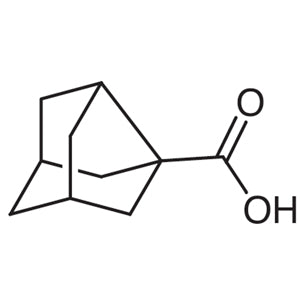
3-NoradamantanecarboxylicAcid TCI N0621
Regular price Rp 2.491.650,00Regular price