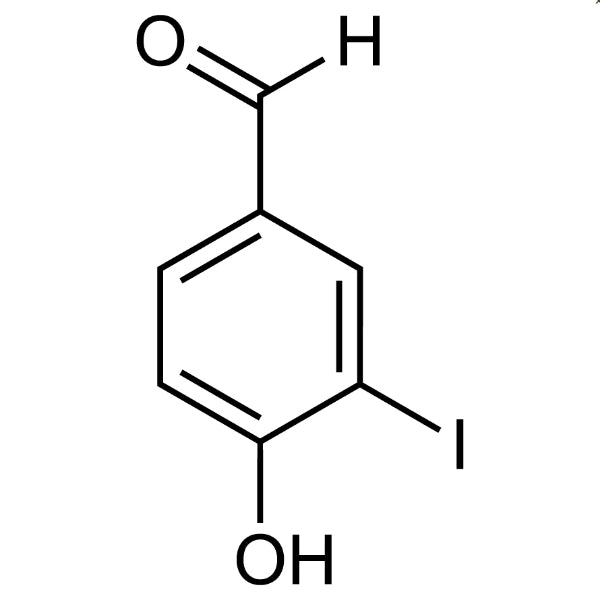
TCI H1960 4-Hydroxy-3-iodobenzaldehyde is an aromatic intermediate that combines three useful functional groups on a single benzene ring: a phenolic hydroxyl group, an iodine atom, and an aldehyde group. This arrangement makes it one of the most frequently relied upon building blocks in directed organic synthesis, because each of the three groups can be addressed with different reagents and reaction conditions, allowing molecules to be constructed step by step under controlled conditions. Medicinal chemistry laboratories, synthetic organic chemistry groups, and fluorescent probe research programmes all make extensive use of compounds of this type.
The advantage of this compound lies in the orthogonal reactivity of its three functional groups. The aromatic carbon-iodine bond is an ideal partner for Suzuki, Sonogashira, and Heck cross-coupling reactions as well as Buchwald-Hartwig amination, and the iodide reacts more readily than the corresponding bromide or chloride under the same catalytic conditions. The aldehyde group is ready to be condensed with amines to form Schiff bases, reduced to the benzylic alcohol, oxidised to the acid, or employed in Wittig and Knoevenagel reactions. The phenolic hydroxyl group, positioned para to the aldehyde, contributes electron-donating character to the ring.
In Indonesian laboratories this material is typically found in university research groups, pharmaceutical development laboratories, and institutional research centres working on multi-step synthesis. It is used at research and small preparative scale rather than in bulk production, supporting thesis and dissertation work, method development, and the preparation of intermediates that are later carried forward into more elaborate target molecules. Its versatility means a single container often serves several unrelated synthetic projects within the same laboratory.
- Palladium-catalysed cross-coupling chemistry: the aromatic carbon-iodine bond undergoes oxidative addition more readily than bromide or chloride analogues, giving reliable conversion in Suzuki, Sonogashira, and Heck reactions under mild catalytic conditions.
- Schiff base and imine synthesis: the free aldehyde condenses directly with primary amines and hydrazines, providing a straightforward route to imine ligands, hydrazones, and nitrogen-containing scaffolds for coordination and medicinal chemistry studies.
- Fluorescent probe development: the combination of an electron-donating phenolic hydroxyl group and a reactive aldehyde handle allows researchers to assemble push-pull chromophores and sensor molecules through sequential, well-controlled functionalisation steps.
- Buchwald-Hartwig amination studies: the iodinated position serves as a dependable electrophilic partner for carbon-nitrogen bond formation, letting research groups install varied amine substituents while the phenol and aldehyde remain available for later transformation.
- Multi-step medicinal chemistry intermediates: three orthogonally reactive groups on one ring let chemists build complex target molecules in a planned sequence, addressing each site separately without protecting or sacrificing the others.
| Brand | TCI (Tokyo Chemical Industry) |
|---|---|
| CAS number | 60032-63-5 |
| Molecular formula | — |
| Purity | — |
| Category | Chemistry > Building Blocks > Non-Heterocyclic Building Blocks |
| Pack sizes | available in standard TCI research-scale packaging; please confirm the currently available pack size when ordering |
| Physical form | — |
| Storage | store in a cool, dry place in the original tightly closed container |
- Chemical name: 4-Hydroxy-3-iodobenzaldehyde
- Catalogue code: H1960
Store the container in a cool, dry, well-ventilated area away from direct sunlight, heat sources, and strong oxidising agents. Keep the original supplier container tightly closed when not in use, as both the phenolic and aldehyde functional groups are susceptible to slow oxidation on prolonged exposure to air and moisture. Transfer the material inside a fume hood using clean, dry glass or chemically compatible plastic spatulas and vessels, and reseal promptly after weighing. Laboratory personnel should wear safety glasses, nitrile gloves, and a laboratory coat, and should avoid inhaling dust or allowing skin contact. Always consult the manufacturer's safety data sheet before first use, and dispose of residues and contaminated materials through the laboratory's designated chemical waste stream in accordance with institutional procedures.
—
Product Categories
- Building BlocksNon-Heterocyclic Building BlocksCarbonyl Compounds [Non-Heterocyclic Building Blocks]
- Building BlocksNon-Heterocyclic Building BlocksHalogenated Hydrocarbons (Fluorides expected) [Non-Heterocyclic Building Blocks]
- Building BlocksNon-Heterocyclic Building BlocksOxygen Compounds [Non-Heterocyclic Building Blocks]
Produk Terkait
-
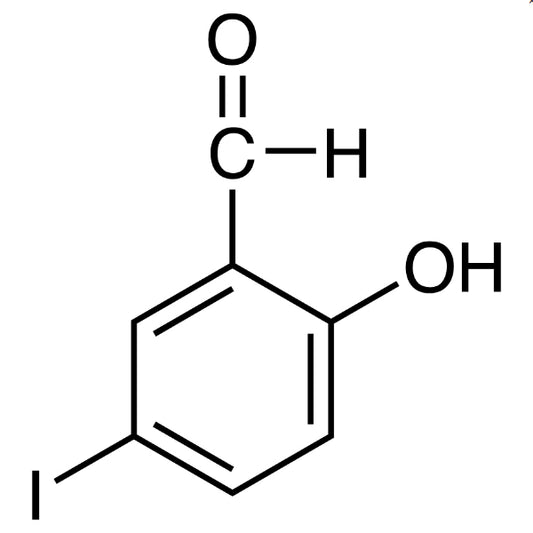
2-Hydroxy-5-iodobenzaldehyde TCI I1175
Regular price From Rp 903.000,00Regular price -
3-Hydroxy-2,4,6-triiodobenzaldehyde TCI H1944
Regular price From Rp 2.889.600,00Regular price -
4-Hydroxy-3,5-diiodobenzaldehyde TCI H1539
Regular price From Rp 2.650.200,00Regular price -
4-Iodobenzaldehyde TCI I0612
Regular price From Rp 1.431.150,00Regular price -
3-Iodobenzaldehyde TCI I0611
Regular price From Rp 3.419.850,00Regular price -
2-Iodobenzaldehyde TCI I0610
Regular price From Rp 2.491.650,00Regular price -
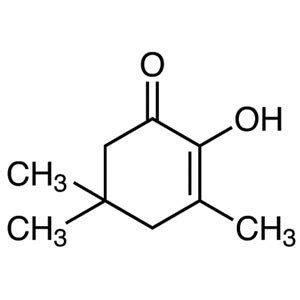
2-Hydroxy-3,5,5-trimethyl-2-cyclohexen-1-one TCI T2723
Regular price Rp 1.273.650,00Regular price -
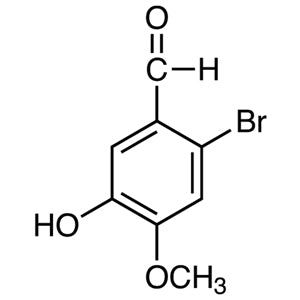
2-Bromo-5-hydroxy-4-methoxybenzaldehyde TCI B4681
Regular price Rp 4.293.450,00Regular price