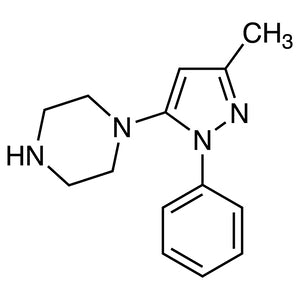
TCI M3838 is 1-(3-Methyl-1-phenyl-1H-pyrazol-5-yl)piperazine, a heterocyclic building block that unites two structural motifs which appear very frequently in medicinal chemistry: a substituted pyrazole ring and a piperazine ring. In this molecule, the piperazine group is bonded directly to position five of the pyrazole ring, which itself carries a methyl substituent at position three and a phenyl group on the first nitrogen atom. In the synthetic laboratory, this compound serves as a ready-made core scaffold that saves several synthetic steps when researchers set out to build libraries of drug candidate compounds.
The characteristic that makes this material valuable is the free secondary nitrogen atom on the piperazine ring, which acts as a highly versatile point of attachment for acylation, sulfonylation, reductive alkylation, Buchwald–Hartwig arylation, and the formation of ureas and carbamates. The piperazine ring is also known to improve aqueous solubility and to provide a basic centre that can be protonated, two factors that often determine the pharmacokinetic behaviour of test compounds. The pyrazole scaffold, meanwhile, contributes conformational rigidity, metabolic resistance, and hydrogen bond acceptor capability, while the phenyl group adds an aromatic surface to the framework.
In Indonesian laboratories, a building block of this type is normally used by synthetic and medicinal chemistry groups in universities, research institutes, and contract research units that prepare analogue series for screening. Because the scaffold arrives already assembled, working groups with limited synthetic capacity can move directly to the derivatisation step rather than constructing the pyrazole–piperazine core themselves, which shortens project timelines and reduces the number of intermediate purifications required.
Related TCI products
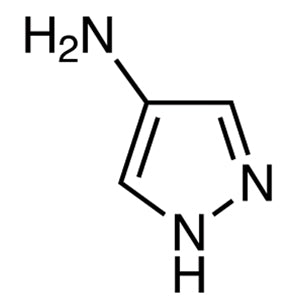
- TCI P2523 28466-26-4 1H-Pyrazol-4-amine
- TCI B5002 877399-74-1 tert-Butyl 4-[4-(4,4,5,5-Tetramethyl-1,3,2-dioxaborolan-2-yl)pyrazol-1-yl]piperidine-1-carboxylate
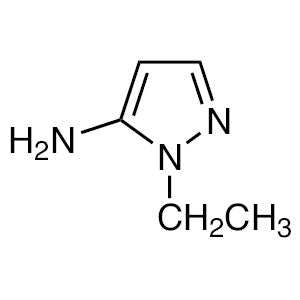
- TCI A3482 3528-58-3 1-Ethyl-1H-pyrazol-5-amine
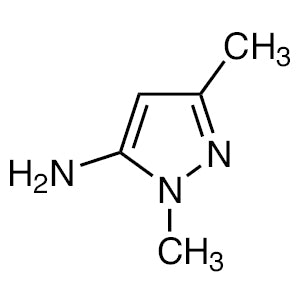
- TCI A3464 3524-32-1 1,3-Dimethyl-1H-pyrazol-5-amine
- TCI A2548 129-56-6 Anthra[1,9-cd]pyrazol-6(2H)-one
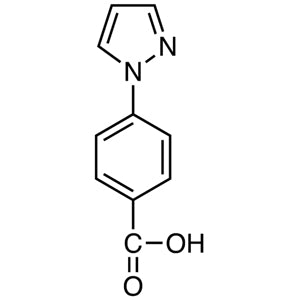
- TCI P2499 16209-00-0 4-(1H-Pyrazol-1-yl)benzoic Acid
- Medicinal chemistry library synthesis: the free piperazine nitrogen allows rapid parallel derivatisation, so a single scaffold charge can generate many analogues for structure–activity relationship studies without redesigning the core.
- Acylation and sulfonylation chemistry: the secondary amine reacts cleanly with acid chlorides, anhydrides, and sulfonyl chlorides, making it a dependable starting point for amide and sulfonamide analogue series.
- Reductive alkylation studies: chemists condense the piperazine nitrogen with aldehydes or ketones and reduce the intermediate, introducing varied side chains while keeping the pyrazole core intact throughout.
- Buchwald–Hartwig and related cross-coupling work: the compound serves as the amine partner for palladium-catalysed carbon–nitrogen bond formation, giving access to arylated piperazine derivatives from a single common intermediate.
- Urea and carbamate formation: reaction with isocyanates or chloroformates at the free nitrogen builds hydrogen bonding elements onto the scaffold, a common tactic when tuning target affinity and physicochemical properties.
| Brand | TCI (Tokyo Chemical Industry) |
|---|---|
| CAS number | 401566-79-8 |
| Molecular formula | — |
| Purity | — |
| Category | Chemistry > Building Blocks > Heterocyclic Building Blocks |
| Pack sizes | available in the catalogue pack sizes offered by TCI for this article; please confirm the required quantity when ordering |
| Physical form | — |
| Storage | keep in a tightly closed container, protected from light and moisture, in accordance with the manufacturer's label |
- Chemical name: 1-(3-Methyl-1-phenyl-1H-pyrazol-5-yl)piperazine
Store the container tightly closed in a cool, dry, well ventilated area away from direct sunlight, moisture, and sources of ignition, following the storage conditions stated on the manufacturer's label and safety data sheet. Amber glass or the original supplier packaging is suitable, and containers should be resealed promptly after each use to limit exposure to air and humidity. Handle the material in a fume hood using a laboratory coat, chemical resistant gloves, and safety goggles. Weigh and transfer with clean, dry spatulas to avoid contamination, keep it separated from strong oxidising agents and strong acids, and dispose of residues and contaminated consumables through the laboratory's chemical waste route.
—
Product Categories
Produk Terkait
-
1H-Pyrazol-4-amine TCI P2523
Regular price Rp 2.571.450,00Regular price -
tert-Butyl4-[4-(4,4,5,5-Tetramethyl-1,3,2-dioxaborolan-2-yl)pyrazol-1-yl]piperidine-1-carboxylate TCI B5002
Regular price From Rp 1.696.800,00Regular price -
1-Ethyl-1H-pyrazol-5-amine TCI A3482
Regular price From Rp 2.254.350,00Regular price -
1,3-Dimethyl-1H-pyrazol-5-amine TCI A3464
Regular price From Rp 1.298.850,00Regular price -
Anthra[1,9-cd]pyrazol-6(2H)-one TCI A2548
Regular price Rp 4.718.700,00Regular price -
4-(1H-Pyrazol-1-yl)benzoicAcid TCI P2499
Regular price Rp 1.724.100,00Regular price -
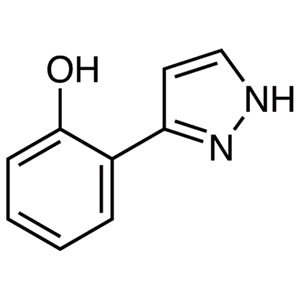
2-(1H-Pyrazol-3-yl)phenol TCI P2218
Regular price From Rp 1.326.150,00Regular price -
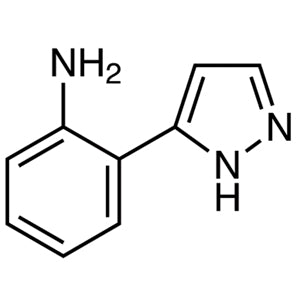
2-(1H-Pyrazol-5-yl)aniline TCI P1902
Regular price Rp 9.248.400,00Regular price
![877399-74-1 tert-Butyl 4-[4-(4,4,5,5-Tetramethyl-1,3,2-dioxaborolan-2-yl)pyrazol-1-yl]piperidine-1-carboxylate - AMI Scientific](http://amiscientific.com/cdn/shop/files/TCI2510B5002_79e00c7c-6778-4604-beae-188e01d7ad50.jpg?v=1767854889&width=533)
![129-56-6 Anthra[1,9-cd]pyrazol-6(2H)-one - AMI Scientific](http://amiscientific.com/cdn/shop/files/TCI2510A2548.jpg?v=1767083034&width=533)