

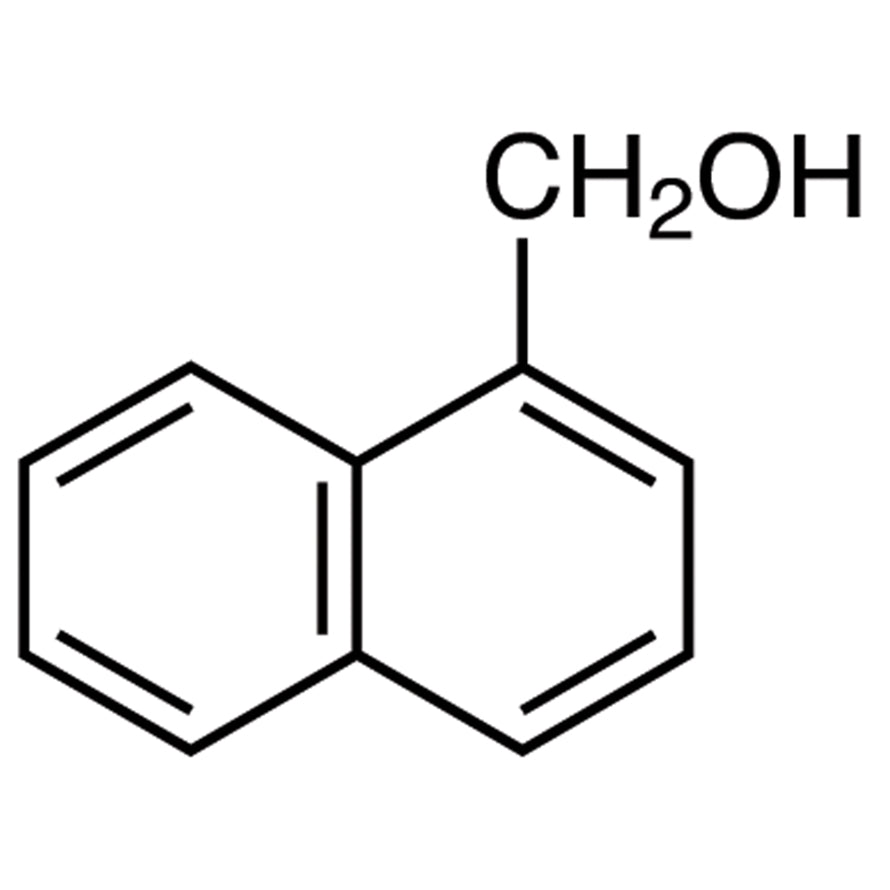
1-Naphthalenemethanol from TCI, also known as 1-naphthylmethanol, is a primary alcohol attached to the 1-position of a naphthalene ring. It belongs to the class of non-heterocyclic building blocks and is used to introduce the naphthylmethyl unit into target molecules. This structural unit is common in organic synthesis, materials chemistry and photophysical research. In the laboratory, the compound is a starting point for preparing aldehydes, benzylic halides, esters, ethers and amines. That versatility makes 1-Naphthalenemethanol a practical reagent to keep on the organic chemistry shelf.
The compound's usefulness comes from two structural features working together. The hydroxymethyl group is benzylic, so it can be readily oxidized, halogenated, or converted into good leaving groups such as mesylates and tosylates. The naphthalene system provides extended aromaticity, characteristic ultraviolet absorption and fluorescence, which lets it act as a spectroscopic marker or chromophore in research. The rigid, hydrophobic naphthalene framework also affects solubility, molecular packing and π–π interactions in the final products. These factors matter when designing organic materials and ligands, which is why researchers choose this building block for work that needs predictable reactivity and a well-defined aromatic scaffold.
In Indonesia, 1-Naphthalenemethanol suits both teaching laboratories and research work in university chemistry departments, research institutes and industrial R&D units. Undergraduate and graduate students can use it to practise core functional group transformations such as oxidation, halogenation and esterification. Research groups can use it as an intermediate for fluorescent probes, ligands and organic materials. Because it is a TCI reagent, laboratories get a recognized brand supplied through AMI Scientific, which keeps procurement for routine synthesis and exploratory projects simple.
- Oxidation to naphthaldehyde derivatives: the benzylic hydroxymethyl group oxidizes readily, giving an easy route to aldehydes that can be used in further condensation and coupling reactions.
- Preparation of benzylic halides and sulfonates: the alcohol converts easily into halides, mesylates or tosylates, which then act as reactive electrophiles for alkylation and substitution steps.
- Synthesis of esters, ethers and amines: the primary alcohol allows straightforward derivatization, so the naphthylmethyl unit can be introduced into many kinds of target molecules for synthetic research.
- Fluorescent and chromophoric labeling studies: the naphthalene ring has characteristic UV absorption and fluorescence, which makes the naphthylmethyl group useful as a spectroscopic marker in photophysical experiments.
- Design of organic materials and ligands: the rigid, hydrophobic naphthalene framework affects solubility, molecular packing and π–π interactions, which are important properties when building functional materials and coordination ligands.
| Brand | TCI (product code N0633) |
|---|---|
| CAS number | 4780-79-4 |
| Molecular formula | — |
| Purity | — |
| Category | Chemistry > Building Blocks > Non-Heterocyclic Building Blocks |
| Pack sizes | available in the pack sizes supplied by TCI; please confirm current options with AMI Scientific |
| Physical form | solid at room temperature; see the TCI product specification for details |
| Storage | keep tightly closed in a cool, dry, well-ventilated place |
Keep 1-Naphthalenemethanol in its original, tightly sealed container, or in a clean, well-labeled glass container. Store it in a cool, dry, well-ventilated area away from direct sunlight, heat sources and strong oxidizing agents. When handling, wear standard laboratory protective equipment, including safety glasses, gloves and a lab coat. Work in a fume hood or well-ventilated area to avoid inhaling dust, and avoid contact with skin and eyes. Always read the TCI Safety Data Sheet before use, and dispose of residues according to local laboratory waste regulations.
—
Produk Terkait
-
2-Naphthalenemethanol TCI N0881
Regular price From Rp 2.491.650,00Regular price -
6-Methoxy-2-naphthalenemethanol TCI M2931
Regular price From Rp 2.359.350,00Regular price -
4-Methoxy-1-naphthalenemethanol TCI M2086
Regular price From Rp 955.500,00Regular price -
2-Methoxy-1-naphthalenemethanol TCI M2018
Regular price From Rp 2.199.750,00Regular price -
1-Pyrenemethanol TCI P1221
Regular price From Rp 1.538.250,00Regular price -
4-Methyl-1-cyclohexanemethanol(cis-andtrans-mixture) TCI M1412
Regular price From Rp 2.174.550,00Regular price -
3-Methyl-3-oxetanemethanol TCI M1136
Regular price From Rp 875.700,00Regular price -
1-Adamantanemethanol TCI H0420
Regular price From Rp 610.050,00Regular price


