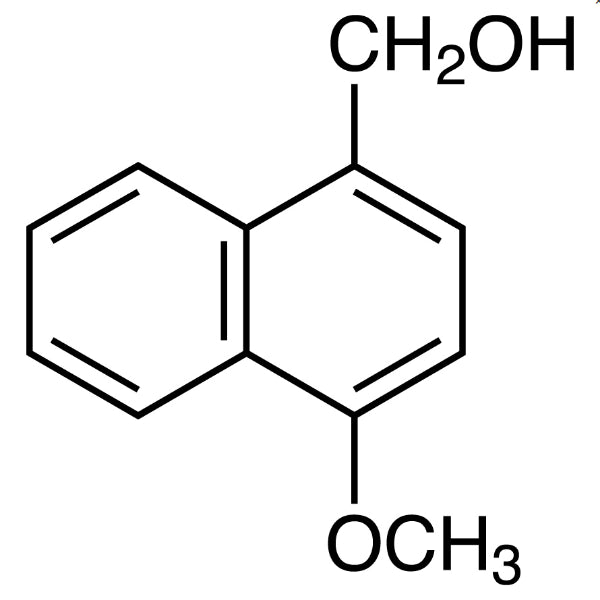
4-Methoxy-1-naphthalenemethanol is a chemical compound widely used in organic synthesis reactions within laboratory settings. It serves as a fundamental building block for the creation of more complex chemical structures. Its aromatic structure, featuring a naphthalene ring connected to methoxy and hydroxyl groups, makes it a versatile reagent in various synthetic pathways. This compound is particularly valuable in laboratories where the development of new chemical entities is a priority. Due to its reactivity, it is often employed in substitution and coupling reactions, contributing to the synthesis of pharmaceuticals and other specialized compounds.
The compound's chemical properties make it a preferred choice for researchers. It exhibits solubility in organic solvents such as ethyl acetate and ethanol, which facilitates its use in a wide range of experimental procedures. Its ability to participate in diverse chemical reactions enhances its utility in synthetic chemistry. Additionally, its stability under specific conditions ensures reliable performance during storage and use. These characteristics make it a reliable and effective reagent for both academic and industrial research applications.
In Indonesian laboratories, 4-Methoxy-1-naphthalenemethanol is commonly used in pure chemical research and pharmaceutical development. It is a key component in the synthesis of new compounds, particularly in the field of pharmacology. Many research institutions and universities utilize this compound to advance their studies, contributing to the growth of scientific knowledge and innovation in the region.
Related TCI products
- TCI M2931 60201-22-1 6-Methoxy-2-naphthalenemethanol
- TCI M2018 40696-22-8 2-Methoxy-1-naphthalenemethanol
- TCI N0881 1592-38-7 2-Naphthalenemethanol
- TCI N0633 4780-79-4 1-Naphthalenemethanol
- TCI B4723 115929-59-4 2-Bromo-4-methoxy-6-nitrophenol
- TCI B4539 173336-76-0 4-Bromo-1-methoxy-2-(3-methoxypropoxy)benzene
- Organic synthesis is a primary application where this compound is used to create complex molecules through substitution and coupling reactions.
- Pharmaceutical development benefits from its role in synthesizing active pharmaceutical ingredients and drug-related compounds.
- Chemical research in academic institutions relies on its reactivity and solubility for various synthetic pathways and molecular design.
- Analytical chemistry applications utilize its stability and solubility for chromatographic and spectroscopic studies.
- Industrial chemical manufacturing employs it as a building block for producing specialty chemicals and intermediates.
| Brand | TCI |
|---|---|
| CAS number | 16820-54-5 |
| Molecular formula | — |
| Purity | — |
| Category | Chemistry > Building Blocks > Non-Heterocyclic Building Blocks |
| Pack sizes | Available in standard laboratory quantities |
| Physical form | Solid or liquid, depending on the specific product variant |
| Storage | Store in a cool, dry place away from direct sunlight |
This compound should be stored in a cool, dry environment to maintain its stability and prevent degradation. It is recommended to use airtight containers to minimize exposure to moisture and air. When handling, it is important to follow standard laboratory safety protocols, including the use of personal protective equipment such as gloves and goggles. Due to its chemical nature, it should be kept away from incompatible substances. Proper labeling of storage containers is essential for safe handling and easy identification. Maintaining appropriate storage conditions ensures the compound remains effective for use in research and development applications.
—
Produk Terkait
-
6-Methoxy-2-naphthalenemethanol TCI M2931
Regular price From Rp 2.359.350,00Regular price -
2-Methoxy-1-naphthalenemethanol TCI M2018
Regular price From Rp 2.199.750,00Regular price -
2-Naphthalenemethanol TCI N0881
Regular price From Rp 2.491.650,00Regular price -
1-Naphthalenemethanol TCI N0633
Regular price From Rp 769.650,00Regular price -
2-Bromo-4-methoxy-6-nitrophenol TCI B4723
Regular price From Rp 505.050,00Regular price -
4-Bromo-1-methoxy-2-(3-methoxypropoxy)benzene TCI B4539
Regular price From Rp 848.400,00Regular price -
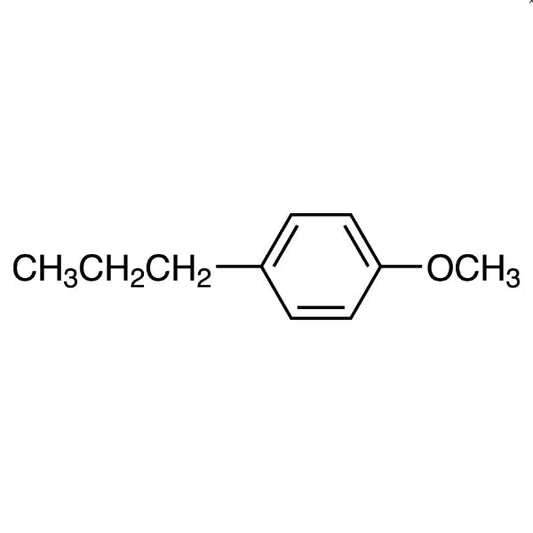
1-Methoxy-4-propylbenzene TCI P3068
Regular price Rp 1.829.100,00Regular price -
2-Methoxy-6-nitrophenol TCI M3747
Regular price From Rp 2.889.600,00Regular price