

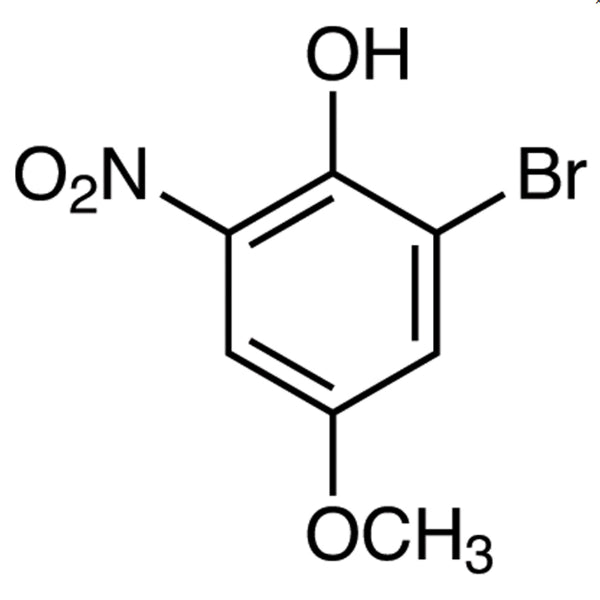
2-Bromo-4-methoxy-6-nitrophenol is a chemical compound widely used in synthetic laboratory reactions. As a building block in organic chemistry, it serves as a versatile intermediate for the synthesis of more complex molecules. Its unique structure, featuring bromo, methoxy, and nitro functional groups, makes it a valuable resource for researchers aiming to explore various chemical transformations. This compound is commonly found in the chemical inventory of laboratories involved in pharmaceutical, materials science, and analytical chemistry research.
The compound's aromatic structure and functional groups contribute to its reactivity, making it suitable for substitution and electrophilic reactions. Its solubility in organic solvents such as ethyl acetate and ethanol facilitates efficient processing and purification steps in laboratory workflows. Additionally, its chemical and physical stability under controlled conditions allows for consistent performance in both small-scale and large-scale experiments. These properties make it a reliable choice for synthetic chemists seeking to develop new compounds with specific functionalities.
In Indonesian laboratories, 2-Bromo-4-methoxy-6-nitrophenol is utilized in scientific research and chemical product development. It is frequently employed in academic and industrial settings to support the creation of novel compounds with applications in medicine, materials, and analytical techniques. Its availability and reactivity make it an essential component in the toolkit of researchers working on complex chemical syntheses.
Related TCI products
- Pharmaceutical research utilizes this compound for the synthesis of active pharmaceutical ingredients due to its reactivity and functional group versatility.
- Material science applications benefit from its aromatic structure, enabling the development of advanced polymers and functional materials.
- Analytical chemistry labs use it as a standard reference for spectroscopic and chromatographic analyses due to its well-defined chemical properties.
- Organic synthesis projects rely on its substitutable functional groups to create a wide range of derivatives with tailored properties.
- Academic research institutions incorporate it into curriculum-based experiments to teach advanced synthetic techniques and chemical reactivity.
| Brand | TCI |
|---|---|
| CAS number | 115929-59-4 |
| Molecular formula | — |
| Purity | — |
| Category | Chemistry > Building Blocks > Non-Heterocyclic Building Blocks |
| Pack sizes | Available in various quantities as per supplier specifications |
| Physical form | Solid or liquid, depending on the specific product variant |
| Storage | Store in a cool, dry place away from direct sunlight and incompatible substances |
This compound should be stored in a cool, dry environment to maintain its chemical stability. It is recommended to use airtight containers to prevent exposure to moisture and air, which may affect its reactivity. Due to its potential chemical reactivity, it should be kept away from incompatible substances such as strong oxidizers or reducing agents. Proper labeling of storage containers is essential for safety and identification. In laboratory settings, it is advisable to handle the compound with appropriate personal protective equipment, including gloves and safety goggles, to minimize exposure risks. Regular monitoring of storage conditions ensures the compound remains suitable for use in synthetic processes.
—
Produk Terkait
-
2-Methoxy-6-nitrophenol TCI M3747
Regular price From Rp 2.942.100,00Regular priceRp 2.072.700,00Sale price From Rp 2.942.100,00
