TCI C2013 1-Cyclohexyl-5-(4-chlorobutyl)-1H-tetrazole is a heterocyclic compound built around a tetrazole core that carries a cyclohexyl group on the nitrogen at position one and a 4-chlorobutyl chain at position five. In organic synthesis laboratories, this compound serves as an alkylating building block, meaning a material that supplies a complete tetrazole fragment already fitted with a halogenated alkyl arm. Researchers can therefore attach a substituted tetrazole group to another molecule through a single alkylation step, without having to construct the tetrazole ring themselves, work that normally demands the handling of azide reagents.
The property that makes it a preferred choice is the clear division of roles between the two parts of the molecule. The butyl chain, with a primary chloride at its terminus, is an electrophile of controlled reactivity, so it is readily displaced by nucleophiles such as phenolates, alkoxides, thiolates, or amines, particularly when assisted by a base and an iodide catalyst. The four-carbon length provides sufficient spatial distance between the tetrazole core and the newly installed group, a factor that often determines activity in molecular design work. Meanwhile, the cyclohexyl-substituted tetrazole ring is stable enough to survive these conditions intact.
In Indonesian laboratories, this building block is typically used in university and institutional research groups working on medicinal chemistry and heterocyclic synthesis, where a ready-made tetrazole fragment removes the need for in-house azide chemistry and the specialised handling it requires. It is also drawn upon in method development and small-scale exploratory synthesis, where a reliable, well-defined electrophile shortens route planning. Reagent-scale quantities suit the bench-scale campaigns common to these settings.
Related TCI products
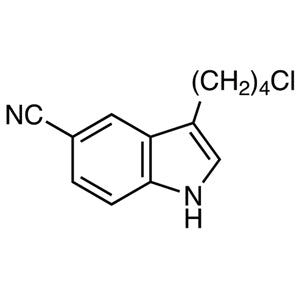
- TCI C3086 143612-79-7 3-(4-Chlorobutyl)indole-5-carbonitrile
- TCI C0902 40126-55-4 5-(4-Chlorobutyl)hydantoin
- TCI B5308 50907-23-8 5-(4-Bromophenyl)-1H-tetrazole
- TCI B2577 73096-42-1 5-(2-Bromophenyl)-1H-tetrazole
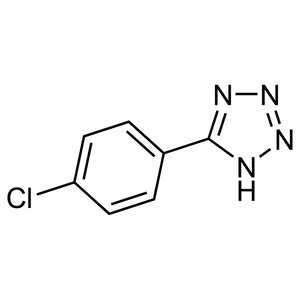
- TCI C4066 16687-61-9 5-(4-Chlorophenyl)-1H-tetrazole
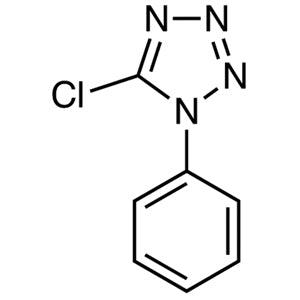
- TCI C0999 14210-25-4 5-Chloro-1-phenyl-1H-tetrazole
- Medicinal chemistry building block work, where the intact tetrazole fragment is introduced onto a scaffold in one alkylation step rather than assembled on site from azide precursors.
- O-alkylation of phenols and alcohols, in which the primary chloride reacts with phenolate or alkoxide nucleophiles under basic conditions to form a tetrazole-bearing ether linkage.
- N-alkylation of amines and azoles, taking advantage of the controlled electrophilicity of the terminal chloride to install the tetrazolyl-butyl arm onto nitrogen nucleophiles selectively.
- S-alkylation with thiolate nucleophiles, where the soft sulfur nucleophile displaces chloride efficiently and gives thioether products carrying the substituted tetrazole group.
- Spacer and linker chemistry in molecular design, exploiting the four-carbon chain to set a defined distance between the tetrazole core and the appended functional group.
| Brand | TCI (Tokyo Chemical Industry) |
|---|---|
| CAS number | 73963-42-5 |
| Molecular formula | — |
| Purity | — |
| Category | Chemistry > Building Blocks > Heterocyclic Building Blocks |
| Pack sizes | available in standard TCI reagent pack sizes; please confirm the specific size when ordering |
| Physical form | — |
| Storage | keep in a tightly closed original container, stored cool and away from light in accordance with the manufacturer's label |
- Chemical name: 1-Cyclohexyl-5-(4-chlorobutyl)-1H-tetrazole
Store the material in its tightly sealed original container in a cool, dry place away from direct sunlight and heat sources, following the storage conditions stated on the manufacturer's label and safety data sheet. Keep the container closed when not in use to limit exposure to moisture and air. Handle in a fume hood using nitrile gloves, safety goggles, and a laboratory coat, and avoid inhalation of dust and contact with skin or eyes. As an alkylating agent, it should be kept separate from strong nucleophiles, strong bases, and oxidising agents, and any spills or waste should be collected and disposed of through the laboratory's designated chemical waste route.
—
Produk Terkait
-
3-(4-Chlorobutyl)indole-5-carbonitrile TCI C3086
Regular price Rp 4.001.550,00Regular price -
5-(4-Chlorobutyl)hydantoin TCI C0902
Regular price From Rp 1.565.550,00Regular price -
5-(4-Bromophenyl)-1H-tetrazole TCI B5308
Regular price From Rp 2.411.850,00Regular price -
5-(2-Bromophenyl)-1H-tetrazole TCI B2577
Regular price From Rp 1.829.100,00Regular price -
5-(4-Chlorophenyl)-1H-tetrazole TCI C4066
Regular price From Rp 848.400,00Regular price -
5-Chloro-1-phenyl-1H-tetrazole TCI C0999
Regular price From Rp 2.227.050,00Regular price -
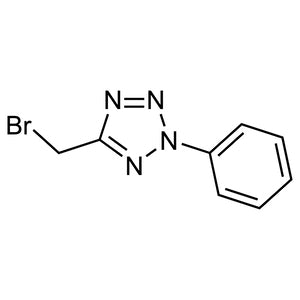
5-(Bromomethyl)-2-phenyl-2H-tetrazole TCI B6880
Regular price Rp 3.817.800,00Regular price -
2-(4-Chlorobutoxy)tetrahydropyran TCI C1279
Regular price From Rp 903.000,00Regular price