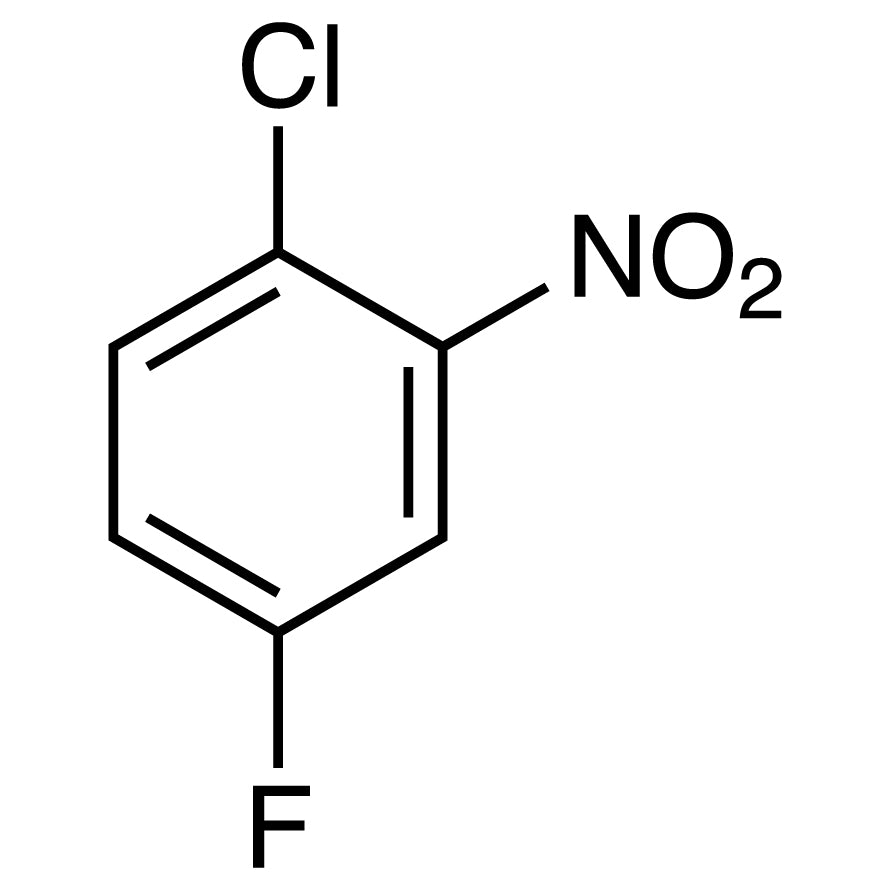
1-Chloro-4-fluoro-2-nitrobenzene (CAS 345-17-5) is an organic compound belonging to the building blocks category in organic synthesis, specifically classified under fluorinated building blocks. Its molecular structure consists of a benzene ring substituted with chloro, fluoro, and nitro groups, which makes it a highly versatile starting material for constructing more complex molecules in the chemistry laboratory. In laboratory practice, the compound serves as an intermediate reagent that enables researchers to carry out a wide range of transformations, including nucleophilic aromatic substitution reactions, carbon–nitrogen bond formation, and other functional group modifications essential to synthetic work.
The presence of a fluorine atom attached to the aromatic ring gives this compound a distinctive electronic character that is highly valued in synthetic planning. The fluorine substituent influences the electron density of the ring, activating it toward nucleophilic attack while also imparting stability and lipophilicity to the resulting derivatives. Combined with a nitro group that further activates the aromatic system and a chloro group that offers a reliable leaving group, the compound provides a reactive yet stable combination of functional groups. These characteristics make it a preferred choice for designing derivative compounds with potential biological activity or specific material properties, as well as for fine-tuning molecular behavior in advanced research.
In Indonesian laboratories, this product is commonly used in academic research institutions, university chemistry departments, and industrial R&D facilities as a key component in the planning and execution of target compound synthesis. Researchers typically employ it as a starting point for building pharmaceutical intermediates, agrochemical candidates, and specialty chemicals through well-established aromatic substitution pathways. Its role is especially important in projects exploring fluorinated molecules, where the compound's predictable reactivity supports reproducible results. For both academic studies and industrial development programs, the product represents an essential building block that helps Indonesian researchers move efficiently from synthetic concept to practical laboratory outcome.
- Nucleophilic aromatic substitution studies: the aromatic ring, activated by its electron-withdrawing nitro and fluoro groups, readily undergoes substitution with nucleophiles, making this compound ideal for teaching and research on aromatic substitution mechanisms.
- Synthesis of pharmaceutical intermediates: the reactive chloro position serves as a convenient handle for introducing amines and other substituents, supporting the preparation of drug-like molecules built around a fluorinated aromatic core.
- Carbon–nitrogen bond formation: the compound is well suited to amination reactions and related coupling approaches, allowing researchers to construct anilines and heterocyclic precursors in an efficient single-step transformation.
- Development of agrochemical and specialty materials: the fluorinated aromatic scaffold imparts metabolic stability and unique electronic properties, making it a practical starting point for designing crop-protection agents and functional materials.
- Structure–activity relationship studies: because the fluoro substituent can be retained or replaced during synthesis, the compound supports systematic modification of molecular structure to explore how changes affect biological activity or material behavior.
| Brand | TCI |
|---|---|
| CAS number | 345-17-5 |
| Molecular formula | — |
| Purity | — |
| Category | Chemistry > Building Blocks > Fluorinated Building Blocks |
| Pack sizes | available in standard laboratory pack sizes as listed in the TCI catalog; confirm the exact size at the time of ordering. |
| Physical form | — |
| Storage | — |
- Product code: C2166
- Chemical name: 1-Chloro-4-fluoro-2-nitrobenzene
Store the product in a cool, dry, well-ventilated area, protected from direct sunlight and moisture. Keep the container tightly closed when not in use, and store the substance in its original packaging to preserve its stability. Use suitable laboratory containers made of compatible materials when transferring the compound, and avoid exposure to heat or open flames. Always work in a fume hood and wear appropriate personal protective equipment, including gloves, safety goggles, and a laboratory coat. Avoid inhalation of dust or vapors, and prevent contact with skin and eyes. Follow standard laboratory waste disposal procedures for chemical substances of this type.
—
Produk Terkait
-
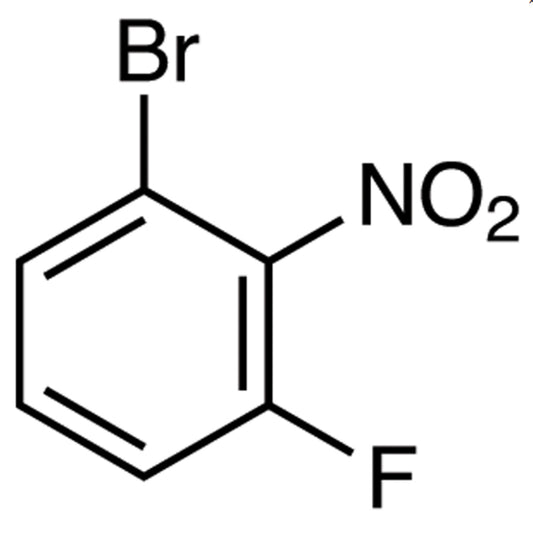
1-Bromo-3-fluoro-2-nitrobenzene TCI B4842
Regular price From Rp 1.273.650,00Regular price -
4-Bromo-2-fluoro-1-nitrobenzene TCI B3062
Regular price From Rp 1.538.250,00Regular price -
2-Bromo-4-fluoro-1-nitrobenzene TCI B3061
Regular price Rp 1.988.700,00Regular price -
1-Bromo-2-fluoro-4-nitrobenzene TCI B3060
Regular price From Rp 1.431.150,00Regular price -
2-Bromo-1-fluoro-4-nitrobenzene TCI B2958
Regular price Rp 664.650,00Regular price -
1-Bromo-4-fluoro-2-nitrobenzene TCI B2339
Regular price From Rp 980.700,00Regular price -
4-Bromo-1-fluoro-2-nitrobenzene TCI B2075
Regular price From Rp 477.750,00Regular price -
2-Fluoro-4-methoxy-1-nitrobenzene TCI F1291
Regular price From Rp 769.650,00Regular price