


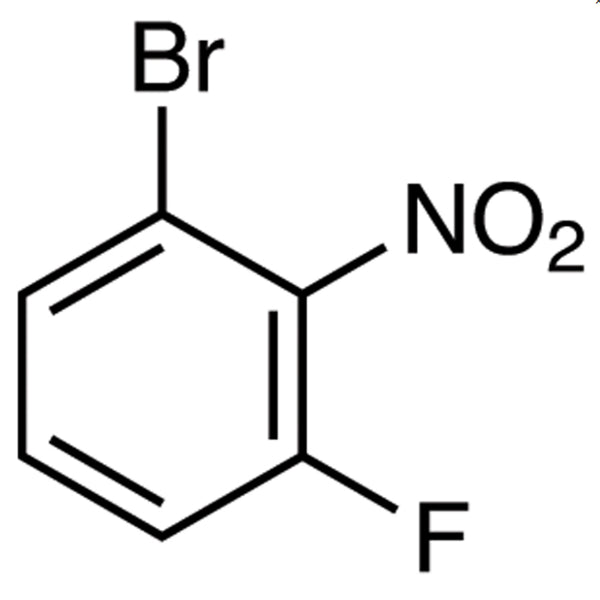
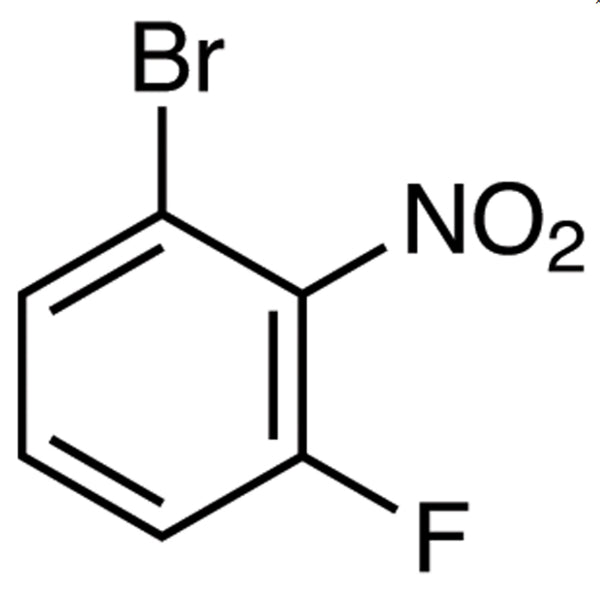
1-Bromo-3-fluoro-2-nitrobenzene is a versatile organic compound widely used in laboratory settings for synthetic chemistry applications. It serves as a key building block in the development of complex molecules, particularly in organic synthesis where its unique functional groups enable a range of chemical transformations. This compound is commonly utilized by researchers in Indonesia and globally for its ability to participate in various reaction mechanisms, making it an essential component in the creation of novel chemical structures. Its presence in laboratory workflows highlights its importance in both academic and industrial research environments.
The compound’s chemical properties, including the presence of bromo, fluoro, and nitro groups, contribute to its reactivity and stability under different reaction conditions. These functional groups provide multiple sites for substitution and modification, allowing chemists to tailor the final product to specific applications. The combination of these groups also influences the compound’s solubility and reactivity, making it a preferred choice for a variety of synthetic pathways. Its structural complexity and functional versatility make it a valuable resource in the field of organic chemistry.
In Indonesian laboratories, 1-Bromo-3-fluoro-2-nitrobenzene is frequently used in research focused on the synthesis of complex organic compounds. It plays a crucial role in studies related to pharmaceutical development, material science, and chemical engineering. Its application in these areas underscores its significance in advancing scientific knowledge and innovation within the local scientific community.
TCI brochures (PDF)
- Fluorination Reagents, Fluorinated Building Blocks 2026-03-18 · p. 16
Related TCI products
- TCI B3062 321-23-3 4-Bromo-2-fluoro-1-nitrobenzene
- TCI B3061 700-36-7 2-Bromo-4-fluoro-1-nitrobenzene
- TCI B3060 185331-69-5 1-Bromo-2-fluoro-4-nitrobenzene
- TCI B2958 701-45-1 2-Bromo-1-fluoro-4-nitrobenzene
- TCI B2339 446-09-3 1-Bromo-4-fluoro-2-nitrobenzene
- TCI B2075 364-73-8 4-Bromo-1-fluoro-2-nitrobenzene
- Organic synthesis applications benefit from this compound's ability to participate in multiple reaction mechanisms, enabling the creation of complex molecular structures.
- Pharmaceutical research utilizes its reactivity to develop new drug compounds with specific functional groups and molecular configurations.
- Material science studies leverage its chemical properties to design and synthesize advanced materials with tailored characteristics.
- Chemical engineering projects incorporate it as a building block for the production of industrial chemicals and specialty compounds.
- Academic research in Indonesia uses it to explore synthetic pathways and understand the behavior of fluorinated and nitro-substituted compounds.
| Brand | TCI |
|---|---|
| CAS number | 886762-70-5 |
| Molecular formula | — |
| Purity | — |
| Category | Chemistry > Building Blocks > Fluorinated Building Blocks |
| Pack sizes | Available in various quantities as per standard laboratory supply |
| Physical form | Liquid |
| Storage | Store in a cool, dry place away from direct sunlight and incompatible materials |
This compound should be stored in a cool, dry environment to maintain its chemical integrity and prevent degradation. It is recommended to use airtight containers made of materials compatible with its chemical nature, such as glass or high-density polyethylene. Due to its reactivity, it should be kept away from strong oxidizing agents and incompatible substances. Proper labeling and secure storage are essential to ensure safety in the laboratory. Always handle with care, using appropriate personal protective equipment when necessary. The compound is not classified as hazardous under standard laboratory conditions but should be treated with the same caution as other reactive chemicals.
—
Produk Terkait
-
4-Bromo-2-fluoro-1-nitrobenzene TCI B3062
Regular price From Rp 1.538.250,00Regular priceRp 1.075.200,00Sale price From Rp 1.538.250,00 -
2-Bromo-4-fluoro-1-nitrobenzene TCI B3061
Regular price Rp 1.988.700,00Regular priceRp 1.390.200,00Sale price Rp 1.988.700,00 -
1-Bromo-2-fluoro-4-nitrobenzene TCI B3060
Regular price From Rp 1.431.150,00Regular priceRp 1.000.650,00Sale price From Rp 1.431.150,00 -
2-Bromo-1-fluoro-4-nitrobenzene TCI B2958
Regular price Rp 664.650,00Regular priceRp 464.100,00Sale price Rp 664.650,00 -
1-Bromo-4-fluoro-2-nitrobenzene TCI B2339
Regular price From Rp 980.700,00Regular priceRp 685.650,00Sale price From Rp 980.700,00 -
4-Bromo-1-fluoro-2-nitrobenzene TCI B2075
Regular price From Rp 477.750,00Regular priceRp 333.900,00Sale price From Rp 477.750,00 -
2-Fluoro-4-methoxy-1-nitrobenzene TCI F1291
Regular price From Rp 769.650,00Regular priceRp 537.600,00Sale price From Rp 769.650,00 -
4-Fluoro-2-iodo-1-nitrobenzene TCI F1178
Regular price From Rp 1.485.750,00Regular priceRp 1.038.450,00Sale price From Rp 1.485.750,00


