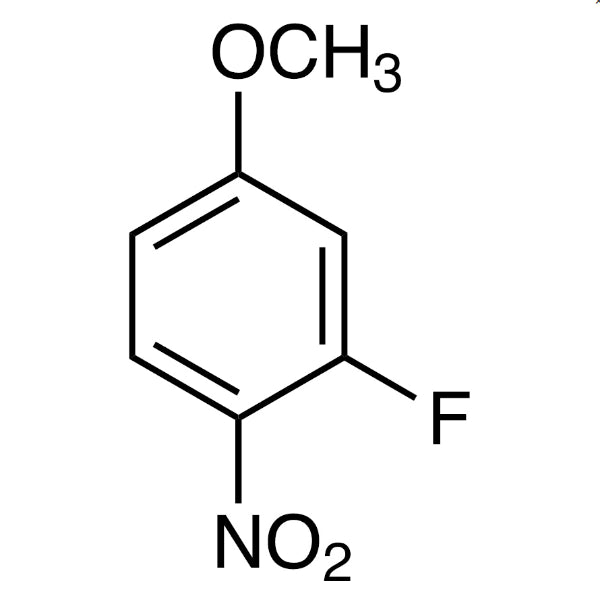
2-Fluoro-4-methoxy-1-nitrobenzene is a chemical compound widely used as a building block in the synthesis of complex molecules. It serves as a key intermediate in organic reactions that require fluorine, methoxy, and nitro groups on an aromatic ring. In the laboratory, this compound plays a crucial role in the development of new substances, including pharmaceuticals, industrial chemicals, and catalytic reagents. Its structural features make it highly versatile for various synthetic pathways.
The compound’s unique combination of functional groups—fluoro, methoxy, and nitro—provides it with specific reactivity and stability. These properties make it a preferred choice for researchers looking to explore substitution reactions and reduction processes. Its chemical stability ensures safe handling under standard laboratory conditions, making it a reliable material for both academic and industrial applications. The presence of multiple reactive substituents allows for a wide range of chemical transformations, enhancing its utility in synthetic chemistry.
In Indonesian laboratories, 2-Fluoro-4-methoxy-1-nitrobenzene is commonly used by chemists, students, and pharmaceutical researchers. Its availability through local distributors like AMI Scientific ensures easy access for those conducting experiments requiring this compound. Its role in drug synthesis and chemical development is particularly significant, supporting research efforts in both academic and industrial settings.
Related TCI products
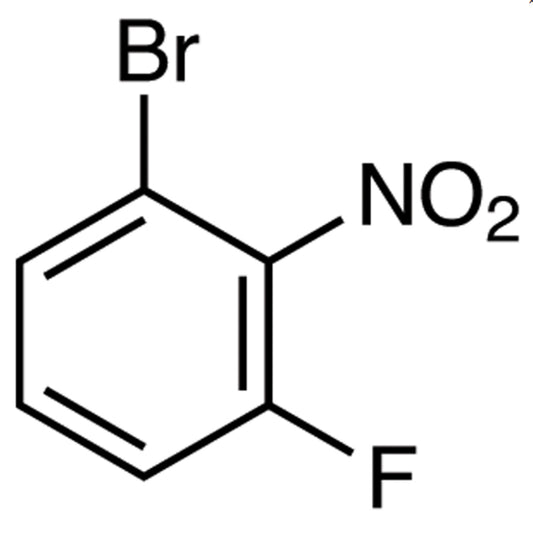
- TCI B4842 886762-70-5 1-Bromo-3-fluoro-2-nitrobenzene
- TCI B3062 321-23-3 4-Bromo-2-fluoro-1-nitrobenzene
- TCI B3061 700-36-7 2-Bromo-4-fluoro-1-nitrobenzene
- TCI B3060 185331-69-5 1-Bromo-2-fluoro-4-nitrobenzene
- TCI B2958 701-45-1 2-Bromo-1-fluoro-4-nitrobenzene
- TCI B2339 446-09-3 1-Bromo-4-fluoro-2-nitrobenzene
- Drug synthesis applications benefit from its aromatic structure and functional groups, enabling the creation of complex pharmaceutical compounds.
- Organic chemistry research utilizes its reactivity in substitution and reduction reactions, supporting the development of new chemical entities.
- Industrial chemical production relies on its stability and versatility for the synthesis of various chemical intermediates.
- Catalytic reaction studies use its functional groups to explore reaction mechanisms and improve catalytic efficiency.
- Academic research in chemistry employs it as a fundamental building block for teaching and experimental purposes.
| Brand | TCI |
|---|---|
| CAS number | 446-38-8 |
| Molecular formula | — |
| Purity | — |
| Category | Chemistry > Building Blocks > Fluorinated Building Blocks |
| Pack sizes | Available in various quantities as per supplier specifications |
| Physical form | Liquid or solid, depending on supplier packaging |
| Storage | Store in a cool, dry place away from light and incompatible materials |
This compound should be stored in a cool, dry environment, away from direct sunlight and sources of heat. It is recommended to keep it in a tightly sealed container to prevent contamination and evaporation. Due to its chemical nature, it should be stored separately from strong oxidizers and reactive materials to ensure safety. Laboratory personnel should handle it with appropriate personal protective equipment, including gloves and safety goggles, to minimize exposure. Proper ventilation is essential when working with this compound to avoid inhalation of vapors. Regular monitoring of storage conditions is advised to maintain its integrity and ensure safe handling practices.
—
Produk Terkait
-
1-Bromo-3-fluoro-2-nitrobenzene TCI B4842
Regular price From Rp 1.273.650,00Regular price -
4-Bromo-2-fluoro-1-nitrobenzene TCI B3062
Regular price From Rp 1.538.250,00Regular price -
2-Bromo-4-fluoro-1-nitrobenzene TCI B3061
Regular price Rp 1.988.700,00Regular price -
1-Bromo-2-fluoro-4-nitrobenzene TCI B3060
Regular price From Rp 1.431.150,00Regular price -
2-Bromo-1-fluoro-4-nitrobenzene TCI B2958
Regular price Rp 664.650,00Regular price -
1-Bromo-4-fluoro-2-nitrobenzene TCI B2339
Regular price From Rp 980.700,00Regular price -
4-Bromo-1-fluoro-2-nitrobenzene TCI B2075
Regular price From Rp 477.750,00Regular price -
4-Fluoro-2-iodo-1-nitrobenzene TCI F1178
Regular price From Rp 1.485.750,00Regular price