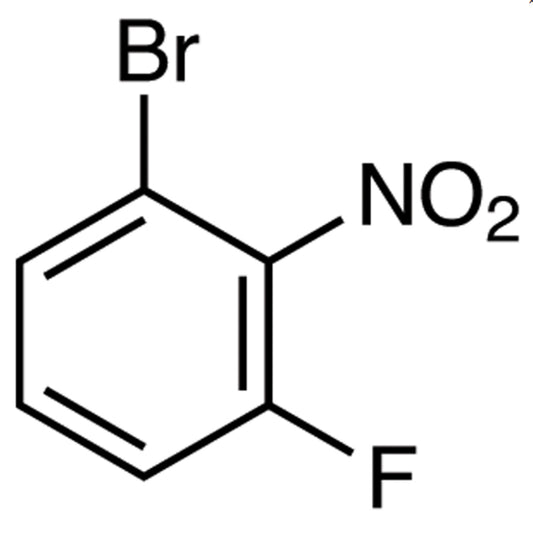
4-Fluoro-2-iodo-1-nitrobenzene is a versatile organic compound widely used in laboratory settings for the synthesis of complex organic molecules. As a fluorinated building block, it serves as a key intermediate in various chemical reactions, particularly those involving electrophilic substitution or functionalization. Its unique combination of functional groups—fluoro, iodine, and nitro—makes it a valuable tool for chemists working on the development of new compounds or modifications of existing ones. This compound is essential for researchers aiming to explore reactivity patterns and synthetic pathways in organic chemistry.
The chemical properties of 4-Fluoro-2-iodo-1-nitrobenzene make it a preferred choice in laboratory applications. The presence of the nitro group provides strong electron-withdrawing effects, enhancing the reactivity of the molecule. The fluorine and iodine substituents further influence the polarity and reactivity of the compound, making it suitable for reactions requiring high activation or specific functional group transformations. These characteristics allow it to be used in a wide range of synthetic processes, from pharmaceutical development to material science.
In Indonesian laboratories, 4-Fluoro-2-iodo-1-nitrobenzene is commonly utilized in organic chemistry research, particularly in academic and research institutions. It is frequently employed in projects related to the synthesis of new compounds or the modification of existing ones. Its stability under certain conditions ensures that it remains a reliable reagent for long-term research applications. This compound supports the advancement of chemical research in Indonesia by providing a foundation for complex synthetic strategies.
Related TCI products
- TCI B4842 886762-70-5 1-Bromo-3-fluoro-2-nitrobenzene
- TCI B3062 321-23-3 4-Bromo-2-fluoro-1-nitrobenzene
- TCI B3061 700-36-7 2-Bromo-4-fluoro-1-nitrobenzene
- TCI B3060 185331-69-5 1-Bromo-2-fluoro-4-nitrobenzene
- TCI B2958 701-45-1 2-Bromo-1-fluoro-4-nitrobenzene
- TCI B2339 446-09-3 1-Bromo-4-fluoro-2-nitrobenzene
- Organic synthesis projects benefit from this compound due to its reactivity and functional group versatility, enabling the creation of complex molecules with high precision.
- Pharmaceutical research utilizes it as a building block for the development of new drug candidates, leveraging its unique electronic properties for targeted molecular modifications.
- Material science applications take advantage of its structural characteristics for the synthesis of advanced polymers and functional materials with tailored properties.
- Analytical chemistry experiments incorporate it as a standard reference compound for testing reaction conditions and monitoring synthetic pathways.
- Educational institutions use it in teaching laboratories to demonstrate electrophilic substitution reactions and functional group transformations in organic chemistry.
| Brand | TCI |
|---|---|
| CAS number | 41860-64-4 |
| Molecular formula | — |
| Purity | — |
| Category | Chemistry > Building Blocks > Fluorinated Building Blocks |
| Pack sizes | Available in various quantities as per supplier specifications |
| Physical form | Solid or liquid, depending on the specific formulation |
| Storage | Store in a cool, dry place away from light and incompatible materials |
This compound should be stored in a cool, dry environment, away from direct sunlight and sources of heat. It is recommended to use airtight containers made of materials that are chemically inert, such as glass or high-density polyethylene, to prevent contamination and degradation. Due to its reactivity, it should be handled with appropriate personal protective equipment, including gloves and safety goggles. In laboratory settings, it should be kept in a well-ventilated area to minimize exposure to vapors. Proper labeling and storage conditions ensure the stability and safety of the compound during handling and use.
—
Produk Terkait
-
1-Bromo-3-fluoro-2-nitrobenzene TCI B4842
Regular price From Rp 1.273.650,00Regular price -
4-Bromo-2-fluoro-1-nitrobenzene TCI B3062
Regular price From Rp 1.538.250,00Regular price -
2-Bromo-4-fluoro-1-nitrobenzene TCI B3061
Regular price Rp 1.988.700,00Regular price -
1-Bromo-2-fluoro-4-nitrobenzene TCI B3060
Regular price From Rp 1.431.150,00Regular price -
2-Bromo-1-fluoro-4-nitrobenzene TCI B2958
Regular price Rp 664.650,00Regular price -
1-Bromo-4-fluoro-2-nitrobenzene TCI B2339
Regular price From Rp 980.700,00Regular price -
4-Bromo-1-fluoro-2-nitrobenzene TCI B2075
Regular price From Rp 477.750,00Regular price -
2-Fluoro-4-methoxy-1-nitrobenzene TCI F1291
Regular price From Rp 769.650,00Regular price