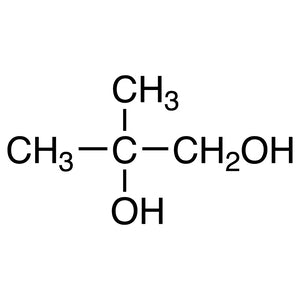
2-(4-Chlorophenyl)-2-methylpropanol (CAS 80854-14-4) is an organic compound belonging to the class of primary aromatic alcohols and serves as an important intermediate, or building block, in organic synthesis within the chemistry laboratory. Its molecular structure consists of a benzene ring substituted with a chlorine atom at the para position and a hydroxymethyl group attached to a quaternary carbon. This architecture makes it a flexible starting point for a wide range of chemical transformations, including the assembly of more complex molecules used in drug discovery, agrochemical research, and specialty chemical development.
The main advantage of this compound lies in the balanced combination of its functional groups, which offers an attractive trade-off between reactivity and stability. The alcohol group is reactive toward a variety of activating reagents, allowing it to be readily converted into esters, ethers, tosylates, or alkyl halides that serve as reactive intermediates. At the same time, the chlorinated aromatic ring imparts a distinctive electronic character to the final products, while the quaternary carbon provides useful steric protection. This combination makes the molecule predictable in its behavior and dependable in multistep synthetic sequences, which is why it is a preferred building block in method development and process chemistry.
In Indonesian laboratories, this material is generally used to assemble more complex molecules, such as pharmaceutical compounds, pesticides, and specialty chemicals, through reactions including esterification, etherification, halogenation, or oxidation. Academic research groups commonly employ it in medicinal chemistry and synthetic methodology studies, while industrial laboratories use it as a dependable intermediate for building analog libraries during early-stage development. Because the reactive alcohol group can be transformed into other functional groups with relative ease, the compound fits well into the practical workflows of both university teaching laboratories and commercial R&D facilities across Indonesia.
- Intermediate for drug synthesis: The benzylic alcohol and para-chlorinated aromatic ring make it a practical scaffold for building pharmaceutical intermediates through esterification or etherification routes toward more complex structures.
- Pesticide and agrochemical building block: Its chlorinated aromatic core and convertible alcohol group allow researchers to construct active ingredients and analogs with tailored electronic and lipophilic properties during synthesis.
- Precursor for alkyl halides and tosylates: The primary alcohol reacts cleanly with activating reagents, enabling conversion into alkyl halides or tosylates that act as electrophilic coupling partners in further synthetic steps.
- Substrate for oxidation studies: The hydroxymethyl group can be selectively oxidized, making this compound a useful model substrate for studying oxidation conditions and carbonyl-forming transformations in method development.
- Specialty chemical production: Its stable yet reactive profile supports the reliable, reproducible assembly of complex molecules used in coatings, additives, and other specialty chemical applications.
| Brand | TCI (product code C2176) |
|---|---|
| CAS number | 80854-14-4 |
| Molecular formula | — |
| Purity | — |
| Category | Chemistry > Building Blocks > Non-Heterocyclic Building Blocks |
| Pack sizes | as indicated on the product label and in the AMI Scientific catalog |
| Physical form | — |
| Storage | store in a cool, dry place away from direct sunlight |
- Product name: 2-(4-Chlorophenyl)-2-methylpropanol
Store the compound in a cool, dry, and well-ventilated area, and keep the container tightly closed when it is not in use to prevent contamination and moisture uptake. Protect the material from direct sunlight and excessive heat, as these conditions can affect the stability of organic intermediates. When handling, wear appropriate personal protective equipment such as a laboratory coat, chemical-resistant gloves, and safety goggles, and work in a fume hood to avoid inhaling dust or vapors. Keep the product away from strong oxidizing agents and other incompatible substances, and always refer to the supplier's safety data sheet before use.
*Asumsi: karena data kemasan dan bentuk fisik tidak disebutkan dalam data sumber, bagian tersebut dirujuk ke label produk dan katalog pemasok tanpa mencantumkan angka spesifik.*
—
Produk Terkait
-
2-(4-Ethoxyphenyl)-2-methylpropanol TCI E0730
Regular price Rp 1.724.100,00Regular price -
2-Methylpropane-1,2-diol TCI M3821
Regular price From Rp 2.386.650,00Regular price -
2-(2-Chlorophenyl)-2-hydroxyaceticAcid TCI C3937
Regular price From Rp 1.458.450,00Regular price -
3-(4-Chlorophenyl)propan-1-ol TCI C3527
Regular price From Rp 875.700,00Regular price -
2-(4-Chlorophenyl)-2-propanol TCI C3324
Regular price From Rp 3.075.450,00Regular price -
2-(3-Chlorophenyl)ethanol TCI C2907
Regular price From Rp 1.246.350,00Regular price -
2-(4-Chlorophenyl)ethanol TCI C2233
Regular price From Rp 557.550,00Regular price -
2-(2-Chlorophenyl)ethanol TCI C2169
Regular price From Rp 530.250,00Regular price