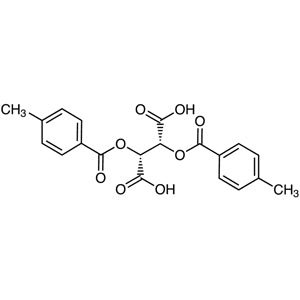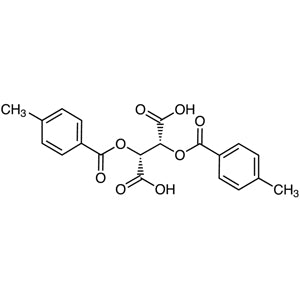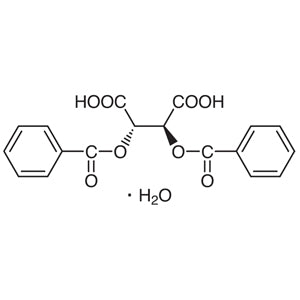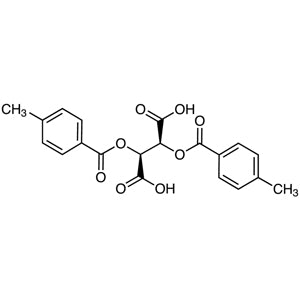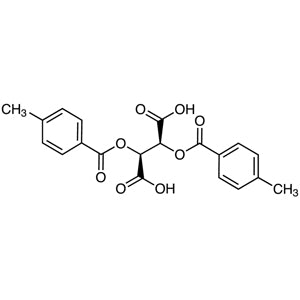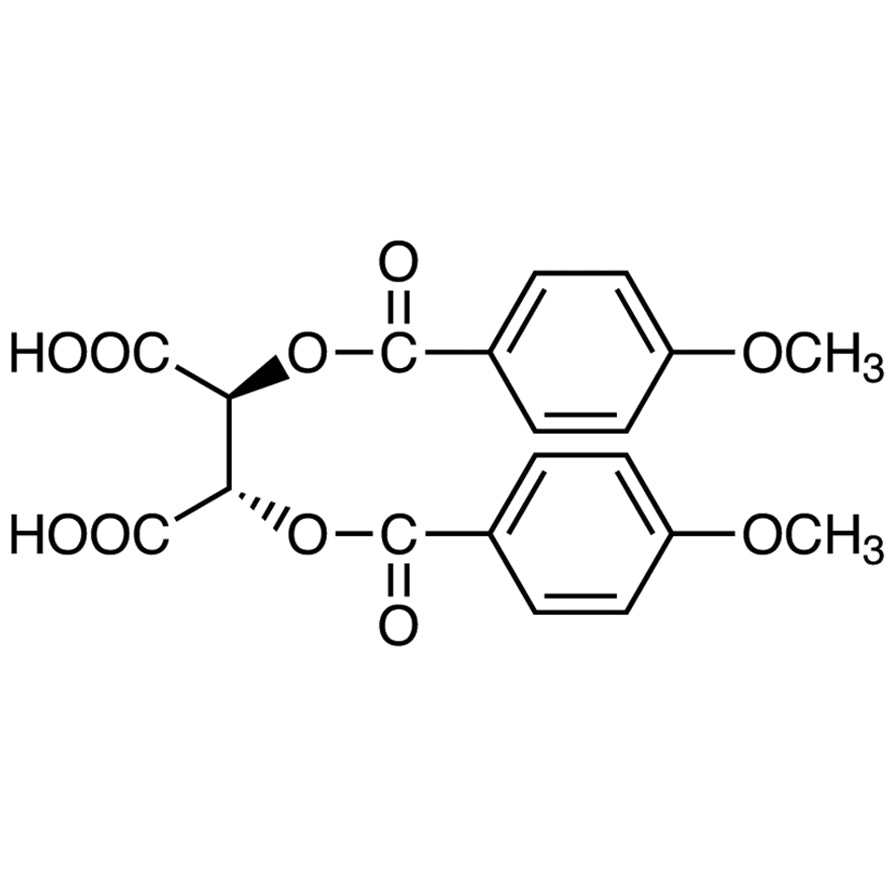
TCI D3490 is (+)-di-p-anisoyl-D-tartaric acid, a D-configured tartaric acid in which both hydroxyl groups have been esterified with p-anisoyl (4-methoxybenzoyl) groups. The compound is classified as a chiral building block, and its primary laboratory function is to serve as a chiral resolving agent as well as a source of a chiral framework for asymmetric synthesis. Because it retains two free carboxylic acid groups, the molecule can form salts with racemic amines, and the difference in solubility between the two resulting diastereomeric salts becomes the basis for separating enantiomers by crystallization.
The properties that make this reagent a widely preferred choice are the combination of a tartrate framework bearing two adjacent stereogenic centers and bulky, oxygen-containing aroyl groups. The p-methoxybenzoyl substituents strengthen aromatic stacking interactions and hydrogen bonding within the crystal lattice of the diastereomeric salt, so the solubility gap between the diastereomeric pair becomes more pronounced than with simple tartaric acid. As a result, high enantiomeric purity can be reached from crystallization in fewer steps. The availability of both the D- and the L-form as an enantiomeric pair also gives researchers a matched choice of resolving agent.
In Indonesian laboratories, a reagent of this type is typically used in university and institutional research groups and in pharmaceutical or fine-chemical development work where a single enantiomer of an amine or amine-containing intermediate must be isolated. It is normally handled at bench scale in synthetic organic chemistry laboratories that carry out classical resolution and asymmetric synthesis, where the ability to select either the D- or the L-form supports method development and comparison of resolution routes.
- Classical resolution of racemic amines: the two free carboxylic acid groups form diastereomeric salts whose differing solubilities allow the enantiomers to be separated by crystallization.
- Asymmetric synthesis: the compound supplies a chiral tartrate framework with two adjacent stereogenic centers that can be used as a source of stereochemical information in enantioselective work.
- Enantiomeric purification of pharmaceutical intermediates: the pronounced solubility gap between diastereomeric salt pairs allows target enantiomeric purity to be reached in fewer crystallization steps.
- Resolution method development: because both the D- and the L-form are available as an enantiomeric pair, researchers can screen matched resolving agents and select the more favourable crystallizing salt.
- Comparative studies against simple tartaric acid: the bulky p-methoxybenzoyl groups reinforce aromatic stacking and hydrogen bonding, giving a clearer basis for comparing resolving-agent performance.
| Brand | TCI |
|---|---|
| CAS number | 191605-10-4 |
| Molecular formula | — |
| Purity | — |
| Category | Chemistry > Asymmetric Synthesis > Chiral Building Blocks |
| Pack sizes | available in the pack sizes listed by the manufacturer; please confirm on enquiry |
| Physical form | — |
| Storage | store in a tightly closed container in a cool, dry, well-ventilated place, following the manufacturer's instructions on the product label |
- Catalogue code: D3490
- Chemical name: (+)-Di-p-anisoyl-D-tartaric Acid
Store the container tightly closed in a cool, dry and well-ventilated area, away from moisture, direct sunlight and incompatible materials, and always follow the storage conditions stated on the manufacturer's label and safety data sheet. Keep the material in its original container or in a chemically compatible, clearly labelled closed container, and reseal it promptly after each use to limit exposure to atmospheric moisture. Handle the compound in a well-ventilated laboratory or fume hood using standard personal protective equipment, including safety glasses, gloves and a laboratory coat, and avoid generating or inhaling dust. Weigh and transfer the material with clean, dry utensils to prevent contamination, and dispose of residues and used packaging in accordance with applicable laboratory and local waste-handling regulations.
—
Produk Terkait
-
(-)-Diacetyl-L-tartaricAcid TCI D1386
Regular price Rp 4.691.400,00Regular price -
(-)-Di-p-toluoyl-L-tartaricAcid TCI D1387
Regular price From Rp 1.961.400,00Regular price -
(+)-Dibenzoyl-D-tartaricAcidMonohydrate TCI D1398
Regular price From Rp 637.350,00Regular price -
(+)-Di-p-toluoyl-D-tartaricAcid TCI D1417
Regular price From Rp 1.193.850,00Regular price -
(+)-Diacetyl-L-tartaricAnhydride TCI D1911
Regular price Rp 1.220.100,00Regular price -
(+)-Diacetyl-D-tartaricAcid TCI D2636
Regular price Rp 2.625.000,00Regular price -
(-)-Diacetyl-D-tartaricAnhydride TCI D2645
Regular price From Rp 743.400,00Regular price -
(+)-Dibenzoyl-D-tartaricAcid TCI D3826
Regular price From Rp 903.000,00Regular price