TCI D3555 4,5-Difluoro-2-nitrobenzoic Acid is a fluorinated aromatic intermediate that carries three functional handles at once: a carboxylic acid group, a nitro group, and two fluorine atoms on the benzene ring. This combination makes it one of the most productive building blocks available for constructing fused heterocyclic systems. In the laboratory it serves as a starting point for the synthesis of benzimidazoles, quinoxalines, benzoxazoles, and a wide range of other aza-aromatic frameworks, reached through planned sequences of nucleophilic aromatic substitution, nitro group reduction, and stepwise ring closure.
The characteristic that makes this compound so highly valued is its pattern of electronic activation. The nitro group and the carboxylic acid group both withdraw electrons strongly, so the fluorine atoms at particular positions become highly susceptible to displacement by nucleophiles such as amines, alkoxides, or thiolates, even under relatively mild conditions. This positional selectivity allows substituents to be installed sequentially and under control. Once the nitro group has been reduced to an aromatic amine, the molecule presents a pair of groups ready to form a new ring, while the carboxylic acid itself can be activated toward amides and esters.
In Indonesian laboratories this material is typically used in synthetic and medicinal chemistry research groups, in university organic chemistry laboratories, and in process development work where fused heterocyclic scaffolds are assembled step by step. It is handled as a research-scale reagent, weighed out for multi-step sequences in which the substitution, reduction, and cyclization stages are planned in advance, and it is normally purchased in quantities matched to individual synthetic campaigns rather than bulk production.
TCI brochures (PDF)
- Fluorination Reagents, Fluorinated Building Blocks 2026-03-18 · p. 28
Related TCI products
- Benzimidazole synthesis: the adjacent nitro and fluorine positions allow amine introduction followed by nitro reduction, giving the ortho-diamine relationship required for ring closure.
- Quinoxaline framework construction: sequential nucleophilic aromatic substitution and nitro group reduction generate the aromatic diamine partner needed to build the fused pyrazine ring.
- Benzoxazole preparation: alkoxide or hydroxyl-bearing nucleophiles displace an activated fluorine, and subsequent reduction and cyclization deliver the oxazole-fused aromatic core.
- Aza-aromatic scaffold development: the three orthogonal functional handles let medicinal chemists elaborate substituents in a controlled order while keeping the ring system intact.
- Amide and ester derivatization: the carboxylic acid can be activated for coupling, so libraries of analogues are prepared from a single fluorinated aromatic starting material.
| Brand | TCI (Tokyo Chemical Industry) |
|---|---|
| CAS number | 20372-63-8 |
| Molecular formula | — |
| Purity | — |
| Category | Chemistry > Building Blocks > Fluorinated Building Blocks |
| Pack sizes | available in standard TCI research-scale packaging; please confirm the pack size when ordering |
| Physical form | — |
| Storage | keep the container tightly closed in a cool, dry, well-ventilated place away from moisture |
- Product Code: TCI D3555
Store the container tightly closed in a cool, dry, well-ventilated area, away from moisture, heat, and direct sunlight, and keep it separated from strong bases and strong oxidizing agents. Use the original supplier container or a compatible tightly sealing glass or chemically resistant vessel, clearly labelled with the compound name and CAS number. Handle the material in a fume hood, wear safety glasses, chemically resistant gloves, and a laboratory coat, and avoid the generation and inhalation of dust during weighing and transfer. Wipe up spills promptly using dry methods and dispose of residues as chemical waste according to institutional procedures. Always consult the manufacturer's safety data sheet before first use.
—
Produk Terkait
-
2,6-Difluoro-3-nitrobenzoicAcid TCI D5138
Regular price From Rp 1.776.600,00Regular price -
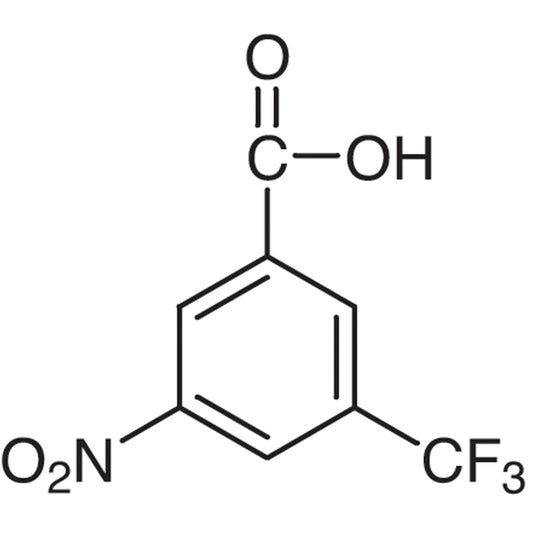
3-Trifluoromethyl-5-nitrobenzoicAcid TCI T1344
Regular price From Rp 3.446.100,00Regular price -
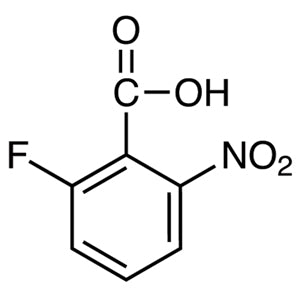
6-Fluoro-2-nitrobenzoicAcid TCI F1107
Regular price Rp 2.094.750,00Regular price -
2-Fluoro-4-nitrobenzoicAcid TCI F0797
Regular price From Rp 1.353.450,00Regular price -
4-Fluoro-2-nitrobenzoicAcid TCI F0737
Regular price From Rp 743.400,00Regular price -
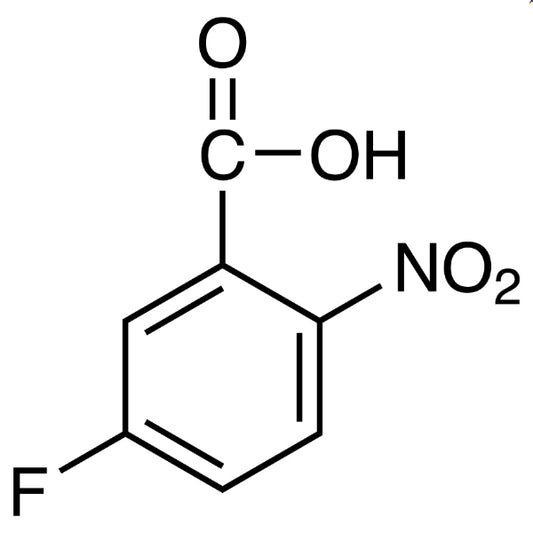
5-Fluoro-2-nitrobenzoicAcid TCI F0694
Regular price From Rp 1.644.300,00Regular price -
3-Fluoro-4-nitrobenzoicAcid TCI F0670
Regular price From Rp 1.405.950,00Regular price -
4-Fluoro-3-nitrobenzoicAcid TCI F0399
Regular price From Rp 1.298.850,00Regular price