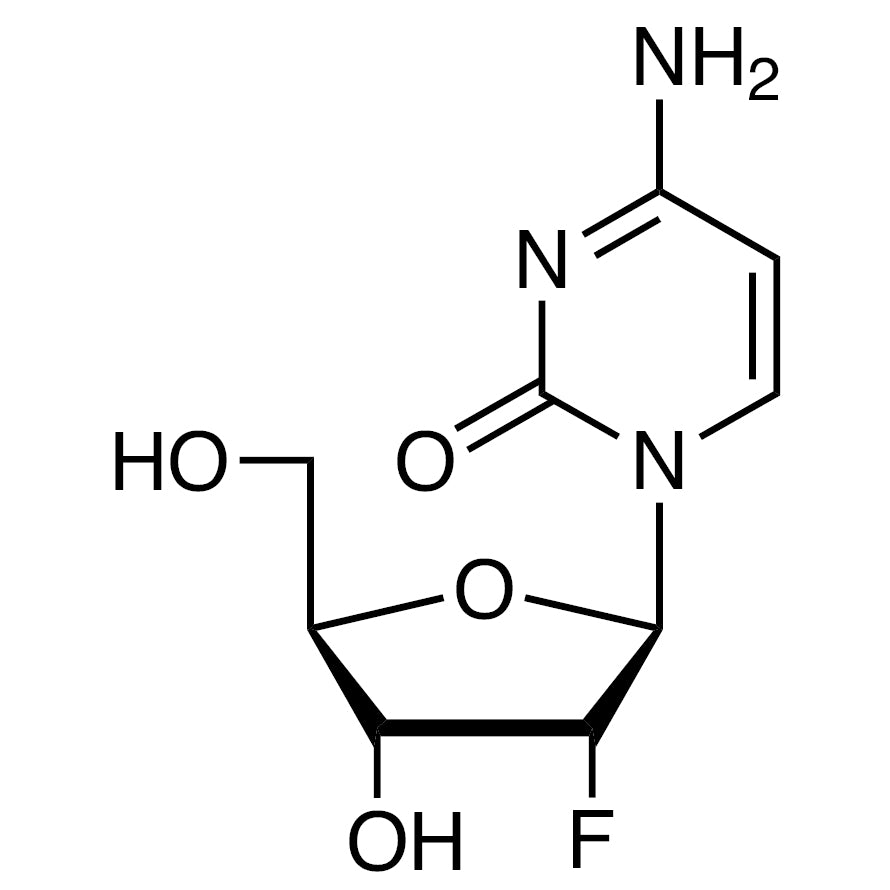
TCI D3614 2'-Deoxy-2'-fluorocytidine is a cytidine nucleoside analogue in which the hydroxyl group at the 2' position of the ribose sugar has been replaced by a fluorine atom. This small modification changes the behaviour of the molecule in meaningful ways, making the compound an important material in modern nucleic acid chemistry. In the laboratory it is used as a starting material for the synthesis of modified nucleotides and oligonucleotides, as a test compound in antiviral research, and as a reference material in chromatographic analyses involving fluorinated nucleosides.
The main reason this compound is selected is the influence of the fluorine atom on conformation and stability. Highly electronegative fluorine locks the sugar ring into a particular conformation, strengthens base pairing within nucleic acid strands, and makes both the glycosidic bond and the phosphodiester backbone more resistant to attack by nuclease enzymes. Because the size of fluorine is close to that of hydrogen, the modification adds almost no steric burden, so the molecule remains recognisable to many enzymes. As a solid that can be weighed accurately and that dissolves well in polar solvents, the material is straightforward to use for preparing stock solutions and for reaction work.
In Indonesian laboratories, this material is typically found in university and institutional research groups working on nucleic acid chemistry, medicinal chemistry, and antiviral screening, as well as in analytical laboratories that need a reference compound for methods involving fluorinated nucleosides. It is normally handled in small quantities on the analytical balance, dissolved in polar solvents to make stock solutions, and used either as a synthetic building block or as a comparison standard, with the remaining solid returned to controlled storage between uses.
- Synthesis of modified nucleotides — the compound serves as a starting material whose 2'-fluoro group is already in place, allowing chemists to build fluorinated nucleotides without carrying out the difficult fluorination step themselves.
- Preparation of modified oligonucleotides — incorporating this analogue gives strands with stronger base pairing and greater resistance to nuclease attack, which is exactly what oligonucleotide work with modified backbones requires.
- Antiviral research screening — the material is used as a test compound because the 2'-fluoro modification alters how the nucleoside is handled by biological systems while keeping the molecule small enough to stay enzymatically recognisable.
- Chromatographic reference material — as an accurately weighable solid with good solubility in polar solvents, it provides a dependable comparison peak in analytical methods involving fluorinated nucleosides.
- Structure–activity and conformational studies — because fluorine locks the sugar ring into a defined conformation with almost no added steric bulk, the compound is well suited to investigating how sugar geometry affects nucleic acid behaviour.
| Brand | TCI (Tokyo Chemical Industry), catalogue number D3614 |
|---|---|
| CAS number | 10212-20-1 |
| Molecular formula | — |
| Purity | — |
| Category | Life Science > Biochemicals and Reagents > Nucleosides, Nucleotides, Oligonucleotides |
| Pack sizes | available in the packaging options offered by TCI for this catalogue item; please confirm the size required when ordering |
| Physical form | solid, suitable for accurate weighing and readily soluble in polar solvents |
| Storage | — |
- Chemical class: cytidine nucleoside analogue with fluorine substituted at the 2' position of the ribose sugar
Store the container tightly closed in a cool, dry place away from direct sunlight, moisture, and sources of heat, and follow the storage conditions stated on the manufacturer's label and safety data sheet for this catalogue item. Keep the solid in its original container or in a clean, chemically compatible, well-sealed vessel that is clearly labelled; amber or opaque containers are preferred for light protection. Handle the material in a well-ventilated area or fume hood using a laboratory coat, safety glasses, and suitable gloves, and avoid generating dust when weighing. Return the solid promptly to storage after use to limit exposure to atmospheric moisture, keep prepared stock solutions tightly capped and labelled with contents and date, and dispose of residues and contaminated consumables in accordance with local laboratory chemical waste procedures.
—
Produk Terkait
-
2',3'-Di-O-acetyl-5'-deoxy-5-fluorocytidine TCI D4969
Regular price From Rp 795.900,00Regular price -
5'-Deoxy-5-fluorocytidine TCI D4342
Regular price From Rp 743.400,00Regular price -
2'-Deoxy-5-fluorocytidine TCI D3642
Regular price Rp 5.935.650,00Regular price -
5-Fluorocytidine TCI F0534
Regular price Rp 1.326.150,00Regular price -
2'-Deoxy-2'-fluoroguanosine TCI D6293
Regular price From Rp 2.359.350,00Regular price -
2'-Deoxy-5-(hydroxymethyl)uridine TCI D6190
Regular price From Rp 3.392.550,00Regular price -
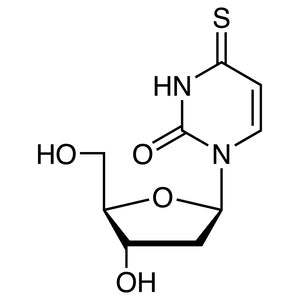
2'-Deoxy-4-thiouridine TCI D6061
Regular price Rp 4.584.300,00Regular price -
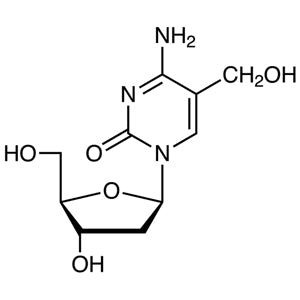
2'-Deoxy-5-(hydroxymethyl)cytidine TCI D4220
Regular price From Rp 4.213.650,00Regular price