

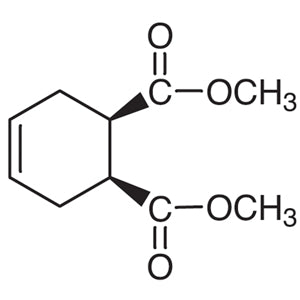
TCI D3703 Dimethyl cis-4-Cyclohexene-1,2-dicarboxylate (CAS 4841-84-3) is the dimethyl diester of 4-cyclohexene-1,2-dicarboxylic acid in the cis configuration, structurally equivalent to the product of a Diels–Alder reaction between butadiene and a maleate derivative. In the organic synthesis laboratory, this compound serves as a non-heterocyclic building block that offers three reactive handles at once: two neighbouring ester groups and one carbon–carbon double bond within the ring. That combination makes it a highly versatile starting material for constructing substituted cyclohexane compounds as well as more complex bridged and polycyclic frameworks.
The property that makes this material attractive is the presence of an intact double bond that sits apart from the ester groups. This internal alkene can be directed into a wide range of transformations such as epoxidation, dihydroxylation, hydrogenation, hydroboration, oxidative cleavage to dialdehydes or acids, and metathesis reactions. Because the ester groups are not conjugated with the alkene, the reactivity of the two regions remains relatively independent, so researchers can modify one part of the molecule without disturbing the other. The cis configuration of the two esters further opens the way to stereochemically controlled work, since both carbonyl groups lie on the same face of the ring.
In Indonesian laboratories, this building block is typically used in university and institutional organic synthesis groups, in methodology and stereochemistry research, and in preparative work that requires a defined cyclohexene scaffold rather than an aromatic one. It is generally ordered as a research-scale reagent for multi-step routes, for teaching advanced synthesis practicals, and for internal method development where a bifunctional ester with a reactive ring alkene is needed as the entry point to a target skeleton.
- Cyclohexane scaffold construction: the intact ring alkene and the two adjacent esters allow chemists to build substituted cyclohexane targets from a single, well-defined starting framework.
- Alkene functionalization studies: the internal double bond can be epoxidized, dihydroxylated, hydrogenated, or hydroborated, making the compound a convenient substrate for comparing alkene transformation methods.
- Oxidative cleavage routes: the ring double bond can be cleaved oxidatively to dialdehydes or diacids, giving access to open-chain difunctional intermediates that retain both original ester groups.
- Stereoselective synthesis work: the fixed cis relationship between the two ester groups provides a defined stereochemical starting point for research on diastereoselective ring functionalization.
- Bridged and polycyclic synthesis: as a Diels–Alder-type adduct equivalent, it acts as an entry point for building bridged and polycyclic systems in multi-step preparative sequences.
| Brand | TCI (Tokyo Chemical Industry) |
|---|---|
| CAS number | 4841-84-3 |
| Molecular formula | — |
| Purity | — |
| Category | Chemistry > Building Blocks > Non-Heterocyclic Building Blocks |
| Pack sizes | available in standard TCI research-scale packaging; please confirm the currently offered pack size when ordering |
| Physical form | — |
| Storage | keep in the tightly closed original container, protected from light and heat, in accordance with the manufacturer's stated storage condition on the label |
- Catalogue number: D3703
- Chemical name: Dimethyl cis-4-Cyclohexene-1,2-dicarboxylate
Store the container tightly closed in a cool, dry, well-ventilated chemical store away from heat, direct sunlight, ignition sources, and strong oxidizing agents. Keep the material in its original manufacturer container, or in a compatible tightly sealed glass or approved chemical-resistant bottle if transfer is required, and label any secondary container clearly. Handle in a fume hood using safety goggles, chemical-resistant gloves, and a laboratory coat, and avoid inhalation of vapours or contact with skin and eyes. Consult the manufacturer's Safety Data Sheet before use, and dispose of residues and contaminated materials as regulated chemical waste according to institutional procedures.
—
Produk Terkait
-
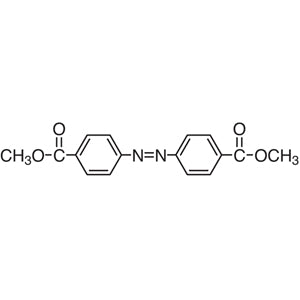
DimethylAzobenzene-4,4'-dicarboxylate TCI A1581
Regular price From Rp 2.571.450,00Regular price -
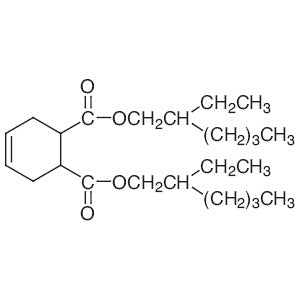
Bis(2-ethylhexyl)4-Cyclohexene-1,2-dicarboxylate TCI T0605
Regular price From Rp 477.750,00Regular price -
DimethylBicyclo[1.1.1]pentane-1,3-dicarboxylate TCI D6351
Regular price Rp 3.260.250,00Regular price -
2,4-Dimethyl-3-cyclohexene-1-carboxaldehyde(mixtureofisomers) TCI D5743
Regular price From Rp 1.035.300,00Regular price -
Diglycidyl4-Cyclohexene-1,2-dicarboxylate TCI D5576
Regular price Rp 848.400,00Regular price -
DimethylCubane-1,4-dicarboxylate TCI D5542
Regular price From Rp 2.359.350,00Regular price -
Dimethyl7-Oxabicyclo[2.2.1]hepta-2,5-diene-2,3-dicarboxylate TCI D4414
Regular price From Rp 1.193.850,00Regular price -
Diethylcis-4-Cyclohexene-1,2-dicarboxylate TCI D3714
Regular price Rp 2.837.100,00Regular price
![Dimethyl Bicyclo[1.1.1]pentane-1,3-dicarboxylate (CAS 115913-32-1) - TCI D6351 - AMI Scientific](http://amiscientific.com/cdn/shop/files/TCI2510D6351.jpg?v=1767110078&width=533)


![Dimethyl 7-Oxabicyclo[2.2.1]hepta-2,5-diene-2,3-dicarboxylate (CAS 1829-60-3) - TCI D4414 - AMI Scientific](http://amiscientific.com/cdn/shop/files/TCI2510D4414.jpg?v=1767107531&width=533)
