TCI D4201, 2,6-Dichloro-4-(4,4,5,5-tetramethyl-1,3,2-dioxaborolan-2-yl)phenol with CAS number 1003298-87-0, is an organoboron reagent belonging to the organometallic reagent family. Its molecular structure consists of a phenol ring carrying two chlorine atoms at the positions ortho to the hydroxyl group, together with a pinacol boronate ester group at the para position. This combination of three distinct functional groups on a single aromatic core makes the compound a highly useful starting material in modern organic synthesis, particularly in cross-coupling reactions that require both a boron partner and an additional handle for further functionalization within the same molecule.
The characteristic that makes this reagent a preferred choice among researchers is the stability of the pinacol boronate ester, which is considerably easier to handle, weigh, and store than the corresponding free boronic acid, since free boronic acids tend to form cyclic anhydrides and complicate accurate stoichiometric determination. The phenolic hydroxyl group provides a site for etherification, esterification, or directed hydrogen bonding, while the two ortho chlorine atoms exert an electronic effect that lowers the electron density of the ring and at the same time introduce a distinctive steric environment. Together, these features allow researchers to design synthetic strategies around a single, well-defined building block.
In Indonesian laboratories, this reagent is typically used in university research groups, government research institutes, and industrial R&D units engaged in synthetic organic chemistry and medicinal chemistry programmes. It is commonly employed at the bench scale within multi-step synthesis campaigns, where a reliable and reproducible boron coupling partner is needed. Because the pinacol ester form is straightforward to weigh out and store under ordinary laboratory conditions, it fits well into teaching and research workflows that depend on consistent, well-characterised commercial reagents.
TCI brochures (PDF)
- Suzuki-Miyaura Cross Coupling Reaction 2025-12-01 · p. 16
- Boron Compounds 2025-10-07 · p. 15
Related TCI products
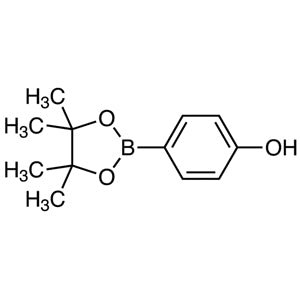
- TCI T1954 269409-70-3 4-(4,4,5,5-Tetramethyl-1,3,2-dioxaborolan-2-yl)phenol
- TCI D5574 408492-27-3 2,6-Dichloro-4-(4,4,5,5-tetramethyl-1,3,2-dioxaborolan-2-yl)pyridine
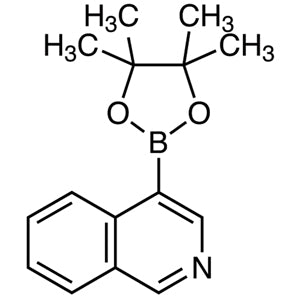
- TCI I0739 685103-98-4 4-(4,4,5,5-Tetramethyl-1,3,2-dioxaborolan-2-yl)isoquinoline
- TCI T4406 1219637-88-3 1-(4,4,5,5-Tetramethyl-1,3,2-dioxaborolan-2-yl)-9H-carbazole
- TCI T4400 942919-26-8 4-(4,4,5,5-Tetramethyl-1,3,2-dioxaborolan-2-yl)-1H-pyrrolo[2,3-b]pyridine
- TCI T4396 928664-98-6 4-(4,4,5,5-Tetramethyl-1,3,2-dioxaborolan-2-yl)isoxazole
- Suzuki-Miyaura cross-coupling reactions: the pinacol boronate ester acts as a stable and reliable boron partner for forming carbon-carbon bonds with aryl halides and related electrophiles under palladium catalysis.
- Medicinal chemistry building block synthesis: the three independent functional groups allow chemists to assemble substituted biaryl scaffolds and elaborate them further without needing to introduce additional handles at a later stage.
- Sequential functionalization strategies: after the boronate has been consumed in coupling, the phenolic hydroxyl group remains available for etherification or esterification, enabling a controlled, stepwise construction of complex targets.
- Materials and ligand precursor preparation: the electron-poor dichlorophenol ring provides a distinctive electronic profile that is useful when preparing aromatic frameworks and coordinating motifs for functional material studies.
- Method development and reaction screening: the well-defined, easily weighed solid form supports accurate stoichiometry, making it suitable for optimising catalyst systems, solvents, and bases in coupling methodology studies.
| Brand | TCI |
|---|---|
| CAS number | 1003298-87-0 |
| Molecular formula | — |
| Purity | — |
| Category | Chemistry > Organometallic Reagents > Organoboron [Organometallic Reagents] |
| Pack sizes | available in standard TCI research-scale packaging; please confirm the currently offered pack size when ordering |
| Physical form | — |
| Storage | store in a tightly closed container in a cool, dry place away from moisture |
- Chemical name: 2,6-Dichloro-4-(4,4,5,5-tetramethyl-1,3,2-dioxaborolan-2-yl)phenol
Store the reagent in a tightly closed original container in a cool, dry, and well-ventilated area, protected from moisture and direct sunlight, since boronate esters are sensitive to prolonged exposure to humid air. Use amber or opaque chemically resistant containers where extended storage is required, and keep the container closed when not in active use. Handle the material inside a fume hood, wearing safety goggles, chemical-resistant gloves, and a laboratory coat. Weigh the solid carefully to avoid dust formation, and always consult the manufacturer's safety data sheet before use, disposal, or transfer between containers.
—
Produk Terkait
-
4-(4,4,5,5-Tetramethyl-1,3,2-dioxaborolan-2-yl)phenol TCI T1954
Regular price From Rp 1.298.850,00Regular price -
2,6-Dichloro-4-(4,4,5,5-tetramethyl-1,3,2-dioxaborolan-2-yl)pyridine TCI D5574
Regular price From Rp 2.279.550,00Regular price -
4-(4,4,5,5-Tetramethyl-1,3,2-dioxaborolan-2-yl)isoquinoline TCI I0739
Regular price From Rp 2.386.650,00Regular price -
1-(4,4,5,5-Tetramethyl-1,3,2-dioxaborolan-2-yl)-9H-carbazole TCI T4406
Regular price Rp 3.021.900,00Regular price -
4-(4,4,5,5-Tetramethyl-1,3,2-dioxaborolan-2-yl)-1H-pyrrolo[2,3-b]pyridine TCI T4400
Regular price From Rp 3.630.900,00Regular price -
4-(4,4,5,5-Tetramethyl-1,3,2-dioxaborolan-2-yl)isoxazole TCI T4396
Regular price From Rp 2.174.550,00Regular price -
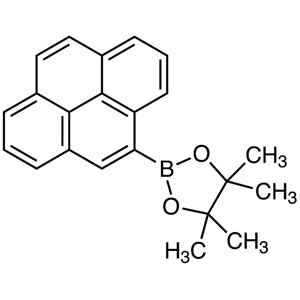
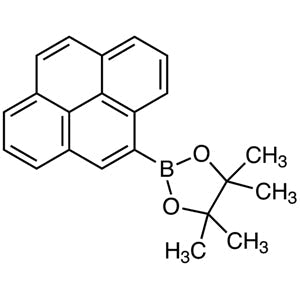
4-(4,4,5,5-Tetramethyl-1,3,2-dioxaborolan-2-yl)pyrene TCI T3857
Regular price Rp 4.399.500,00Regular price -
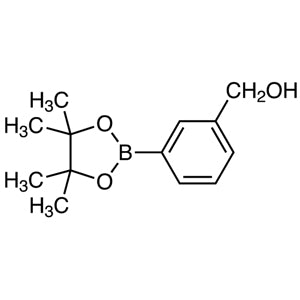
3-(4,4,5,5-Tetramethyl-1,3,2-dioxaborolan-2-yl)benzylAlcohol TCI T3830
Regular price From Rp 717.150,00Regular price


![942919-26-8 4-(4,4,5,5-Tetramethyl-1,3,2-dioxaborolan-2-yl)-1H-pyrrolo[2,3-b]pyridine - AMI Scientific](http://amiscientific.com/cdn/shop/files/TCI2510T4400.jpg?v=1767145178&width=533)