TCI D4849 2',6'-Dimethoxyacetophenone is an aromatic ketone in which the acetyl group is flanked by two methoxy groups occupying both ortho positions of the benzene ring. This symmetrical arrangement gives the molecule a distinctive structural character and makes it a useful intermediate in organic synthesis, particularly in research connected to naturally derived compounds such as flavonoids, chromones, and other polyphenolic families. The methyl ketone group is a highly productive reaction centre, because its alpha hydrogens are readily removed to form a reactive enolate that can be engaged in a wide range of carbon–carbon bond-forming transformations.
The property that makes this building block a preferred choice is the combination of enolate reactivity with the steric and electronic influence of the two methoxy substituents. The methoxy groups donate electron density into the aromatic ring, which affects both the acidity of the alpha hydrogens and the behaviour of the carbonyl group, while their position flanking the acetyl substituent forces the carbonyl slightly out of the plane of the ring. These conditions together produce interesting and often useful selectivity in a number of reactions. Through Claisen–Schmidt condensation the compound can be converted into chalcones, and through the Baker–Venkataraman rearrangement it becomes an entry point toward chromone and flavone skeletons.
In Indonesian laboratories, this building block is typically used in university and institutional research settings where synthetic organic chemistry and natural product chemistry are studied. It supports work on flavonoid and chromone analogues, method development in condensation and rearrangement chemistry, and the preparation of intermediates for further functionalisation. As a TCI-branded reagent supplied through AMI Scientific, it is generally purchased in research-scale quantities for bench synthesis, teaching laboratories, and scale-up feasibility studies rather than for routine bulk production work.
Related TCI products
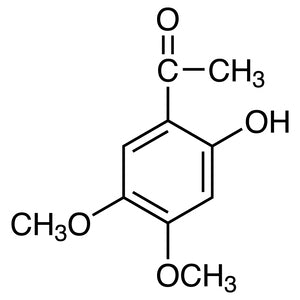
- TCI H1206 20628-06-2 2'-Hydroxy-4',5'-dimethoxyacetophenone
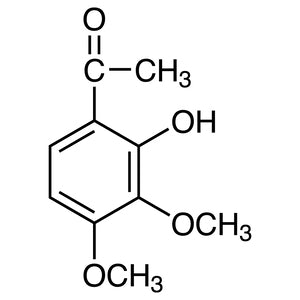
- TCI H1205 5396-18-9 2'-Hydroxy-3',4'-dimethoxyacetophenone
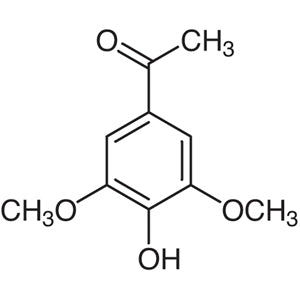
- TCI D2666 2478-38-8 4'-Hydroxy-3',5'-dimethoxyacetophenone
- TCI D2030 829-20-9 2',4'-Dimethoxyacetophenone
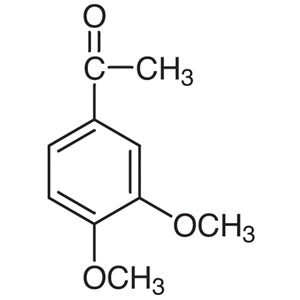
- TCI D1878 1131-62-0 3',4'-Dimethoxyacetophenone
- TCI D1444 1201-38-3 2',5'-Dimethoxyacetophenone
- Chalcone synthesis via Claisen–Schmidt condensation: the readily formed enolate at the methyl ketone reacts cleanly with aromatic aldehydes, giving access to a broad chalcone library.
- Chromone and flavone skeleton construction through the Baker–Venkataraman rearrangement, where this ketone serves as the entry point toward the oxygen-containing heterocyclic cores of these families.
- Flavonoid analogue research: the two ortho methoxy groups mimic the substitution patterns commonly found in natural polyphenols, making it suitable for structure–activity studies.
- General non-heterocyclic building block work: the reactive alpha hydrogens allow alkylation, aldol-type coupling, and further elaboration of the acetyl group into larger organic frameworks.
- Methodology and selectivity studies: the out-of-plane carbonyl caused by the flanking methoxy substituents provides a useful test substrate when investigating steric and electronic effects on reaction outcome.
| Brand | TCI (Tokyo Chemical Industry) |
|---|---|
| CAS number | 2040-04-2 |
| Molecular formula | — |
| Purity | — |
| Category | Chemistry > Building Blocks > Non-Heterocyclic Building Blocks |
| Pack sizes | available in standard TCI research-scale packaging; please confirm the currently offered pack size when ordering |
| Physical form | — |
| Storage | store in a cool, dry place in a tightly closed original container, away from light and moisture |
- Catalogue Code: D4849
Store the material in its original tightly closed container in a cool, dry, and well-ventilated area, protected from direct sunlight, heat sources, and moisture. Keep containers sealed when not in use to prevent absorption of atmospheric moisture and to preserve material quality over time. Handle the compound inside a fume hood using standard laboratory personal protective equipment, including safety goggles, chemical-resistant gloves, and a laboratory coat. Avoid inhalation of dust and direct contact with skin and eyes. Use clean, dry spatulas and glassware when weighing or transferring to avoid cross-contamination, and always consult the manufacturer's safety data sheet before use, storage, or disposal.
—
Produk Terkait
-
2'-Hydroxy-4',5'-dimethoxyacetophenone TCI H1206
Regular price Rp 5.009.550,00Regular price -
2'-Hydroxy-3',4'-dimethoxyacetophenone TCI H1205
Regular price From Rp 1.829.100,00Regular price -
4'-Hydroxy-3',5'-dimethoxyacetophenone TCI D2666
Regular price From Rp 2.439.150,00Regular price -
2',4'-Dimethoxyacetophenone TCI D2030
Regular price Rp 1.193.850,00Regular price -
3',4'-Dimethoxyacetophenone TCI D1878
Regular price From Rp 1.008.000,00Regular price -
2',5'-Dimethoxyacetophenone TCI D1444
Regular price Rp 1.670.550,00Regular price -
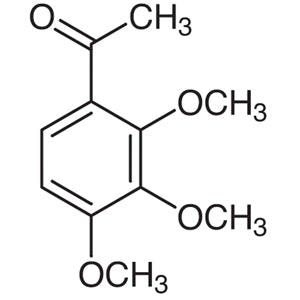
2',3',4'-Trimethoxyacetophenone TCI T1517
Regular price Rp 2.199.750,00Regular price -
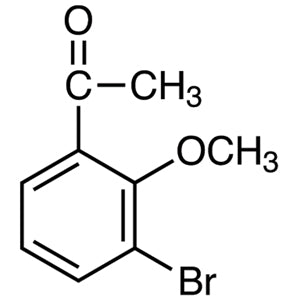
3'-Bromo-2'-methoxyacetophenone TCI B5498
Regular price From Rp 1.087.800,00Regular price