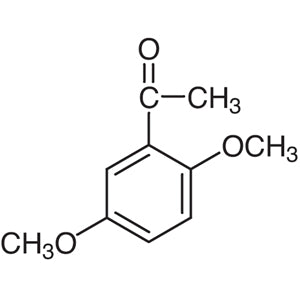
2',5'-Dimethoxyacetophenone is a chemical compound widely used as a building block in the synthesis of complex organic compounds. It serves as a versatile intermediate in various chemical reactions, particularly those involving aromatic substituent groups. Its role in the laboratory is crucial for constructing more complex molecular structures, enabling researchers to explore new chemical pathways and develop innovative products. This compound is essential in both academic and industrial research settings, where the ability to manipulate molecular frameworks is key to advancing chemical knowledge.
The compound is valued for its predictable chemical behavior and moderate reactivity, which make it suitable for a range of synthetic applications. Its non-volatile nature simplifies handling and storage, reducing the risk of evaporation during experiments. Additionally, its stable molecular structure allows it to interact reliably with a variety of reagents, including alcohols, acids, and bases. These properties ensure consistent results in laboratory experiments, making it a preferred choice for chemists working on organic synthesis projects.
In Indonesian laboratories, 2',5'-Dimethoxyacetophenone is commonly used in chemical research, especially in the field of organic synthesis. It is a key component in the development of new products and the study of complex reaction mechanisms. Many research institutions and universities in Indonesia rely on this compound to support their scientific investigations and contribute to advancements in chemical science.
Related TCI products
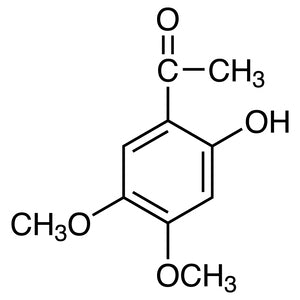
- TCI H1206 20628-06-2 2'-Hydroxy-4',5'-dimethoxyacetophenone
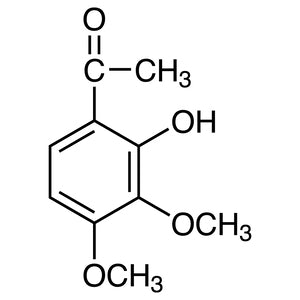
- TCI H1205 5396-18-9 2'-Hydroxy-3',4'-dimethoxyacetophenone
- TCI D4849 2040-04-2 2',6'-Dimethoxyacetophenone
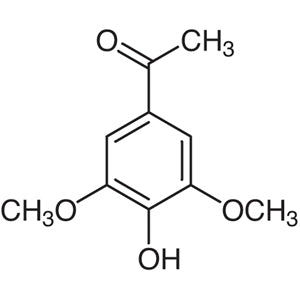
- TCI D2666 2478-38-8 4'-Hydroxy-3',5'-dimethoxyacetophenone
- TCI D2030 829-20-9 2',4'-Dimethoxyacetophenone
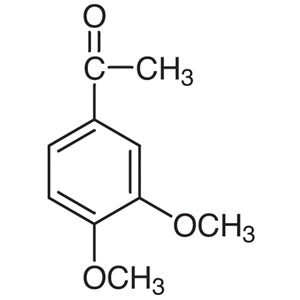
- TCI D1878 1131-62-0 3',4'-Dimethoxyacetophenone
- Organic synthesis applications benefit from its role as a building block in creating complex molecular structures.
- It is ideal for aromatic substitution reactions due to its stable aromatic group and reactive methoxy substituents.
- Research into heterocyclic compounds often utilizes this compound as a starting material for ring formation.
- It supports the development of new pharmaceuticals by enabling the synthesis of structurally diverse molecules.
- In academic settings, it is frequently used to teach and demonstrate fundamental principles of organic chemistry.
| Brand | TCI |
|---|---|
| CAS number | 1201-38-3 |
| Molecular formula | — |
| Purity | — |
| Category | Chemistry > Building Blocks > Non-Heterocyclic Building Blocks |
| Pack sizes | Available in various quantities as per standard laboratory supply |
| Physical form | Solid or liquid, depending on the specific product variant |
| Storage | Store in a cool, dry place away from direct sunlight |
This compound should be stored in a cool, dry environment to maintain its stability and prevent degradation. It is recommended to use airtight containers to minimize exposure to moisture and air, which can affect its chemical integrity. Due to its non-volatile nature, it is less prone to evaporation, but proper sealing is still advised. Laboratory personnel should handle it with care, using appropriate personal protective equipment when necessary. It is important to ensure that storage conditions are consistent to preserve its reactivity and usability in chemical experiments. Always follow standard safety protocols when working with chemical compounds to ensure a safe laboratory environment.
—
Produk Terkait
-
2'-Hydroxy-4',5'-dimethoxyacetophenone TCI H1206
Regular price Rp 5.009.550,00Regular price -
2'-Hydroxy-3',4'-dimethoxyacetophenone TCI H1205
Regular price From Rp 1.829.100,00Regular price -
2',6'-Dimethoxyacetophenone TCI D4849
Regular price From Rp 557.550,00Regular price -
4'-Hydroxy-3',5'-dimethoxyacetophenone TCI D2666
Regular price From Rp 2.439.150,00Regular price -
2',4'-Dimethoxyacetophenone TCI D2030
Regular price Rp 1.193.850,00Regular price -
3',4'-Dimethoxyacetophenone TCI D1878
Regular price From Rp 1.008.000,00Regular price -
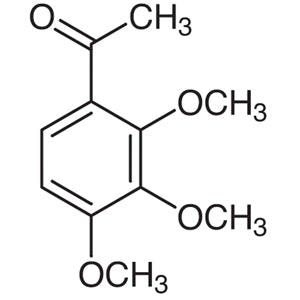
2',3',4'-Trimethoxyacetophenone TCI T1517
Regular price Rp 2.199.750,00Regular price -
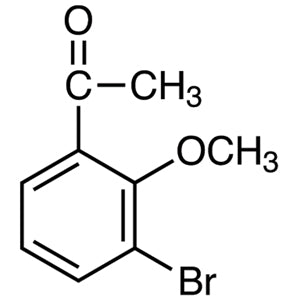
3'-Bromo-2'-methoxyacetophenone TCI B5498
Regular price From Rp 1.087.800,00Regular price