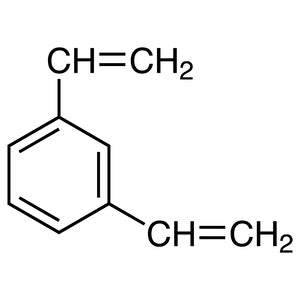
1,3-Divinylbenzene (stabilized with TBC) is a chemical compound widely used as a building block in various laboratory applications. It is a key reagent in organic chemistry due to its aromatic structure and two vinyl groups positioned at the 1 and 3 positions of the benzene ring. This compound plays a crucial role in the synthesis of complex organic molecules, making it an essential component in research and development settings. Its versatility allows it to participate in multiple reaction types, including addition and substitution reactions, which are fundamental in chemical synthesis.
The properties that make 1,3-Divinylbenzene a preferred choice include its stability and non-polar nature, which facilitate solubility in organic solvents. The stabilization with tert-butylcatechol (TBC) ensures that the compound remains chemically stable during storage and use, reducing the risk of degradation. This stability is particularly important in laboratory environments where long-term storage and repeated use are common. Additionally, its reactivity and compatibility with various functional groups make it a valuable tool in synthetic chemistry.
In Indonesian laboratories, 1,3-Divinylbenzene is commonly used in organic chemistry research, especially in academic institutions and research centers. Its role in the synthesis of polymers and other chemical compounds makes it a popular choice for both educational and industrial applications. The compound’s reliability and performance in controlled laboratory conditions ensure consistent results in chemical experiments and processes.
Related TCI products
- TCI D6110 105-06-6 1,4-Divinylbenzene (stabilized with TBC)
- TCI D0958 1321-74-0 Divinylbenzene (m- and p- mixture) (contains Ethylvinylbenzene, Diethylbenzene) (stabilized with TBC)
- TCI V0130 2444-68-0 9-Vinylanthracene
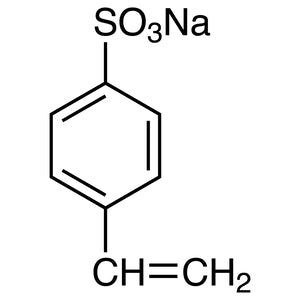
- TCI O0609 2695-37-6 Sodium 4-Vinylbenzenesulfonate
- TCI M0428 622-97-9 4-Methylstyrene (stabilized with TBC)
- TCI M0259 611-15-4 2-Methylstyrene (stabilized with TBC)
- Organic synthesis applications benefit from 1,3-Divinylbenzene due to its reactivity and ability to form cross-linked polymers.
- Polymer research utilizes this compound for creating cross-linked structures, enhancing the mechanical properties of the final product.
- Chemical reaction testing often involves this compound because of its stability and compatibility with various functional groups.
- Teaching laboratories use it to demonstrate key organic chemistry concepts, such as addition and substitution reactions.
- Industrial chemical development relies on this compound for the synthesis of complex molecules and materials.
| Brand | TCI |
|---|---|
| CAS number | 108-57-6 |
| Molecular formula | — |
| Purity | — |
| Category | Chemistry > Building Blocks > Non-Heterocyclic Building Blocks |
| Pack sizes | Available in various quantities as per supplier specifications |
| Physical form | Liquid |
| Storage | Store in a cool, dry place away from light and incompatible materials |
This compound should be stored in a cool, dry environment, away from direct sunlight and sources of heat. It is recommended to keep it in a sealed container to prevent exposure to air and moisture. Due to its non-polar nature, it is advisable to use containers made of materials that are chemically inert, such as glass or high-density polyethylene. In laboratory settings, it is important to handle the compound with care, using appropriate personal protective equipment. Ensure that the storage area is well-ventilated to minimize the risk of inhalation of vapors. Always follow standard safety protocols to maintain a safe working environment.
—
Product Categories
Produk Terkait
-
1,4-Divinylbenzene(stabilizedwithTBC) TCI D6110
Regular price From Rp 2.359.350,00Regular price -
Divinylbenzene(m-andp-mixture)(containsEthylvinylbenzene,Diethylbenzene)(stabilizedwithTBC) TCI D0958
Regular price From Rp 584.850,00Regular price -
9-Vinylanthracene TCI V0130
Regular price From Rp 2.545.200,00Regular price -
Sodium4-Vinylbenzenesulfonate TCI O0609
Regular price From Rp 980.700,00Regular price -
4-Methylstyrene(stabilizedwithTBC) TCI M0428
Regular price From Rp 955.500,00Regular price -
2-Methylstyrene(stabilizedwithTBC) TCI M0259
Regular price Rp 5.009.550,00Regular price -
1-Methoxy-2-vinylbenzene(stabilizedwithHQ) TCI E1556
Regular price From Rp 3.817.800,00Regular price -
2-VinylbenzoicAcid TCI V0188
Regular price From Rp 2.147.250,00Regular price