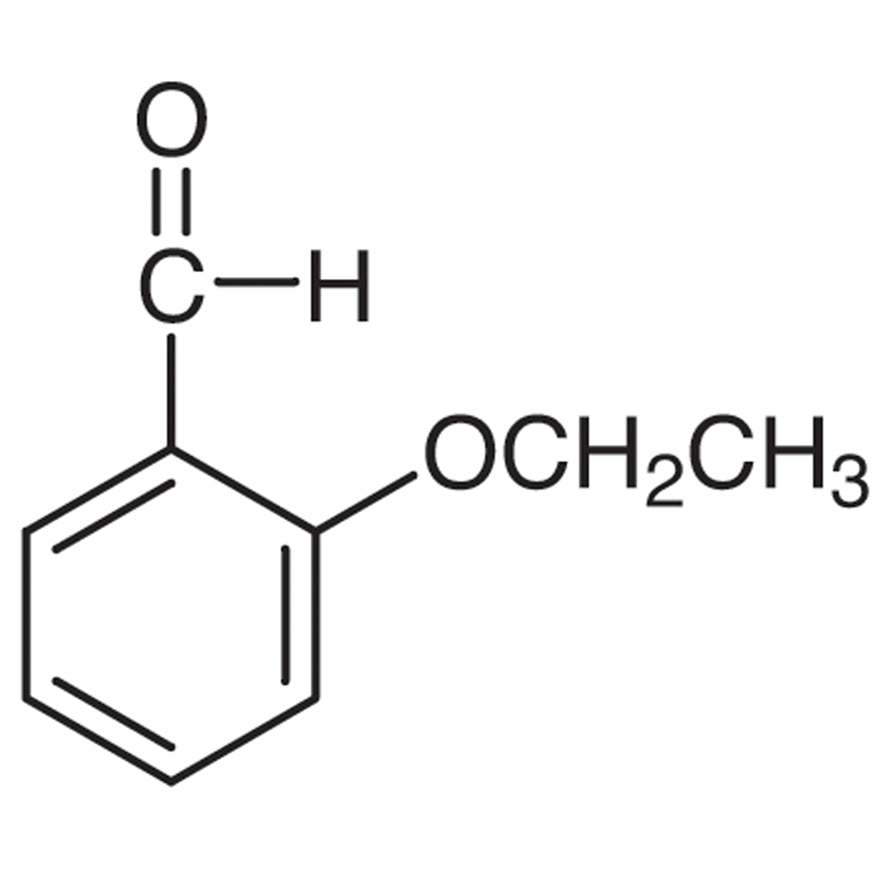
TCI E0058 2-Ethoxybenzaldehyde is an aromatic aldehyde that carries an ethoxy group at the ortho position relative to the formyl group. The close proximity of these two functional groups gives the compound a distinctive and highly useful chemical character: the ethoxy group sits directly adjacent to the carbonyl, allowing it to participate in cyclization reactions that form new rings. For this reason, the compound is widely used in the laboratory as a starting material for the synthesis of heterocyclic compounds, for the preparation of Schiff bases, and for condensation reactions that demand a controlled ortho substitution pattern.
The property that makes this material a preferred choice is the high yet well-directed reactivity of its aldehyde group. The aromatic formyl group condenses readily with primary amines, hydrazines, and active methylene compounds under relatively mild conditions, so reaction products are generally clean and do not demand prolonged purification. Meanwhile, the ethoxy group at the ortho position provides a degree of steric hindrance that is in fact useful for steering the reaction toward the desired pathway. Synthetic purity from TCI matters here because aromatic aldehydes can oxidize to the corresponding acid when quality is not maintained, and such acidic impurities noticeably reduce the yield of condensation reactions.
In Indonesian laboratories, this building block is typically encountered in organic synthesis work where a reliable ortho-substituted benzaldehyde is needed as the entry point to a larger molecular framework. It suits academic research groups exploring heterocyclic chemistry, laboratories preparing Schiff base ligands, and process development work where condensation steps must proceed reproducibly from batch to batch. Because consistent aldehyde quality directly determines the outcome of the first step, laboratories generally prefer a defined synthetic grade over material of uncertain provenance.
- Heterocyclic compound synthesis — the ortho ethoxy group can take part in ring-closing steps, making this aldehyde a direct entry point to new heterocyclic scaffolds without additional functional group manipulation.
- Schiff base preparation — the aromatic formyl group condenses cleanly with primary amines under mild conditions, giving imine products that are straightforward to isolate and characterize.
- Condensation reactions with active methylene compounds — the reactive aldehyde couples efficiently in classical condensation chemistry, and the clean reaction profile keeps downstream purification work to a minimum.
- Controlled ortho-substitution chemistry — laboratories select this compound specifically when a defined ortho substitution pattern is required, since the ethoxy group provides steric direction toward the intended product.
- Hydrazone and derivative formation — reaction with hydrazines proceeds under relatively gentle conditions, supporting the preparation of derivatives for further synthetic elaboration or structural study.
| Brand | TCI |
|---|---|
| CAS number | 613-69-4 |
| Molecular formula | — |
| Purity | — |
| Category | Chemistry > Building Blocks > Non-Heterocyclic Building Blocks |
| Pack sizes | available in standard laboratory pack sizes; please refer to the current catalogue listing |
| Physical form | — |
| Storage | keep tightly closed and protected from air to limit oxidation of the aldehyde group |
- Product code: E0058
- Chemical class: aromatic aldehyde bearing an ortho ethoxy substituent
Store the container tightly closed in a cool, dry, well-ventilated area away from oxidizing agents, strong acids, and strong bases. Because aromatic aldehydes are prone to oxidation into the corresponding carboxylic acid on prolonged exposure to air, keep the original supplier container sealed and minimize the time it stays open on the bench; amber glass and, where practical, an inert gas headspace help preserve quality. Handle in a fume hood using safety goggles, chemical-resistant gloves, and a laboratory coat. Avoid inhalation of vapor and contact with skin or eyes, dispense with clean dry equipment to prevent cross-contamination, and dispose of residues and contaminated material through the laboratory's established chemical waste procedure.
—
Produk Terkait
-
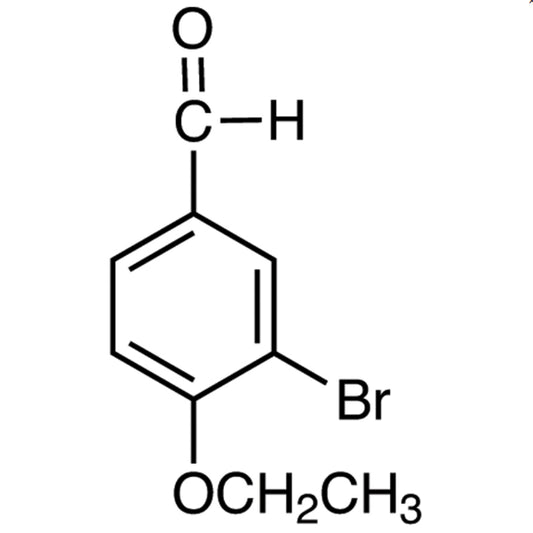
3-Bromo-4-ethoxybenzaldehyde TCI B5079
Regular price From Rp 584.850,00Regular price -
3-Ethoxybenzaldehyde TCI E1133
Regular price Rp 2.068.500,00Regular price -
4-Ethoxybenzaldehyde TCI E0042
Regular price From Rp 955.500,00Regular price