

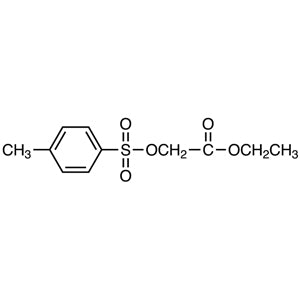
Ethyl 2-(p-Toluenesulfonyloxy)acetate is an alkylating reagent that serves as a carrier of the ethoxycarbonylmethyl group into a wide range of target molecules. Structurally, the compound consists of the ethyl ester of glycolic acid in which the hydroxyl group has been converted into a tosylate ester, an excellent leaving group. This arrangement makes the compound a practical electrophile for installing the –CH₂COOEt side chain onto the oxygen, nitrogen, or sulfur atom of a nucleophile, a transformation that is very frequently required in the construction of drug-like molecular frameworks and ligand scaffolds.
The property that makes this reagent the preferred choice is the balance it strikes between reactivity and ease of handling. Compared with ethyl bromoacetate, which is highly reactive but also known as a strong lachrymator and rather unpleasant to work with, this tosylate derivative is generally a solid that is easier to weigh out accurately, more stable in storage, and does not give off pungent vapours. The tosylate group provides sufficient reactivity toward moderate nucleophiles such as phenolates, thiolates, and amines, while its unexceptional reaction rate actually helps improve selectivity on substrates bearing more than one potentially reactive site.
In Indonesian laboratories, the reagent is typically used in synthetic organic chemistry groups at universities and research institutes, as well as in the formulation and process development units of the pharmaceutical and fine chemical industries. It is most often called upon at the stage where a side chain must be introduced onto an already assembled framework, so that the ester group can subsequently be hydrolysed or amidated. Its handling characteristics make it well suited to teaching and research settings where fume hood capacity is shared among many users.
Related TCI products
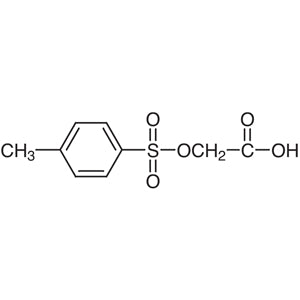
- TCI T2727 39794-77-9 2-(p-Toluenesulfonyloxy)acetic Acid
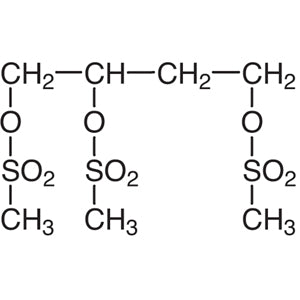
- TCI T1454 108963-16-2 1,2,4-Tris(methanesulfonyloxy)butane
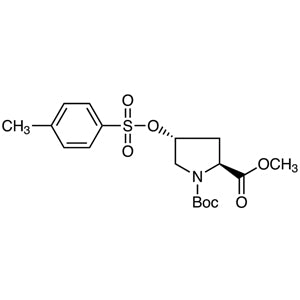
- TCI B5247 88043-21-4 N-(tert-Butoxycarbonyl)-trans-4-(p-toluenesulfonyloxy)-L-proline Methyl Ester
- TCI A0228 123-86-4 Butyl Acetate [for Spectrophotometry]
- TCI A0045 108-05-4 Vinyl Acetate Monomer (stabilized with HQ)
- TCI A0044 109-60-4 Propyl Acetate
- O-Alkylation of phenols and phenolates: the tosylate leaving group allows clean introduction of the –CH₂COOEt fragment onto a phenolic oxygen without the pungent vapours associated with haloacetate alternatives.
- N-Alkylation of amines and nitrogen heterocycles: the moderate reaction rate of the tosylate helps limit over-alkylation and improves control when a nitrogen atom must receive a single acetate side chain.
- S-Alkylation of thiols and thiolates: sulfur nucleophiles react readily with this reagent, making it a convenient route to thioether-linked acetic ester fragments used in ligand and inhibitor synthesis.
- Building block for pharmaceutical intermediate synthesis: the ethoxycarbonylmethyl group it delivers can later be hydrolysed to a carboxylic acid or converted to an amide during downstream elaboration.
- Selective functionalisation of polyfunctional substrates: because the reagent is not excessively reactive, chemists can target one nucleophilic site on a molecule that carries several, reducing the need for extensive protecting group work.
| Brand | TCI (Tokyo Chemical Industry), catalogue number E0851 |
|---|---|
| CAS number | 39794-75-7 |
| Molecular formula | — |
| Purity | — |
| Category | Chemistry > Building Blocks > Non-Heterocyclic Building Blocks |
| Pack sizes | available in the standard research-scale pack sizes offered by the manufacturer; please confirm the currently available options when ordering |
| Physical form | generally supplied as a solid, convenient for accurate weighing |
| Storage | keep in a tightly closed original container in a cool, dry place |
- Chemical name: Ethyl 2-(p-Toluenesulfonyloxy)acetate
Store the reagent in its tightly closed original container in a cool, dry, well-ventilated location, away from moisture, heat, and direct sunlight, since tosylate esters are susceptible to slow hydrolysis when exposed to humid air. Keep the container separated from strong bases and strong nucleophiles. All weighing and transfer operations should be performed in a fume hood using clean, dry glassware or spatulas, with standard personal protective equipment: safety glasses, chemically resistant gloves, and a laboratory coat. As an alkylating agent, the compound should be treated as potentially irritating to skin, eyes, and the respiratory tract, so avoid direct contact and inhalation of dust. Clean up spills promptly with a dry absorbent material and dispose of residues as chemical waste in accordance with the laboratory's own procedures. Always consult the manufacturer's safety data sheet before first use.
—
Produk Terkait
-
2-(p-Toluenesulfonyloxy)aceticAcid TCI T2727
Regular price Rp 4.743.900,00Regular price -
1,2,4-Tris(methanesulfonyloxy)butane TCI T1454
Regular price Rp 3.578.400,00Regular price -
N-(tert-Butoxycarbonyl)-trans-4-(p-toluenesulfonyloxy)-L-prolineMethylEster TCI B5247
Regular price From Rp 557.550,00Regular price -
ButylAcetate[forSpectrophotometry] TCI A0228
Regular price Rp 1.538.250,00Regular price -
VinylAcetateMonomer(stabilizedwithHQ) TCI A0045
Regular price Rp 477.750,00Regular price -
PropylAcetate TCI A0044
Regular price From Rp 477.750,00Regular price -
PhenylAcetate TCI A0043
Regular price Rp 452.550,00Regular price -
n-OctylAcetate TCI A0042
Regular price From Rp 505.050,00Regular price

![123-86-4 Butyl Acetate [for Spectrophotometry] - AMI Scientific](http://amiscientific.com/cdn/shop/files/TCI2510A0228.jpg?v=1767078302&width=533)


