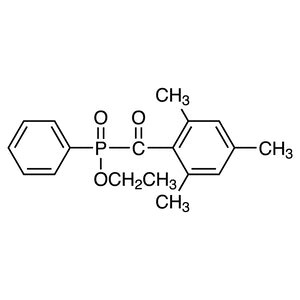
Ethyl Phenyl(2,4,6-trimethylbenzoyl)phosphinate is a chemical compound widely used as a photoinitiator in photochemical polymerization processes. This material plays a crucial role in the synthesis of light-sensitive polymers, such as photopolymer resins and chemical films. In laboratory settings, it is employed to trigger chemical reactions through exposure to ultraviolet (UV) light, thereby accelerating the formation of polymers. Its ability to initiate polymerization without the need for high temperatures or extreme pressures makes it a valuable tool in modern materials science.
The compound is favored for its chemical stability under specific conditions and its effectiveness in linking monomers to the final polymer structure. Its photoreactive nature ensures efficient initiation of polymerization reactions, making it a preferred choice for applications requiring controlled and rapid curing. The solid form of the compound also facilitates storage and handling, contributing to its practicality in laboratory environments.
In Indonesian laboratories, this material is commonly used in research related to new material development, including composite films, surface coatings, and construction materials. Its ability to produce durable and lightweight materials makes it a relevant choice for studies in material technology and chemistry. Researchers rely on this compound to achieve precise control over polymerization processes, supporting innovation in various industrial and academic applications.
- Photopolymer Resin Synthesis: This compound is ideal for creating resins that cure under UV light, offering fast and efficient polymerization for industrial and academic applications.
- Composite Film Development: It is used in the production of composite films where light sensitivity and rapid curing are essential for achieving desired material properties.
- Surface Coating Formulation: The material enables the creation of UV-curable coatings, providing durable and protective layers on various surfaces.
- Construction Material Innovation: It supports the development of lightweight and durable construction materials by facilitating controlled polymerization processes.
- Advanced Material Research: Its role in photoinitiation makes it a key component in studies focused on new material synthesis and functional polymer design.
| Brand | TCI |
|---|---|
| CAS number | 84434-11-7 |
| Molecular formula | — |
| Purity | — |
| Category | Materials Science > Polymer/Macromolecule Reagents > Polymerization Reagents |
| Pack sizes | Available in various quantities as per supplier specifications |
| Physical form | Solid |
| Storage | Store in a cool, dry place away from direct light |
This material should be stored in a cool, dry environment, away from direct sunlight and sources of heat. It is recommended to use airtight containers to prevent moisture absorption and maintain its chemical integrity. Due to its photoreactive nature, it should be kept in a dark location when not in use. Proper labeling of containers is essential to ensure safe handling and prevent accidental exposure. Laboratory personnel should wear appropriate personal protective equipment, such as gloves and safety goggles, when handling this compound. Regular inspection of storage conditions is advised to ensure long-term stability and usability of the material.
—
Produk Terkait
-
Eicosane TCI E0003
Regular price From Rp 1.063.650,00Regular price -
1-Eicosanol TCI E0004
Regular price From Rp 1.979.250,00Regular price -
1-Eicosene TCI E0005
Regular price Rp 1.623.300,00Regular price -
ArachidicAcid TCI E0006
Regular price From Rp 1.034.250,00Regular price -
SodiumHeptanoate TCI E0009
Regular price Rp 6.051.150,00Regular price -
Epichlorohydrin TCI E0012
Regular price From Rp 562.800,00Regular price -
StyreneOxide TCI E0013
Regular price From Rp 532.350,00Regular price