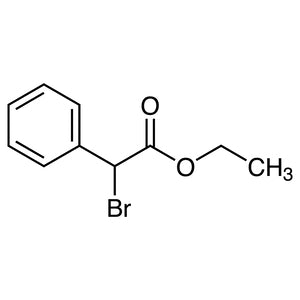
Ethyl 2-Bromo-2-phenylacetate is an α-bromo ester that carries a phenyl group on the same carbon as its bromine atom. The combination of the electron-withdrawing ester function and the adjacent aromatic ring leaves the alpha position strongly activated, which makes this compound a versatile electrophile in the organic synthesis laboratory. Its role is to supply a ready-to-couple phenylacetate unit that can be joined to a wide range of nucleophiles, while also serving as a precursor to reactive intermediates such as carbanions, carbenes and radicals that are widely used in the construction of new molecular frameworks.
The characteristic that leads chemists to select this reagent is its high but still controllable substitution reactivity, allowing reactions to be run at moderate temperatures with bases that are not excessively harsh. The bromine atom is both a good leaving group and readily abstracted homolytically, which opens up radical chemistry routes including its use as an initiator in controlled radical polymerisation. Its liquid form makes it easy to dispense with a micropipette or syringe in air-free reactions, and its good solubility in common organic solvents simplifies both reaction system design and the product purification stage.
In Indonesian laboratories this material is typically used in academic and industrial research settings where organic synthesis, building-block chemistry and polymer work are carried out. University chemistry departments, government research institutes and private R&D laboratories draw on reagents of this type for method development, the preparation of intermediates and postgraduate research projects. Because it is a liquid reagent handled in relatively small volumes, it fits well into the standard bench-scale synthetic workflows found in local facilities.
Related TCI products
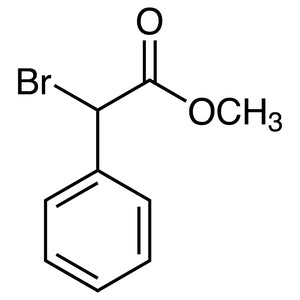
- TCI M2038 3042-81-7 Methyl alpha-Bromophenylacetate
- TCI E1445 4773-33-5 Ethyl 2-Chloro-2-phenylacetate
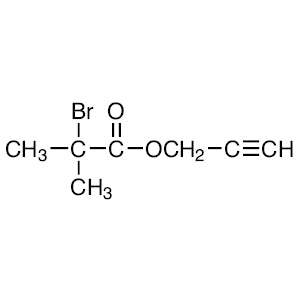
- TCI P2820 40630-86-2 2-Propyn-1-yl 2-Bromo-2-methylpropanoate
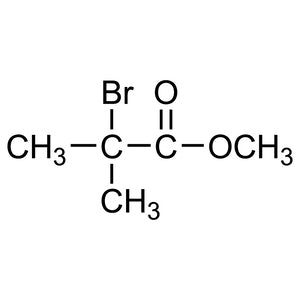
- TCI M2208 23426-63-3 Methyl 2-Bromo-2-methylpropanoate
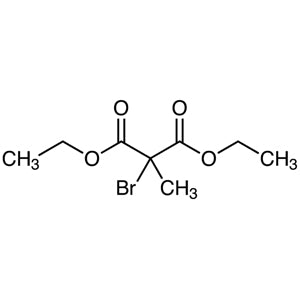
- TCI D4368 29263-94-3 Diethyl 2-Bromo-2-methylmalonate
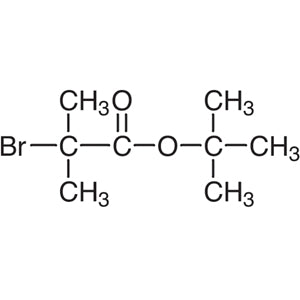
- TCI B3500 23877-12-5 tert-Butyl 2-Bromoisobutyrate
- Nucleophilic substitution chemistry: the activated alpha carbon reacts readily with a broad range of nucleophiles, allowing the phenylacetate unit to be transferred under mild conditions with straightforward reaction control.
- Carbanion generation: treatment with suitable bases converts the compound into stabilised carbanion intermediates, giving chemists a reliable entry point for carbon–carbon bond forming sequences in multi-step synthesis.
- Carbene precursor chemistry: the bromine and ester substituents on a single carbon centre make this reagent a practical starting material for generating carbene intermediates used in framework construction.
- Controlled radical polymerisation: the easily abstracted bromine atom allows the compound to serve as an initiator, providing defined chain starting points for polymer chemists working on controlled architectures.
- Building block synthesis: as a non-heterocyclic building block it introduces a phenyl-bearing ester fragment into larger target molecules, supporting intermediate preparation in research-scale synthetic programmes.
| Brand | TCI |
|---|---|
| CAS number | 2882-19-1 |
| Molecular formula | — |
| Purity | — |
| Category | Chemistry > Building Blocks > Non-Heterocyclic Building Blocks |
| Pack sizes | — |
| Physical form | liquid, soluble in common organic solvents |
| Storage | keep in a tightly closed container in a cool, dry place away from light and moisture |
- Catalogue code: E1525
Store the reagent in its original tightly sealed container in a cool, dry and well-ventilated area, protected from light, moisture and sources of ignition. Amber glass bottles or the manufacturer's supplied packaging are suitable containers, and bottles should be resealed promptly after each withdrawal to limit exposure to atmospheric moisture. As an alkylating-type organobromine compound it should be handled in a fume hood using gloves, safety goggles and a laboratory coat, avoiding skin and eye contact as well as inhalation of vapour. Dispense with a clean, dry syringe or micropipette, keep it away from strong bases and oxidising agents, and dispose of residues through the laboratory's designated chemical waste stream.
—
Product Categories
- Polymer/Macromolecule ReagentsPolymerization ReagentsControlled Radical Polymerization Reagents
- Biomaterials/Biocompatible Materials Research ReagentsPolymerization Reagents (Initiators, Catalysts, Ligands) [Biomaterials/Biocompatible Materials Research Reagents]Atom Transfer Radical Polymerization (ATRP) Reagents
Produk Terkait
-
Methylalpha-Bromophenylacetate TCI M2038
Regular price Rp 1.353.450,00Regular price -
Ethyl2-Chloro-2-phenylacetate TCI E1445
Regular price From Rp 928.200,00Regular price -
2-Propyn-1-yl2-Bromo-2-methylpropanoate TCI P2820
Regular price Rp 4.213.650,00Regular price -
Methyl2-Bromo-2-methylpropanoate TCI M2208
Regular price From Rp 848.400,00Regular price -
Diethyl2-Bromo-2-methylmalonate TCI D4368
Regular price Rp 2.016.000,00Regular price -
tert-Butyl2-Bromoisobutyrate TCI B3500
Regular price From Rp 584.850,00Regular price -
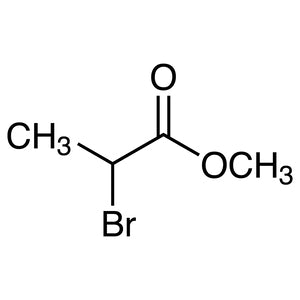
Methyl2-Bromopropionate TCI B1460
Regular price From Rp 769.650,00Regular price -
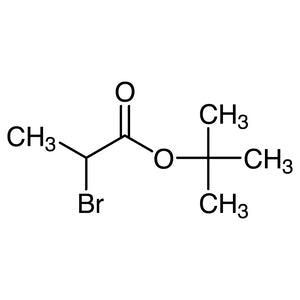
tert-Butyl2-Bromopropionate TCI B1277
Regular price From Rp 3.312.750,00Regular price