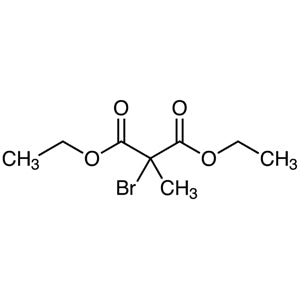
Diethyl 2-Bromo-2-methylmalonate is a chemical compound widely used in organic reactions, particularly in the synthesis of heterocyclic compounds and complex molecules. This reagent plays a crucial role in laboratory settings where the creation of carbon-based structures with bromo and carbonyl groups is required. Its versatility makes it an essential component in various synthetic pathways, supporting the development of advanced chemical structures. Due to its chemical stability and reactivity, it is a reliable choice for researchers aiming to achieve specific chemical transformations.
The compound's bromo group at the 2-position makes it highly reactive towards nucleophiles such as alkoxides and amines, enabling targeted substitutions in organic synthesis. This reactivity, combined with its structural simplicity, allows for precise control over reaction outcomes. Its ability to participate in nucleophilic substitution and carbon-carbon bond formation reactions further enhances its utility in synthetic chemistry. These properties make it a preferred choice for chemists working on complex molecule synthesis and functional group manipulation.
In Indonesian laboratories, Diethyl 2-Bromo-2-methylmalonate is extensively used in organic chemistry research, especially in academic institutions and research centers. It is a key reagent in the development of new compounds and the study of complex chemical structures. Its role in drug development and chemical synthesis makes it a valuable asset for both educational and industrial research applications.
- Synthesis of Heterocyclic Compounds: This compound is ideal for creating complex ring structures, commonly used in pharmaceutical research due to its ability to form stable intermediates.
- Organic Synthesis Reactions: Its reactivity with nucleophiles makes it suitable for substitution reactions, allowing for the creation of diverse functional groups in organic molecules.
- Carbon-Carbon Bond Formation: The compound is used in reactions that build carbon frameworks, essential for developing new chemical entities with specific properties.
- Functional Group Manipulation: Its bromo group facilitates targeted modifications, making it useful in the synthesis of compounds with specific chemical functionalities.
- Drug Development Research: It is frequently employed in the synthesis of potential pharmaceutical compounds, supporting the creation of novel therapeutic agents.
| Brand | TCI |
|---|---|
| CAS number | 29263-94-3 |
| Molecular formula | — |
| Purity | — |
| Category | Chemistry > Building Blocks > Non-Heterocyclic Building Blocks |
| Pack sizes | Available in various quantities as per standard laboratory supply |
| Physical form | Liquid |
| Storage | Store in a cool, dry place away from light and incompatible materials |
Diethyl 2-Bromo-2-methylmalonate should be stored in a cool, dry environment, away from direct sunlight and sources of heat. It is recommended to use airtight containers made of glass or polyethylene to prevent contamination and evaporation. Due to its reactivity, it should be kept separate from strong bases, oxidizing agents, and other incompatible substances. Always ensure proper ventilation when handling the compound, and wear appropriate personal protective equipment such as gloves and safety goggles. The compound is not classified as hazardous under standard conditions, but standard laboratory safety protocols should still be followed to ensure safe handling and storage.
—
Produk Terkait
-
tert-ButylHydrogenDodecanedioate TCI B5926
Regular price From Rp 3.021.900,00Regular price -
tert-ButylHydrogenTetradecanedioate TCI B5927
Regular price Rp 4.320.750,00Regular price -
18-(tert-Butoxy)-18-oxooctadecanoicAcid TCI B5928
Regular price From Rp 1.644.300,00Regular price -
Tetrahydro[3,3'-bifuran]-2,2',5,5'-tetrone TCI B6346
Regular price From Rp 875.700,00Regular price -
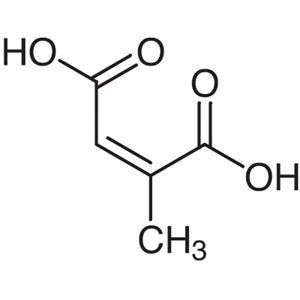
CitraconicAcid TCI C0363
Regular price From Rp 505.050,00Regular price -
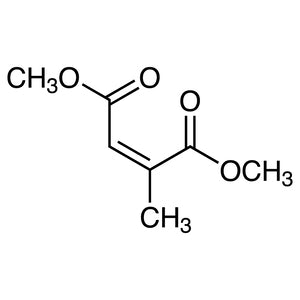
DimethylCitraconate TCI C0364
Regular price From Rp 2.094.750,00Regular price -
CholesterolHydrogenSuccinate TCI C0674
Regular price Rp 6.599.250,00Regular price -
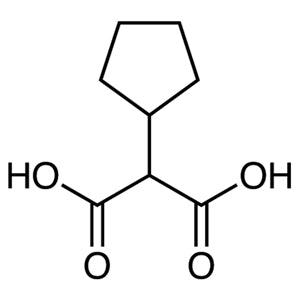
CyclopentylmalonicAcid TCI C0945
Regular price From Rp 3.207.750,00Regular price


![Tetrahydro[3,3'-bifuran]-2,2',5,5'-tetrone (CAS 4534-73-0) - TCI B6346 - AMI Scientific](http://amiscientific.com/cdn/shop/files/TCI2510B6346.jpg?v=1768193651&width=533)