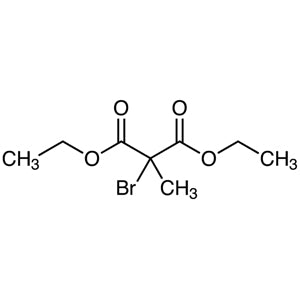
Diethyl Bromomalonate is a chemical compound widely used as a foundational building block in organic synthesis. It serves as a versatile reagent in various laboratory applications, particularly in the creation of complex organic molecules. This compound is commonly employed in synthetic pathways that lead to the formation of heterocyclic structures and other complex chemical entities. Its role in the laboratory is crucial due to its ability to participate in multiple reaction types, making it an essential tool for chemists working on synthetic projects.
The properties of Diethyl Bromomalonate make it a preferred choice for synthetic chemists. It exhibits reactivity in nucleophilic reactions, substitution reactions, and carbon-carbon bond-forming reactions. Its polar nature allows it to dissolve in organic solvents such as ethyl acetate and ethanol, facilitating its use in a wide range of experimental setups. The compound's stability under controlled conditions further enhances its reliability in laboratory environments, ensuring consistent results across multiple experiments.
In Indonesian laboratories, Diethyl Bromomalonate is frequently utilized in research focused on organic chemistry. Its availability and chemical versatility make it a go-to reagent for both academic and industrial applications. Researchers rely on its predictable behavior and compatibility with various synthetic methods, contributing to the advancement of chemical studies in the region.
TCI brochures (PDF)
- Halogenation Reagents 2026-04-03 · p. 7
- Biomaterials Research Reagents 2025-02-19 · p. 29
Related TCI products
- Organic synthesis: Diethyl Bromomalonate is widely used in the synthesis of organic compounds due to its reactivity and ability to form complex structures.
- Heterocyclic compound formation: It plays a key role in the creation of heterocyclic structures, which are common in pharmaceutical and industrial chemistry.
- Carbon-carbon bond formation: Its utility in forming carbon-carbon bonds makes it valuable in the development of new chemical entities.
- Esters and carboxylic acid synthesis: The compound is a precursor for the synthesis of esters and carboxylic acids, which are essential in various chemical processes.
- Research and development: Its versatility supports a broad range of R&D activities in both academic and industrial laboratories.
| Brand | TCI |
|---|---|
| CAS number | 685-87-0 |
| Molecular formula | — |
| Purity | — |
| Category | Chemistry > Building Blocks > Non-Heterocyclic Building Blocks |
| Pack sizes | Available in various quantities as per standard laboratory supply |
| Physical form | Liquid |
| Storage | Store in a cool, dry place away from light and incompatible materials |
Diethyl Bromomalonate should be stored in a cool, dry environment, away from direct sunlight and sources of heat. It is recommended to keep the compound in a tightly sealed container to prevent evaporation and contamination. The storage area should be well-ventilated to minimize exposure to vapors. Due to its reactivity, it should be kept away from strong bases, oxidizing agents, and other incompatible substances. Proper personal protective equipment, such as gloves and safety goggles, should be worn when handling the compound to ensure laboratory safety. Regular monitoring of storage conditions ensures the compound remains stable and suitable for use in chemical experiments.
—
Product Categories
- Polymer/Macromolecule ReagentsPolymerization ReagentsControlled Radical Polymerization Reagents
- Biomaterials/Biocompatible Materials Research ReagentsPolymerization Reagents (Initiators, Catalysts, Ligands) [Biomaterials/Biocompatible Materials Research Reagents]Atom Transfer Radical Polymerization (ATRP) Reagents
Produk Terkait
-
Diethyl2-Bromo-2-methylmalonate TCI D4368
Regular price Rp 2.068.500,00Regular priceRp 1.461.600,00Sale price Rp 2.068.500,00