2-Bromoisobutyric Acid is a versatile chemical compound widely used in laboratory settings for various organic synthesis reactions. As a building block in chemical reactions, it plays a crucial role in the development of complex organic molecules. Its simple yet essential chemical structure makes it a fundamental component in many synthetic pathways. This compound is particularly valuable for substitution reactions and other chemical processes that require bromo groups. Due to its reactivity, it is often selected for experiments that demand precise chemical transformations.
The compound's reactivity and stability under specific conditions make it a preferred choice for chemists. Its bromo group enables it to participate in a wide range of reactions, including nucleophilic substitutions and electrophilic additions. This characteristic allows it to be a key reagent in the synthesis of various organic compounds. Additionally, its chemical stability under controlled conditions ensures that it remains effective for use in multiple laboratory applications. These properties contribute to its popularity among researchers working in organic and analytical chemistry.
In Indonesian laboratories, 2-Bromoisobutyric Acid is commonly used in chemical research, especially in the fields of organic synthesis and analytical chemistry. It is a staple in academic and research institutions where precise chemical reactions are required. Its availability and chemical properties make it a reliable choice for experiments that need a specific and reactive building block. This compound is essential for advancing chemical research and development in the region.
TCI brochures (PDF)
- Biomaterials Research Reagents 2025-02-19 · p. 29
Related TCI products
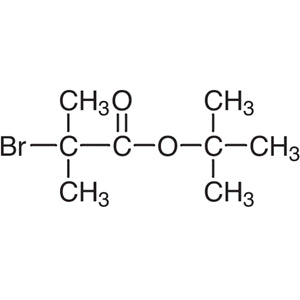
- TCI B3500 23877-12-5 tert-Butyl 2-Bromoisobutyrate
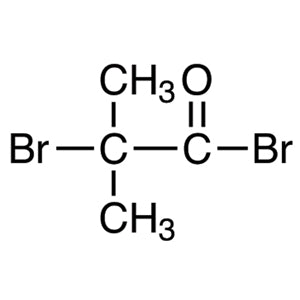
- TCI B0607 20769-85-1 2-Bromoisobutyryl Bromide
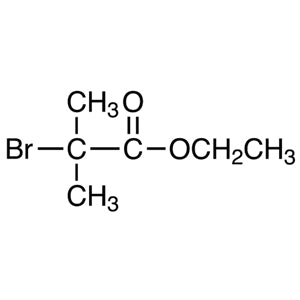
- TCI B0606 600-00-0 Ethyl 2-Bromoisobutyrate
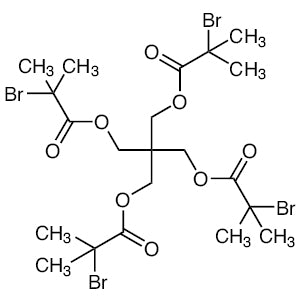
- TCI P2713 243991-62-0 Pentaerythritol Tetrakis(2-bromoisobutyrate)
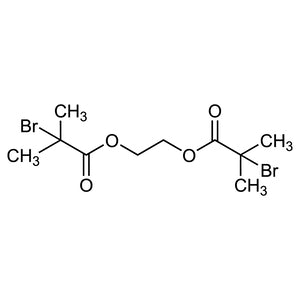
- TCI B7067 248603-11-4 Ethylene Bis(2-bromoisobutyrate)
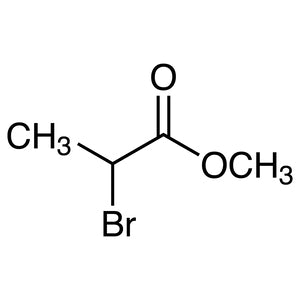
- TCI B1460 5445-17-0 Methyl 2-Bromopropionate
- Organic Synthesis: This compound is widely used in the synthesis of complex organic molecules due to its reactive bromo group.
- Nucleophilic Substitution Reactions: Its bromo group makes it ideal for reactions where substitution is required.
- Analytical Chemistry: It serves as a reagent in analytical procedures for identifying and quantifying chemical compounds.
- Educational Research: It is commonly used in academic settings to teach and demonstrate chemical reaction mechanisms.
- Industrial Chemistry: It finds application in the development of new chemical products and materials.
| Brand | TCI |
|---|---|
| CAS number | 2052-01-9 |
| Molecular formula | — |
| Purity | — |
| Category | Chemistry > Building Blocks > Non-Heterocyclic Building Blocks |
| Pack sizes | Available in various quantities as per supplier specifications |
| Physical form | Solid or liquid depending on the packaging |
| Storage | Store in a cool, dry place away from moisture and direct sunlight |
This compound should be stored in a cool, dry place, away from moisture and direct sunlight to maintain its chemical stability. It is recommended to use airtight containers to prevent exposure to air and humidity. Due to its reactivity, it should be handled with care, using appropriate personal protective equipment. It is advisable to store it in a well-ventilated area to minimize any potential risks. Proper labeling and storage conditions are essential to ensure safe handling and long-term usability in laboratory settings.
—
Product Categories
- Polymer/Macromolecule ReagentsPolymerization ReagentsControlled Radical Polymerization Reagents
- Biomaterials/Biocompatible Materials Research ReagentsPolymerization Reagents (Initiators, Catalysts, Ligands) [Biomaterials/Biocompatible Materials Research Reagents]Atom Transfer Radical Polymerization (ATRP) Reagents
Produk Terkait
-
tert-Butyl2-Bromoisobutyrate TCI B3500
Regular price From Rp 637.350,00Regular priceRp 460.950,00Sale price From Rp 637.350,00 -
2-BromoisobutyrylBromide TCI B0607
Regular price From Rp 900.900,00Regular priceRp 645.750,00Sale price From Rp 900.900,00 -
Ethyl2-Bromoisobutyrate TCI B0606
Regular price Rp 769.650,00Regular priceRp 553.350,00Sale price Rp 769.650,00 -
PentaerythritolTetrakis(2-bromoisobutyrate) TCI P2713
Regular price Rp 4.716.600,00Regular priceRp 3.313.800,00Sale price Rp 4.716.600,00 -
EthyleneBis(2-bromoisobutyrate) TCI B7067
Regular price From Rp 1.881.600,00Regular priceRp 1.331.400,00Sale price From Rp 1.881.600,00 -
Methyl2-Bromopropionate TCI B1460
Regular price From Rp 822.150,00Regular priceRp 590.100,00Sale price From Rp 822.150,00 -
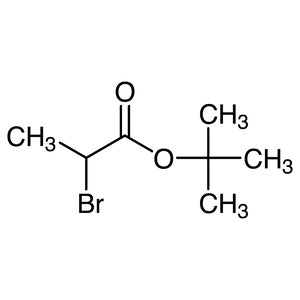
tert-Butyl2-Bromopropionate TCI B1277
Regular price From Rp 3.365.250,00Regular priceRp 2.368.800,00Sale price From Rp 3.365.250,00 -
DiethylBromomalonate TCI B1205
Regular price From Rp 1.060.500,00Regular priceRp 757.050,00Sale price From Rp 1.060.500,00