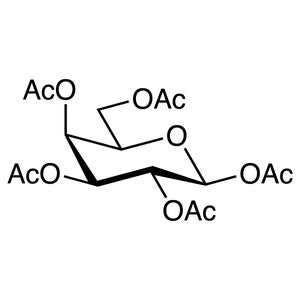
Penta-O-acetyl-beta-D-galactopyranose is a form of D-galactose in which every hydroxyl group, including the anomeric hydroxyl, has been acetylated, producing a peracetate derivative with the beta configuration at the anomeric position. In glycochemistry, this compound is a classical starting material for preparing glycosyl donors, because the acetate groups serve simultaneously as hydroxyl protecting groups and as an activatable leaving group. From this material, researchers can obtain glycosyl bromides, glycosyl imidates, as well as aryl and alkyl glycosides through one to two well-established reaction steps.
The feature that makes this compound a preferred choice is its stability and ease of handling compared with the free sugar. The peracetate form is a non-hygroscopic solid that dissolves readily in dichloromethane, chloroform, ethyl acetate, and acetonitrile, so it is straightforward to purify by column chromatography or by recrystallisation. The acetate group at the C-2 position provides a neighbouring-group participation effect that directs glycosidic bond formation in a 1,2-trans sense, making the stereochemical selectivity of the product easier to control. All of the acetate protecting groups can also be removed in a single operation by transesterification methods.
In Indonesian laboratories, this material is typically used in university and institutional research groups working on carbohydrate synthesis, glycoconjugate preparation, and chemical biology projects that require defined galactoside building blocks. Its stability and non-hygroscopic nature make it well suited to local conditions, where ambient humidity is high and reagents may be stored for extended periods between synthetic campaigns. It is handled on the benchtop using standard organic synthesis glassware and conventional purification facilities.
- Glycosyl donor preparation: the anomeric acetate can be displaced or activated, allowing conversion into glycosyl bromides and imidates through one or two established steps.
- Aryl and alkyl glycoside synthesis: direct Lewis-acid-promoted coupling with phenols and alcohols gives defined galactosides without requiring separate protection of the remaining hydroxyl groups.
- Stereocontrolled glycosylation studies: the C-2 acetate exerts neighbouring-group participation that steers bond formation toward the 1,2-trans product, simplifying stereochemical control in coupling experiments.
- Glycoconjugate and oligosaccharide building blocks: the fully protected galactose unit serves as a stable intermediate that can be elaborated and then globally deprotected by transesterification.
- Chemical biology and glycoscience research: it supplies a well-characterised galactose derivative for preparing probes and substrates used in studies of carbohydrate recognition and processing.
| Brand | TCI |
|---|---|
| CAS number | 4163-60-4 |
| Molecular formula | — |
| Purity | — |
| Category | Chemistry > Chemical Biology > Glycoscience |
| Pack sizes | available in the standard research-scale catalogue pack sizes offered by TCI |
| Physical form | solid, non-hygroscopic peracetylated sugar derivative |
| Storage | keep in a closed container in a cool, dry place away from moisture and direct light |
Store the material in its original tightly closed container in a cool, dry area, protected from direct sunlight and from sources of heat or ignition. Although the peracetate form is not hygroscopic, containers should still be kept sealed to avoid contamination and gradual moisture ingress during repeated opening. Use glass or other chemically compatible containers when transferring or weighing portions, and reseal promptly afterwards. Handle in a well-ventilated area or fume hood, wearing a laboratory coat, safety glasses, and suitable chemical-resistant gloves. Avoid generating dust, avoid contact with skin and eyes, and wash hands thoroughly after handling. Keep the material separate from strong acids, strong bases, and strong oxidising agents, and consult the manufacturer's safety data sheet before use and before disposal of residues.
—
Produk Terkait
-
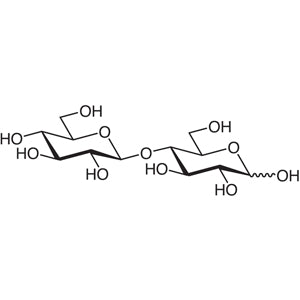
D-(+)-Cellobiose TCI C0056
Regular price From Rp 875.700,00Regular price -
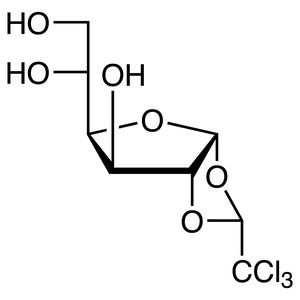
alpha-Chloralose(containsbeta-isomer) TCI C0074
Regular price Rp 848.400,00Regular price -
ChondroitinSulfateSodiumSalt TCI C0335
Regular price From Rp 2.068.500,00Regular price -
alpha-Cyclodextrin TCI C0776
Regular price From Rp 689.850,00Regular price -
beta-Cyclodextrin TCI C0777
Regular price From Rp 2.094.750,00Regular price -
alpha-D-CellobioseOctaacetate TCI C0861
Regular price Rp 2.518.950,00Regular price -
gamma-Cyclodextrin TCI C0869
Regular price From Rp 1.087.800,00Regular price -
beta-Cyclodextrin TCI C0900
Regular price From Rp 505.050,00Regular price