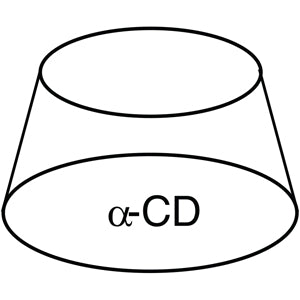
TCI C0777 beta-Cyclodextrin is a cyclic oligosaccharide made of seven glucose units joined together to form a ring. Its structure resembles a truncated cone or doughnut, with a hydrophilic outer surface and a relatively hydrophobic inner cavity. This shape lets beta-cyclodextrin hold guest molecules inside its cavity and form inclusion complexes. In the laboratory it has an important role in glycoscience, supramolecular chemistry, pharmaceutical research and analytical chemistry, especially in studies that aim to improve the solubility and stability of other compounds.
Researchers choose beta-cyclodextrin because its cavity suits many medium-sized organic molecules, including aromatic rings and many active pharmaceutical ingredients. The inclusion complexes it forms can make poorly water-soluble compounds more soluble, protect them from oxidation or light, and mask unwanted tastes or odours. Its hydroxyl groups can be chemically modified, so it is a common starting material for synthesising cyclodextrin derivatives. Because the glucose units that make up the ring are chiral, the material is also useful for chiral recognition and for separating enantiomers.
In Indonesia, beta-cyclodextrin is widely used in pharmaceutical laboratories, university research groups and analytical facilities. Formulation scientists use it to study how inclusion complexation affects drug solubility and stability. Academic chemists use it as a model host molecule in supramolecular and glycoscience research, and as a starting material for modified cyclodextrins. Analytical laboratories use it in work on chiral separation and molecular recognition. Because it comes from TCI, researchers get a consistent reagent from a well-known brand for both routine work and research.
TCI brochures (PDF)
- Cyclodextrins as Building Blocks for Organic Synthesis 2022-04-25 · p. 1
- Macrocycles for Host-Guest Chemistry 2026-03-24 · p. 5
- Drug Delivery System (DDS) Research Reagents 2025-01-29 · p. 4
- Reagents for Glyco Chemistry & Biology 5th Edition · p. 109
Related TCI products
- TCI M1741 84216-71-7 Mono-2-O-(p-toluenesulfonyl)-beta-cyclodextrin
- TCI M1356 128446-36-6 Methyl-beta-cyclodextrin (mixture of several Methylated)
- TCI H0979 128446-35-5 Hydroxypropyl-beta-cyclodextrin
- TCI C0869 17465-86-0 gamma-Cyclodextrin
- TCI C0776 10016-20-3 alpha-Cyclodextrin
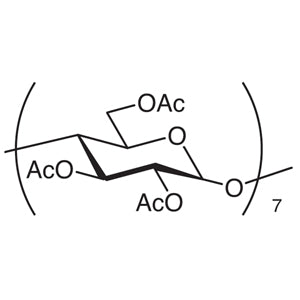
- TCI T1844 23739-88-0 Triacetyl-beta-cyclodextrin
- Solubility enhancement studies: the hydrophobic cavity holds poorly water-soluble molecules while the hydrophilic exterior keeps the complex soluble, which helps researchers improve aqueous solubility.
- Drug stabilisation research: when an active compound sits inside the cyclodextrin cavity, it is partly shielded from oxidation and light, so the material suits stability and formulation studies.
- Supramolecular host–guest chemistry: the cone-shaped ring with a cavity sized for many medium-sized organic molecules makes beta-cyclodextrin a standard model host for studying inclusion complexes.
- Synthesis of cyclodextrin derivatives: the many hydroxyl groups on the glucose units can be chemically modified, so the material is a practical starting point for making functionalised cyclodextrins.
- Chiral recognition and enantiomer separation: the chiral glucose units give the cavity a chiral environment, so the material is used in research on recognising and separating enantiomers.
| Brand | TCI (product code C0777) |
|---|---|
| CAS number | 7585-39-9 |
| Molecular formula | — |
| Purity | — |
| Category | Chemistry > Chemical Biology > Glycoscience |
| Pack sizes | several pack sizes are available; see the product page for current options |
| Physical form | solid powder |
| Storage | keep tightly closed in a cool, dry place, away from moisture |
Store beta-Cyclodextrin in its original tightly sealed container in a cool, dry, well-ventilated place, away from moisture, direct sunlight and strong oxidising agents. Reseal the container promptly after each use so the powder does not absorb moisture from the air. Wear standard laboratory protective equipment when handling it, including gloves, safety glasses and a lab coat. Avoid creating or breathing in dust, and weigh the material in a clean, dry area. Label any secondary containers clearly. Always check the supplier's Safety Data Sheet for full handling, first aid and disposal guidance before use.
—
Product Categories
- Chemical BiologyGlycoscienceApplications Using Glyco-materials
- Chemical BiologyGlycoscienceFunctional Oligosaccharides
- Chemical BiologyGlycoscienceOligosaccharides [Glycoscience]
- Synthetic ReagentsChelation/Complexation CompoundsCyclodextrins
- Pharmaceutical Development and Drug Discovery Research ReagentsDrug Delivery Systems (DDS)Cyclodextrins (for DDS)
- GlycoscienceApplications Using Glyco-materialsGlyco-engeneering [Applications Using Glyco-materials]
- GlycoscienceFunctional OligosaccharidesCyclodextrins [Functional Oligosaccharides]
- GlycoscienceOligosaccharides [Glycoscience]Cyclodextrins [Glycoscience]
- Biochemicals and ReagentsCarbohydrates
- Pharmaceutical Development and Drug Discovery ResearchDrug Delivery Systems (DDS)Cyclodextrins (for DDS)
Produk Terkait
-
Mono-2-O-(p-toluenesulfonyl)-beta-cyclodextrin TCI M1741
Regular price Rp 1.618.050,00Regular priceRp 1.146.600,00Sale price Rp 1.618.050,00 -
Methyl-beta-cyclodextrin(mixtureofseveralMethylated) TCI M1356
Regular price From Rp 1.988.700,00Regular priceRp 1.405.950,00Sale price From Rp 1.988.700,00 -
Hydroxypropyl-beta-cyclodextrin TCI H0979
Regular price From Rp 2.411.850,00Regular priceRp 1.702.050,00Sale price From Rp 2.411.850,00 -
gamma-Cyclodextrin TCI C0869
Regular price From Rp 1.140.300,00Regular priceRp 812.700,00Sale price From Rp 1.140.300,00 -
alpha-Cyclodextrin TCI C0776
Regular price From Rp 742.350,00Regular priceRp 534.450,00Sale price From Rp 742.350,00 -
Triacetyl-beta-cyclodextrin TCI T1844
Regular price From Rp 1.881.600,00Regular priceRp 1.331.400,00Sale price From Rp 1.881.600,00 -
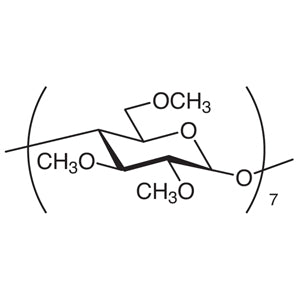
Trimethyl-beta-cyclodextrin TCI T1094
Regular price Rp 2.942.100,00Regular priceRp 2.072.700,00Sale price Rp 2.942.100,00