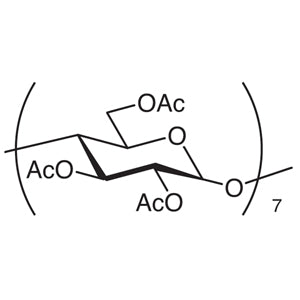
Mono-2-O-(p-toluenesulfonyl)-beta-cyclodextrin is a specialized chemical compound widely used in laboratory settings for its unique molecular properties. This compound belongs to the glycoscience category and plays a crucial role in chemical and biochemical experiments. It is particularly valued for its ability to form complexes with various molecules, making it essential in the study of molecular interactions and structural analysis. Its application spans multiple research areas, including biochemistry, pharmacology, and materials science, where it supports the development of new compounds and analytical techniques.
One of the key features that make this compound a preferred choice is its capacity to engage in both hydrophobic and hydrophilic interactions. This dual functionality allows it to bind selectively to specific molecules, enhancing its utility in isolation and purification processes. Additionally, its stability under standard laboratory conditions ensures consistent performance across a range of experimental setups. These properties contribute to its reliability and make it a versatile tool for researchers working with complex molecular systems.
In Indonesian laboratories, this compound is frequently used in biochemical and pharmaceutical research. Its role in drug development and molecular interaction studies is significant, supporting both academic and industrial research initiatives. The compound's ability to facilitate complex molecule analysis and its stability make it an indispensable resource for scientists in Indonesia. Its application in various research contexts underscores its importance in advancing scientific knowledge and innovation.
Advantages (TCI brochure)
- 2-position tosylated β-cyclodextrin provided through TCI's sophisticated manufacturing process
TCI brochures (PDF)
- Cyclodextrins as Building Blocks for Organic Synthesis 2022-04-25 · p. 1
- Macrocycles for Host-Guest Chemistry 2026-03-24 · p. 5
- Drug Delivery System (DDS) Research Reagents 2025-01-29 · p. 4
- Reagents for Glyco Chemistry & Biology 5th Edition · p. 111
Related TCI products
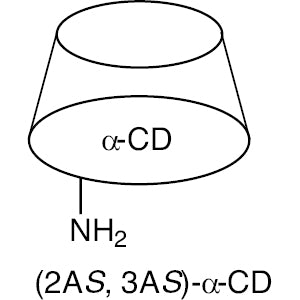
- TCI A2122 121916-94-7 3A-Amino-3A-deoxy-(2AS,3AS)-alpha-cyclodextrin
- TCI M1356 128446-36-6 Methyl-beta-cyclodextrin (mixture of several Methylated)
- TCI H0979 128446-35-5 Hydroxypropyl-beta-cyclodextrin
- TCI C0869 17465-86-0 gamma-Cyclodextrin
- TCI C0777 7585-39-9 beta-Cyclodextrin
- TCI C0776 10016-20-3 alpha-Cyclodextrin
- Biochemical Research: This compound is ideal for studying molecular interactions due to its ability to form complexes with target molecules.
- Pharmaceutical Development: It supports drug formulation and analysis by enabling the isolation and characterization of active compounds.
- Materials Science: Its unique binding properties make it useful in the synthesis of advanced materials and nanotechnology applications.
- Analytical Chemistry: It is widely used in chromatography and spectroscopy to enhance the detection and separation of complex compounds.
- Molecular Biology: It aids in the study of protein-ligand interactions and the structural analysis of biomolecules.
From the TCI brochure
- Shown as a step in the scheme converting β-cyclodextrin to 3-NH2-β-cyclodextrin
| Brand | TCI |
|---|---|
| CAS number | 84216-71-7 |
| Molecular formula | — |
| Purity | — |
| Category | Chemistry > Chemical Biology > Glycoscience |
| Pack sizes | Available in various quantities as per supplier specifications |
| Physical form | Powder |
| Storage | Store in a cool, dry place away from moisture and direct sunlight |
Data from the TCI brochure
| Kemasan | 200mg |
|---|
Source: TCI brochure RR159 (2022-04-25)
This compound should be stored in a cool, dry environment to maintain its stability and prevent degradation. It is recommended to use airtight containers to protect it from moisture and humidity. Since it is a powder, it should be handled with care to avoid inhalation or skin contact. Proper personal protective equipment, such as gloves and safety goggles, should be worn during handling. It should not be exposed to direct sunlight or high temperatures, as these conditions may affect its chemical integrity. Regular monitoring of storage conditions ensures the compound remains suitable for use in laboratory experiments.
—
Product Categories
- Chemical BiologyGlycoscienceApplications Using Glyco-materials
- Chemical BiologyGlycoscienceFunctional Oligosaccharides
- Chemical BiologyGlycoscienceOligosaccharides [Glycoscience]
- Synthetic ReagentsChelation/Complexation CompoundsCyclodextrins
- Pharmaceutical Development and Drug Discovery Research ReagentsDrug Delivery Systems (DDS)Cyclodextrins (for DDS)
- GlycoscienceApplications Using Glyco-materialsGlyco-engeneering [Applications Using Glyco-materials]
- GlycoscienceFunctional OligosaccharidesCyclodextrins [Functional Oligosaccharides]
- GlycoscienceOligosaccharides [Glycoscience]Cyclodextrins [Glycoscience]
- Biochemicals and ReagentsCarbohydrates
- Pharmaceutical Development and Drug Discovery ResearchDrug Delivery Systems (DDS)Cyclodextrins (for DDS)
Produk Terkait
-
3A-Amino-3A-deoxy-(2AS,3AS)-alpha-cyclodextrin TCI A2122
Regular price From Rp 3.127.950,00Regular priceRp 2.202.900,00Sale price From Rp 3.127.950,00 -
Methyl-beta-cyclodextrin(mixtureofseveralMethylated) TCI M1356
Regular price From Rp 1.988.700,00Regular priceRp 1.405.950,00Sale price From Rp 1.988.700,00 -
Hydroxypropyl-beta-cyclodextrin TCI H0979
Regular price From Rp 2.411.850,00Regular priceRp 1.702.050,00Sale price From Rp 2.411.850,00 -
gamma-Cyclodextrin TCI C0869
Regular price From Rp 1.140.300,00Regular priceRp 812.700,00Sale price From Rp 1.140.300,00 -
beta-Cyclodextrin TCI C0777
Regular price From Rp 2.147.250,00Regular priceRp 1.517.250,00Sale price From Rp 2.147.250,00 -
alpha-Cyclodextrin TCI C0776
Regular price From Rp 742.350,00Regular priceRp 534.450,00Sale price From Rp 742.350,00 -
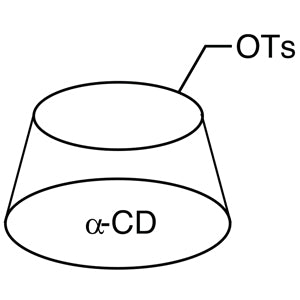
Mono-6-O-(p-toluenesulfonyl)-alpha-cyclodextrin TCI M1644
Regular price From Rp 9.300.900,00Regular priceRp 6.519.450,00Sale price From Rp 9.300.900,00 -
Triacetyl-beta-cyclodextrin TCI T1844
Regular price From Rp 1.881.600,00Regular priceRp 1.331.400,00Sale price From Rp 1.881.600,00