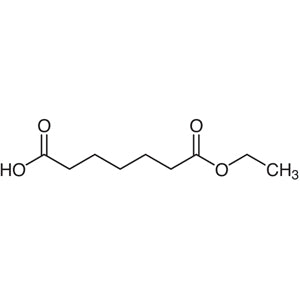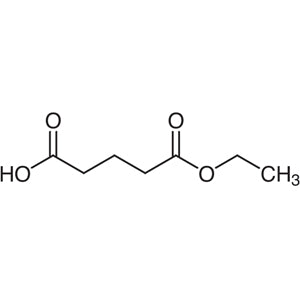
Monoethyl Glutarate is the monoethyl ester of glutaric acid, a five-carbon diacid molecule in which one end has already been protected as an ester while the other end remains a free carboxylic acid. This asymmetric character is precisely what makes it such a useful building block, because researchers can react one end of the molecule selectively without worrying that the other end will react as well. In the laboratory, this compound is frequently used as a bridge or linker with a predetermined chain length, giving synthetic chemists a reliable spacer unit whose geometry is known from the outset.
The principal advantage of this material lies in the differentiated functionality that is built in from the very beginning, so users do not need to carry out additional protection and deprotection steps that normally consume time and lower overall yield. The free carboxylic acid group is ready to be activated into an acid chloride, an active ester, or an amide using standard coupling reagents, while the ethyl ester group can be hydrolysed or reduced at a later stage according to the synthetic design. Its liquid form makes transfer by pipette or syringe straightforward, and the five-carbon chain length provides conformational flexibility that suits many molecular designs.
In Indonesian laboratories, this building block is typically found in university research groups, contract synthesis laboratories, and pharmaceutical or materials development units where custom molecules are assembled step by step. It is generally ordered as part of a wider set of building blocks for a planned synthetic route, where the ability to work on one functional group at a time shortens the route and simplifies purification at each stage of the work.
- Linker and spacer construction: the fixed five-carbon chain provides a defined distance between two attached fragments, so molecular geometry can be planned in advance rather than adjusted experimentally.
- Amide bond formation: the free carboxylic acid end couples cleanly with amines through standard coupling reagents while the ethyl ester end stays untouched throughout the reaction.
- Stepwise asymmetric synthesis: the differentiated ends allow chemists to build a target molecule sequentially from one side, avoiding the mixtures that symmetric diacids commonly produce.
- Protecting-group-free route design: because one carboxyl is already masked as an ethyl ester, synthetic routes avoid extra protection and deprotection stages that reduce overall yield.
- Late-stage ester manipulation: the ethyl ester can be hydrolysed back to the acid or reduced to an alcohol at the end of a sequence, giving flexibility in the final functional group.
| Brand | TCI |
|---|---|
| CAS number | 1070-62-8 |
| Molecular formula | — |
| Purity | — |
| Category | Chemistry > Building Blocks > Non-Heterocyclic Building Blocks |
| Pack sizes | available in standard TCI research and laboratory pack sizes; please confirm the size required when ordering |
| Physical form | liquid |
| Storage | store in a closed container under the conditions stated on the manufacturer's label |
- Product code: G0271
Store the container tightly closed in a cool, dry, and well-ventilated area, away from direct sunlight, heat sources, and incompatible materials such as strong bases and strong oxidising agents. Because the product is a liquid, use glass or another chemically compatible container with a secure closure, and transfer it with a clean pipette or syringe to avoid contamination and spillage. Handle inside a fume hood while wearing safety glasses, chemical-resistant gloves, and a laboratory coat. Keep the free carboxylic acid functionality in mind, as it may be corrosive to skin and eyes. Always consult the manufacturer's safety data sheet before use, label all secondary containers clearly, and dispose of residues and contaminated materials through the laboratory's chemical waste procedures.
—
Produk Terkait
-
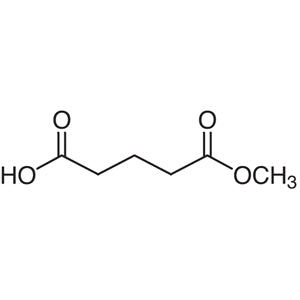
MonomethylGlutarate TCI G0258
Regular price Rp 2.545.200,00Regular price -
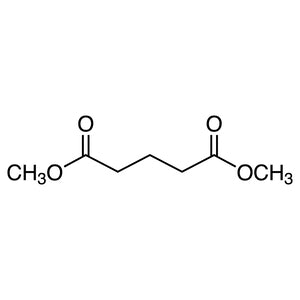
DimethylGlutarate TCI G0185
Regular price From Rp 769.650,00Regular price -
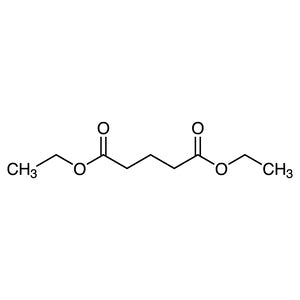
DiethylGlutarate TCI G0184
Regular price From Rp 875.700,00Regular price -
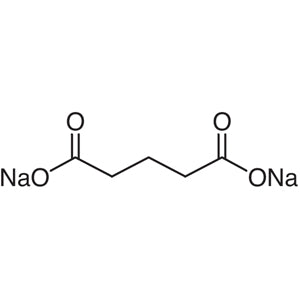
DisodiumGlutarate TCI G0070
Regular price From Rp 2.094.750,00Regular price -
MonoethylAdipate TCI A1223
Regular price From Rp 1.140.300,00Regular price -
MonoethylPimelate TCI P1244
Regular price From Rp 2.491.650,00Regular price -
Monoethyl4-Oxoheptanedioate TCI O0211
Regular price Rp 4.506.600,00Regular price -
Monoethyl5-Nitroisophthalate TCI N0676
Regular price From Rp 1.193.850,00Regular price