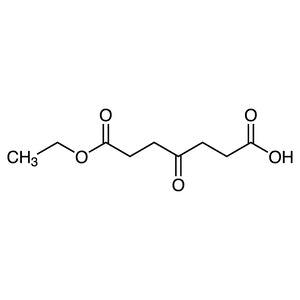
Monoethyl 4-Oxoheptanedioate from TCI (product code O0211) is a derivative of 4-oxoheptanedioic acid. The parent compound is a seven-carbon dicarboxylic acid with a ketone group in the middle of the chain. In this derivative, one of the two carboxyl groups has been esterified with ethanol. The molecule therefore has three different functional groups: a free carboxylic acid, an ethyl ester and a ketone. In the laboratory it serves as a non-heterocyclic building block for stepwise organic synthesis in which the functional groups must be handled separately.
The main advantage of this material is that it is "half-protected." One end of the chain is a free acid and the other is an ethyl ester, so researchers can react the acid group selectively without disturbing the ester side. For example, the acid can be turned into an amide or a different ester. The central ketone gives a further reactive site for reduction, imine formation, Wittig reactions or cyclization. With these three handles, chemists can build asymmetric molecules, bifunctional linkers and ring precursors efficiently, because several protection and deprotection steps can be skipped.
In Indonesian laboratories, this compound is useful to organic synthesis and medicinal chemistry research groups at universities, government research institutes and industrial R&D facilities. Graduate students and researchers working on multistep synthesis can use it to make intermediates that need clearly differentiated reactive sites. It also suits teaching and research laboratories that study selective functional group transformations. Because it saves protection steps, it can help shorten synthetic routes and reduce the amount of reagents used in routine synthetic work.
- Selective amide coupling: the free carboxylic acid can be activated and coupled with amines while the ethyl ester on the other end stays intact for later steps.
- Synthesis of asymmetric molecules: the acid and ester ends are already different, so chemists can extend each end of the chain separately without extra protecting group steps.
- Ketone-based transformations: the central ketone is a convenient site for reduction, imine formation or Wittig olefination, which adds structural variety to the carbon chain.
- Preparation of bifunctional linkers: the chain has distinct reactive groups at each end, which suits linker molecules that connect two different chemical fragments in medicinal chemistry.
- Ring precursor and cyclization studies: the ketone and the two terminal groups can take part in cyclization reactions, which makes the compound a practical starting material for building cyclic structures.
| Brand | TCI (product code O0211) |
|---|---|
| CAS number | 1506-55-4 |
| Molecular formula | — |
| Purity | — |
| Category | Chemistry > Building Blocks > Non-Heterocyclic Building Blocks |
| Pack sizes | available in the standard TCI pack sizes listed for this product code |
| Physical form | refer to the TCI product label and Certificate of Analysis |
| Storage | follow the storage conditions stated on the TCI label and Safety Data Sheet |
Store Monoethyl 4-Oxoheptanedioate in its original, tightly closed TCI container in a cool, dry, well-ventilated area. Keep it away from direct sunlight, heat sources, moisture, strong oxidizing agents and strong bases. Always follow the storage temperature on the product label. Handle the material in a fume hood or another well-ventilated space, and wear standard personal protective equipment: safety glasses, a laboratory coat and chemical-resistant gloves. Avoid contact with skin and eyes, and do not breathe in dust or vapour. Reseal the container promptly after each use to protect the ester from hydrolysis by moisture. Read the Safety Data Sheet before first use, and dispose of residues according to institutional and local chemical waste regulations.
—
Produk Terkait
-
MonoethylAdipate TCI A1223
Regular price From Rp 1.140.300,00Regular price -
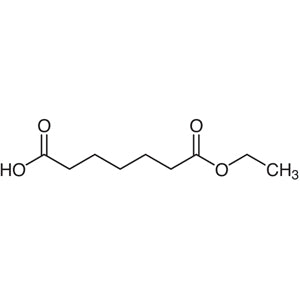
MonoethylPimelate TCI P1244
Regular price From Rp 2.491.650,00Regular price -
Monoethyl5-Nitroisophthalate TCI N0676
Regular price From Rp 1.193.850,00Regular price -
MonoethylMalonate TCI M2700
Regular price From Rp 1.246.350,00Regular price -
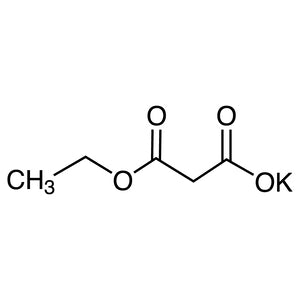
MonoethylPotassiumMalonate TCI M0975
Regular price From Rp 1.724.100,00Regular price -
MonoethylItaconate TCI I0268
Regular price Rp 2.862.300,00Regular price -
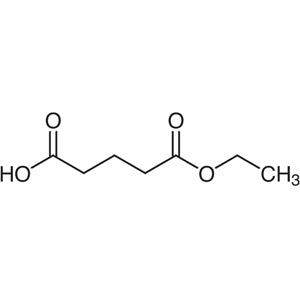
MonoethylGlutarate TCI G0271
Regular price From Rp 1.298.850,00Regular price -
MonoethylFumarate TCI F0359
Regular price Rp 1.908.900,00Regular price