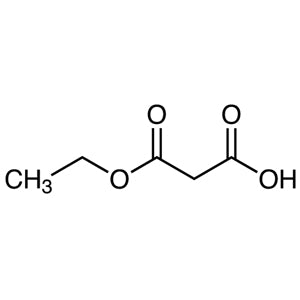
Monoethyl Malonate (M2700), with CAS number 1071-46-1, is a versatile organic compound widely used in laboratory settings for its reactivity and utility in synthetic chemistry. As a non-heterocyclic building block, it serves as a fundamental component in the synthesis of more complex organic molecules. Its structural simplicity allows for easy modification through various chemical reactions, making it an essential tool for chemists working on a wide range of synthetic pathways. This compound is commonly found in research environments where the development of new compounds, pharmaceuticals, and industrial chemicals is a priority.
The chemical properties of Monoethyl Malonate make it a preferred choice in laboratory applications. It exhibits good solubility in organic solvents such as ethyl acetate and ethanol, facilitating its use in solution-based reactions. Its reactivity under specific conditions, such as high temperatures or catalytic influence, allows it to participate in key reactions like Claisen and alkylation. These properties enable chemists to efficiently carry out complex transformations, contributing to the success of synthetic processes in both academic and industrial research.
In Indonesian laboratories, Monoethyl Malonate is frequently used in organic chemistry research, particularly in the development of pharmaceuticals, industrial chemicals, and synthetic compounds. Its role in substitution and addition reactions makes it a valuable resource for researchers aiming to create new materials or compounds. The compound’s reactivity and solubility properties make it a reliable and effective choice for a variety of chemical applications in the region.
- Organic synthesis applications benefit from Monoethyl Malonate due to its reactivity in Claisen and alkylation reactions, enabling the creation of complex molecules.
- Pharmaceutical research utilizes this compound for the synthesis of various drug precursors, supporting the development of new therapeutic agents.
- Industrial chemical production relies on Monoethyl Malonate as a building block for the manufacture of specialty chemicals and polymers.
- Academic research in Indonesian universities employs this compound for teaching and experimental purposes, enhancing students' understanding of synthetic chemistry.
- Analytical chemistry labs use it as a reference standard for qualitative and quantitative analysis of organic compounds.
| Brand | TCI |
|---|---|
| CAS number | 1071-46-1 |
| Molecular formula | — |
| Purity | — |
| Category | Chemistry > Building Blocks > Non-Heterocyclic Building Blocks |
| Pack sizes | — |
| Physical form | Liquid |
| Storage | Store in a cool, dry place away from light and incompatible materials |
Monoethyl Malonate should be stored in a cool, dry location, away from direct light and incompatible substances such as strong oxidizers. It is recommended to use sealed containers made of glass or high-density polyethylene to prevent contamination and evaporation. Due to its reactivity, proper ventilation should be maintained in the laboratory when handling the compound. Personal protective equipment, including gloves and safety goggles, should be worn at all times to ensure safe handling. The compound should not be exposed to high temperatures or open flames, as it may react vigorously under such conditions. Regular monitoring of storage conditions is essential to maintain the stability and integrity of the material.
—
Produk Terkait
-
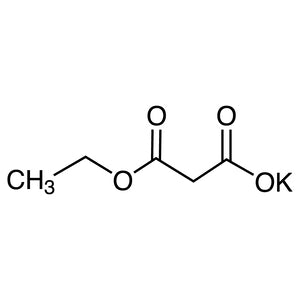
MonoethylPotassiumMalonate TCI M0975
Regular price From Rp 1.724.100,00Regular price -
MonoethylAdipate TCI A1223
Regular price From Rp 1.140.300,00Regular price -
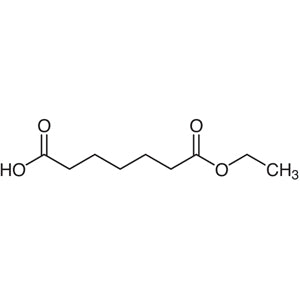
MonoethylPimelate TCI P1244
Regular price From Rp 2.491.650,00Regular price -
Monoethyl4-Oxoheptanedioate TCI O0211
Regular price Rp 4.506.600,00Regular price -
Monoethyl5-Nitroisophthalate TCI N0676
Regular price From Rp 1.193.850,00Regular price -
MonoethylItaconate TCI I0268
Regular price Rp 2.862.300,00Regular price -
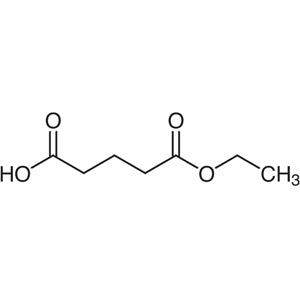
MonoethylGlutarate TCI G0271
Regular price From Rp 1.298.850,00Regular price -
MonoethylFumarate TCI F0359
Regular price Rp 1.908.900,00Regular price