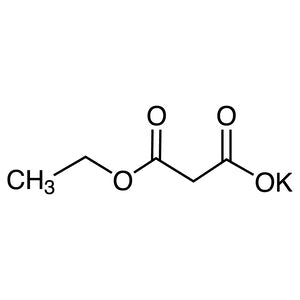
TCI M0975 Monoethyl Potassium Malonate is the potassium salt of malonic acid monoethyl ester, a compound in which one carboxylate group exists in salt form while the other remains an ethyl ester. This salt form makes the material a solid that is considerably easier to handle than the corresponding free acid, which tends to be unstable. In organic synthesis laboratories, this reagent is a dependable building block for constructing beta-ketoester compounds, a class of intermediates of considerable importance because they can be converted into a wide range of heterocyclic frameworks as well as branched carbon chains.
The property that makes this reagent so widely chosen is its ability to release carbon dioxide at the appropriate stage of the reaction, generating an enolate that immediately attacks the acyl electrophile. This mechanism delivers far cleaner results than direct acylation routes, which frequently suffer from double acylation. Because it is a solid salt, the compound is stable in storage, easy to weigh out accurately, and produces no disruptive vapours during measurement. Its limited solubility in organic solvents is in fact turned to advantage in certain procedures, since the material can be dissolved gradually as the reaction proceeds.
In Indonesian laboratories, this reagent is typically found in university organic synthesis groups, research institute laboratories, and pharmaceutical development units where beta-ketoester intermediates are prepared en route to more complex target molecules. Its stability as a weighable solid suits laboratories that do not run inert-atmosphere handling as a matter of routine, and its salt form simplifies planning of both the storage and the measuring steps in multi-stage synthesis work.
- Beta-ketoester synthesis: the reagent couples with activated acyl derivatives and loses carbon dioxide at the correct stage, giving the target ketoester far more cleanly than direct acylation of an ester enolate.
- Heterocyclic framework construction: the beta-ketoester intermediates generated from this material serve as entry points into pyrazole, pyrimidine, and related ring systems commonly targeted in medicinal chemistry programmes.
- Carbon chain extension work: the malonate half-ester unit adds a defined two-carbon fragment to an acyl partner, letting chemists lengthen and branch a carbon skeleton in a single controlled operation.
- Pharmaceutical intermediate preparation: development laboratories use it to reach ketoester building blocks needed for active ingredient routes, where the clean reaction profile reduces purification burden on later steps.
- Teaching and method development: as a stable, accurately weighable solid it suits organic synthesis practicals and route optimisation studies where reproducible measurement matters more than rapid dissolution.
| Brand | TCI (Tokyo Chemical Industry) |
|---|---|
| CAS number | 6148-64-7 |
| Molecular formula | — |
| Purity | — |
| Category | Chemistry > Building Blocks > Non-Heterocyclic Building Blocks |
| Pack sizes | available in the standard TCI research pack sizes; please confirm the size required when ordering |
| Physical form | solid potassium salt; limited solubility in organic solvents |
| Storage | keep in a tightly closed container in a cool, dry place |
- Catalogue number: M0975
Store the material in its original tightly closed container in a cool, dry place, away from moisture, since the salt should be kept free of water uptake that would interfere with accurate weighing and with subsequent reaction performance. Original supplier packaging or a well sealed glass or plastic chemical container is suitable. Handle the solid in a well ventilated area or fume hood, wearing safety glasses, gloves, and a laboratory coat, and avoid generating dust when weighing. Use a clean, dry spatula for each transfer and reseal the container promptly afterwards. Keep the container clearly labelled, and consult the supplier safety data sheet before first use and before disposal of any residues.
—
Produk Terkait
-
MonoethylMalonate TCI M2700
Regular price From Rp 1.246.350,00Regular price -
MonoethylAdipate TCI A1223
Regular price From Rp 1.140.300,00Regular price -
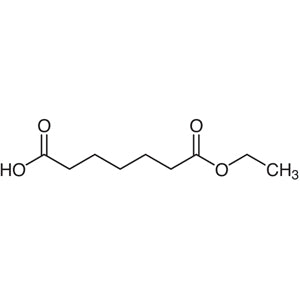
MonoethylPimelate TCI P1244
Regular price From Rp 2.491.650,00Regular price -
Monoethyl4-Oxoheptanedioate TCI O0211
Regular price Rp 4.506.600,00Regular price -
Monoethyl5-Nitroisophthalate TCI N0676
Regular price From Rp 1.193.850,00Regular price -
MonoethylItaconate TCI I0268
Regular price Rp 2.862.300,00Regular price -
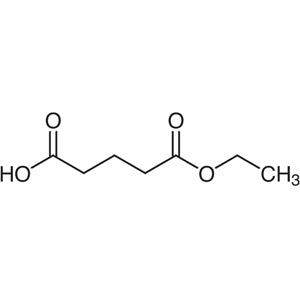
MonoethylGlutarate TCI G0271
Regular price From Rp 1.298.850,00Regular price -
MonoethylFumarate TCI F0359
Regular price Rp 1.908.900,00Regular price