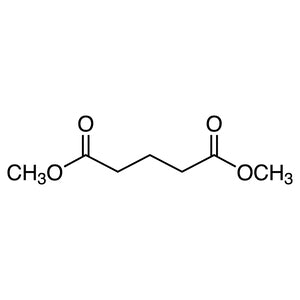
TCI G0185 Dimethyl Glutarate is the dimethyl ester of glutaric acid, supplied as a clear, colourless liquid that pours and measures easily. It belongs to the well-known family of dibasic esters, alongside dimethyl succinate and dimethyl adipate, and is widely used both as a synthetic intermediate and as a high-solvency solvent. In the organic chemistry laboratory, its symmetrical glutarate backbone carrying an ester group at each end makes it a practical starting point for building larger molecules or for closing carbocyclic rings.
The characteristic that makes this material a preferred choice is the higher reactivity of methyl esters compared with ethyl esters in transesterification and condensation reactions, so transformations often run faster and more cleanly, with methanol as a by-product that is easily removed by evaporation. Its solvent properties are equally notable: the compound dissolves many resins, has a low vapour pressure, and carries a mild odour, which is why it is frequently studied as a replacement for more pungent solvents in coating and cleaning formulations. Both ester groups are readily hydrolysed, reduced, or converted into amides, giving considerable flexibility in route design.
In Indonesian laboratories, Dimethyl Glutarate is typically handled in university and institutional organic synthesis groups preparing intermediates on a bench scale, and in industrial research and formulation laboratories evaluating solvent systems. Because it is a pourable liquid with a mild odour, it is convenient to dispense with standard glass pipettes and measuring cylinders in a fume hood, and it fits naturally into the methodology work of chemistry departments, polymer laboratories, and quality or product-development units.
- Synthetic intermediate preparation — the symmetrical diester provides two equivalent reactive ends, allowing chemists to elaborate the glutarate backbone into larger target molecules through straightforward, predictable transformations.
- Carbocyclic ring closure — with an ester group at each end of the chain, the material serves as a convenient precursor for intramolecular condensation reactions that build cyclic frameworks in the laboratory.
- Transesterification studies — methyl esters react more readily than ethyl esters, so reactions proceed faster and more cleanly, and the methanol by-product is easily removed by simple evaporation.
- Resin dissolution and solvent formulation work — the compound dissolves many resins while maintaining a low vapour pressure and mild odour, making it suitable for coating and cleaning formulation research.
- Ester derivatisation chemistry — both ester groups can be hydrolysed, reduced, or converted into amides, giving synthetic chemists considerable flexibility when designing multi-step reaction routes.
| Brand | TCI |
|---|---|
| CAS number | 1119-40-0 |
| Molecular formula | — |
| Purity | — |
| Category | Chemistry > Building Blocks > Non-Heterocyclic Building Blocks |
| Pack sizes | available in the standard TCI catalogue pack sizes; please confirm the required quantity when ordering |
| Physical form | clear, colourless liquid with a mild odour |
| Storage | keep in a tightly closed container in a cool, dry, well-ventilated area |
- Product Code: G0185
Store Dimethyl Glutarate in a tightly closed container in a cool, dry, and well-ventilated area, away from heat sources, ignition sources, and incompatible materials such as strong oxidising agents, strong acids, and strong bases. Tightly sealed glass bottles or the original supplier packaging are suitable containers; keep the closure secure to prevent moisture ingress, since ester groups are susceptible to hydrolysis. Handle and dispense the liquid in a fume hood, and wear safety goggles, chemical-resistant gloves, and a laboratory coat. Avoid contact with skin and eyes, avoid breathing vapours, and clean up any spills promptly using an inert absorbent material. Always consult the manufacturer's Safety Data Sheet before use.
—
Produk Terkait
-
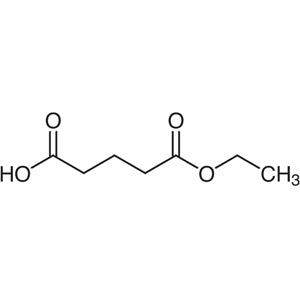
MonoethylGlutarate TCI G0271
Regular price From Rp 1.298.850,00Regular price -
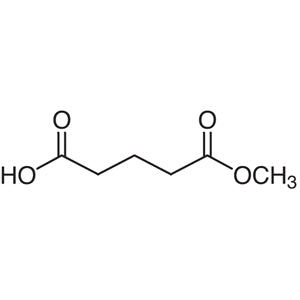
MonomethylGlutarate TCI G0258
Regular price Rp 2.545.200,00Regular price -
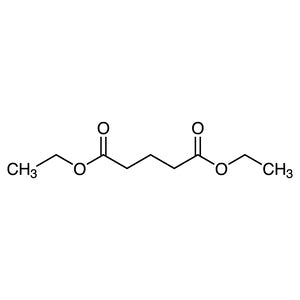
DiethylGlutarate TCI G0184
Regular price From Rp 875.700,00Regular price -
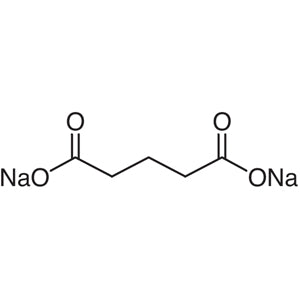
DisodiumGlutarate TCI G0070
Regular price From Rp 2.094.750,00Regular price -
DimethylAcetylenedicarboxylate TCI A0090
Regular price From Rp 2.041.200,00Regular price -
Dimethyl1,3-Acetonedicarboxylate TCI A0056
Regular price From Rp 1.298.850,00Regular price -
DimethylTetradecanedioate TCI T1726
Regular price From Rp 2.411.850,00Regular price -
1-Bromo-3,3-dimethyl-2-butanone TCI B1490
Regular price From Rp 2.094.750,00Regular price