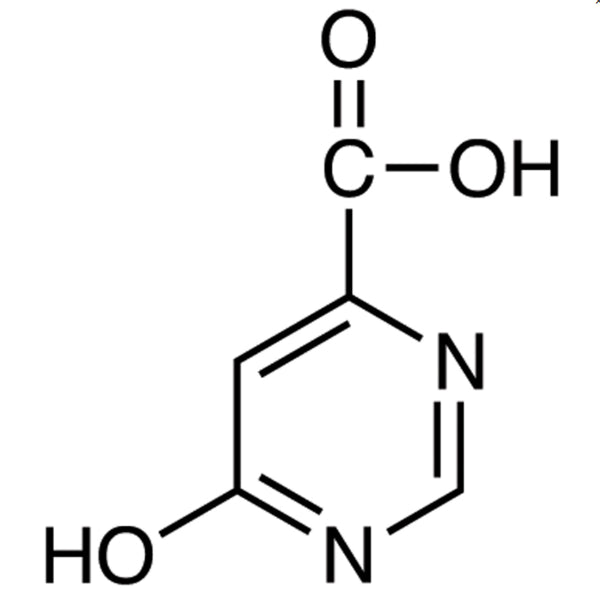
TCI H1392 6-Hydroxy-4-pyrimidinecarboxylic Acid is a nitrogen-containing heterocyclic compound that combines a pyrimidine ring with a hydroxyl group and a carboxylic acid group at defined ring positions. In synthetic laboratories, this compound serves as a heterocyclic building block that supplies a ready-made pyrimidine core, allowing researchers to move directly into the functionalization stage instead of constructing the ring from scratch through lengthy condensation reactions that frequently deliver low yields. Supplied by TCI under catalogue number H1392, it belongs to the heterocyclic building blocks family within the broader chemistry portfolio.
The properties that make this compound a preferred choice begin with the carboxylic acid group, which is readily activated and converted into amides or esters through standard coupling chemistry. This is paired with the hydroxyl group on the ring, which can be transformed into a leaving group by chlorination and thereby opens the way to nucleophilic aromatic substitution. These two distinct reaction pathways give considerable flexibility in designing a synthetic sequence. The pyrimidine ring itself is a highly valued core in medicinal chemistry because it forms the basic framework of the nucleic acid bases, so its derivatives frequently display interesting biological interactions.
In Indonesian laboratories, this compound is generally encountered as a solid with good stability under appropriate storage conditions, which makes it practical for research groups that order materials in discrete batches and draw on them over an extended period. It is typically used in university synthetic chemistry laboratories, pharmaceutical research groups, and institutional research centres where heterocyclic scaffolds are elaborated into more complex target molecules, and where a stable, ready-to-use pyrimidine core shortens the route to the compounds actually under study.
Related TCI products
- TCI B3880 59378-75-5 1-(tert-Butoxycarbonyl)-3-pyrrolidinecarboxylic Acid
- TCI A1505 332927-03-4 9-Acridinecarboxylic Acid Hydrate
- TCI M2723 122684-33-7 Methyl 1-(tert-Butoxycarbonyl)-3-pyrrolidinecarboxylate
- TCI J0008 33985-71-6 9-Julolidinecarboxaldehyde
- TCI A1470 732304-23-3 4-Amino-6-hydroxy-2-methylpyrimidine Hydrate
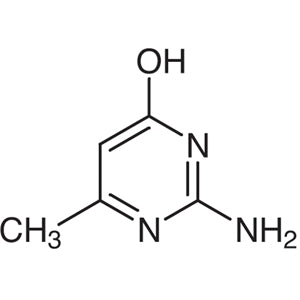
- TCI A1204 3977-29-5 2-Amino-4-hydroxy-6-methylpyrimidine
- Heterocyclic scaffold synthesis — the ready-made pyrimidine core removes the need to build the ring through long condensation sequences that often give low and variable yields.
- Amide and ester derivative preparation — the carboxylic acid group is easily activated, letting researchers append amines or alcohols to generate focused libraries of related pyrimidine derivatives.
- Nucleophilic aromatic substitution chemistry — chlorination converts the ring hydroxyl into a leaving group, enabling nucleophiles to be installed directly onto the pyrimidine ring.
- Medicinal chemistry research — the pyrimidine framework underlies the nucleic acid bases, so derivatives built from this material frequently show interesting biological interactions worth investigating.
- Multi-step route design — two independent reactive handles on one small molecule give chemists real flexibility in ordering transformations across a planned synthetic sequence.
| Brand | TCI (Tokyo Chemical Industry), catalogue number H1392 |
|---|---|
| CAS number | 6299-87-2 |
| Molecular formula | — |
| Purity | — |
| Category | Chemistry > Building Blocks > Heterocyclic Building Blocks |
| Pack sizes | available in standard TCI research-scale packaging; please confirm the size required when ordering |
| Physical form | solid |
| Storage | store under the conditions stated on the manufacturer label to maintain its good stability |
Store this compound in its original tightly closed container, kept in a cool, dry, and well ventilated area away from moisture and direct sunlight, following the conditions stated on the manufacturer label. Glass containers with chemically resistant closures are suitable for any repackaging, and containers should be clearly labelled with the compound name and CAS number. Handle the solid in a fume hood to avoid generating or inhaling dust, and wear appropriate personal protective equipment including safety goggles, chemical resistant gloves, and a laboratory coat. Close the container immediately after use, avoid contact with skin and eyes, and consult the manufacturer safety data sheet before first use. Dispose of residues and contaminated materials according to institutional chemical waste procedures.
—
Produk Terkait
-
1-(tert-Butoxycarbonyl)-3-pyrrolidinecarboxylicAcid TCI B3880
Regular price Rp 1.670.550,00Regular price -
9-AcridinecarboxylicAcidHydrate TCI A1505
Regular price Rp 1.298.850,00Regular price -
Methyl1-(tert-Butoxycarbonyl)-3-pyrrolidinecarboxylate TCI M2723
Regular price From Rp 1.644.300,00Regular price -
9-Julolidinecarboxaldehyde TCI J0008
Regular price Rp 5.778.150,00Regular price -
4-Amino-6-hydroxy-2-methylpyrimidineHydrate TCI A1470
Regular price From Rp 743.400,00Regular price -
2-Amino-4-hydroxy-6-methylpyrimidine TCI A1204
Regular price From Rp 928.200,00Regular price -
4-Amino-6-hydroxy-2-mercaptopyrimidine TCI A0791
Regular price Rp 1.140.300,00Regular price -
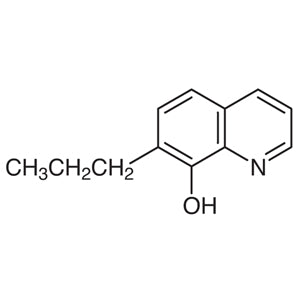
8-Hydroxy-7-propylquinoline TCI P0531
Regular price From Rp 4.877.250,00Regular price