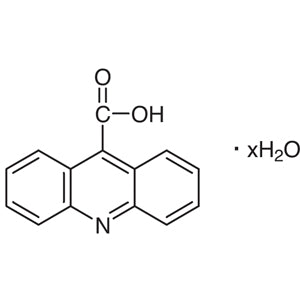
9-Acridinecarboxylic Acid Hydrate is a chemical compound widely used in laboratory settings for the synthesis of heterocyclic compounds. As a key building block in organic chemistry, it plays a crucial role in the development of complex molecular structures, including pharmaceuticals and industrial chemicals. Its unique molecular structure, derived from the acridine family, makes it an essential component in various synthetic pathways. This compound is particularly valuable for researchers aiming to create new compounds with specific functional groups or biological activities.
The compound’s chemical properties make it a preferred choice for laboratory use. It exhibits stability under controlled conditions, though it is highly sensitive to moisture and air exposure. This sensitivity necessitates careful handling and storage to maintain its integrity. Despite these challenges, its reactivity and versatility in chemical reactions make it a reliable material for synthetic applications. Its ability to participate in a wide range of chemical transformations enhances its utility in both academic and industrial research environments.
In Indonesian laboratories, 9-Acridinecarboxylic Acid Hydrate is commonly used in organic chemistry research and the development of new compounds. It is a staple in university laboratories and research institutions where heterocyclic synthesis is a focus. Its application in teaching and experimental settings underscores its importance in both practical and theoretical chemical studies. The compound’s role in advancing chemical knowledge and innovation is well recognized in the scientific community.
Related TCI products
- TCI B3880 59378-75-5 1-(tert-Butoxycarbonyl)-3-pyrrolidinecarboxylic Acid
- TCI M2723 122684-33-7 Methyl 1-(tert-Butoxycarbonyl)-3-pyrrolidinecarboxylate
- TCI H1392 6299-87-2 6-Hydroxy-4-pyrimidinecarboxylic Acid
- TCI J0008 33985-71-6 9-Julolidinecarboxaldehyde
- TCI D5563 560103-80-2 N-[4-(2,4-Dimethylphenyl)-2-thiazolyl]-4-pyridinecarboxamide
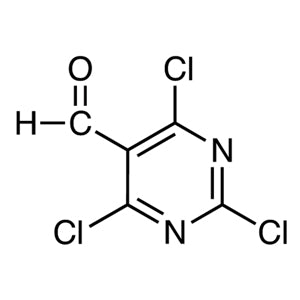
- TCI T3100 50270-27-4 2,4,6-Trichloro-5-pyrimidinecarboxaldehyde
- Organic synthesis of heterocyclic compounds due to its reactive functional groups and structural versatility.
- Development of pharmaceuticals and industrial chemicals as a key building block in complex molecule synthesis.
- Research in medicinal chemistry for the design of new drugs with specific biological activities.
- Teaching and experimental use in academic institutions for demonstrating heterocyclic chemistry principles.
- Support for chemical innovation in Indonesian laboratories through reliable and consistent material availability.
| Brand | TCI |
|---|---|
| CAS number | 332927-03-4 |
| Molecular formula | — |
| Purity | — |
| Category | Chemistry > Building Blocks > Heterocyclic Building Blocks |
| Pack sizes | Available in various quantities as per standard laboratory supply |
| Physical form | Hydrate form, typically a solid |
| Storage | Must be stored in airtight containers away from moisture and heat |
This compound should be stored in airtight containers to prevent exposure to moisture and air, which can degrade its quality. It is essential to keep it away from heat sources to maintain its chemical stability. Laboratory personnel should handle it with care, using appropriate personal protective equipment to ensure safety. The compound is sensitive to environmental conditions, so controlled storage is crucial for maintaining its effectiveness. Proper labeling and storage conditions help prevent contamination and ensure its usability in ongoing research projects. Regular monitoring of storage conditions is recommended to maintain the integrity of the material.
—
Produk Terkait
-
1-(tert-Butoxycarbonyl)-3-pyrrolidinecarboxylicAcid TCI B3880
Regular price Rp 1.723.050,00Regular priceRp 1.220.100,00Sale price Rp 1.723.050,00 -
Methyl1-(tert-Butoxycarbonyl)-3-pyrrolidinecarboxylate TCI M2723
Regular price Rp 1.696.800,00Regular priceRp 1.202.250,00Sale price Rp 1.696.800,00 -
6-Hydroxy-4-pyrimidinecarboxylicAcid TCI H1392
Regular price Rp 557.550,00Regular priceRp 405.300,00Sale price Rp 557.550,00 -
9-Julolidinecarboxaldehyde TCI J0008
Regular price Rp 5.830.650,00Regular priceRp 4.092.900,00Sale price Rp 5.830.650,00 -
N-[4-(2,4-Dimethylphenyl)-2-thiazolyl]-4-pyridinecarboxamide TCI D5563
Regular price Rp 2.041.200,00Regular priceRp 1.442.700,00Sale price Rp 2.041.200,00 -
2,4,6-Trichloro-5-pyrimidinecarboxaldehyde TCI T3100
Regular price Rp 1.113.000,00Regular priceRp 793.800,00Sale price Rp 1.113.000,00 -
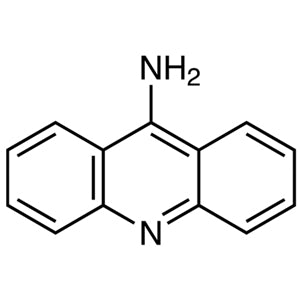
9-Aminoacridine TCI A2905
Regular price Rp 1.563.450,00Regular priceRp 1.108.800,00Sale price Rp 1.563.450,00 -
9-AminoacridineHydrochlorideMonohydrate TCI A0619
Regular price Rp 928.200,00Regular priceRp 664.650,00Sale price Rp 928.200,00


![N-[4-(2,4-Dimethylphenyl)-2-thiazolyl]-4-pyridinecarboxamide (CAS 560103-80-2) - TCI D5563 - AMI Scientific](http://amiscientific.com/cdn/shop/files/TCI2510D5563.jpg?v=1767108895&width=533)
![N-[4-(2,4-Dimethylphenyl)-2-thiazolyl]-4-pyridinecarboxamide (CAS 560103-80-2) - TCI D5563 - AMI Scientific](http://amiscientific.com/cdn/shop/files/TCI2510D5563_c53340da-34c2-4e83-ae80-09723e289a21.jpg?v=1768818466&width=533)